
The First-Time Viewing Experience
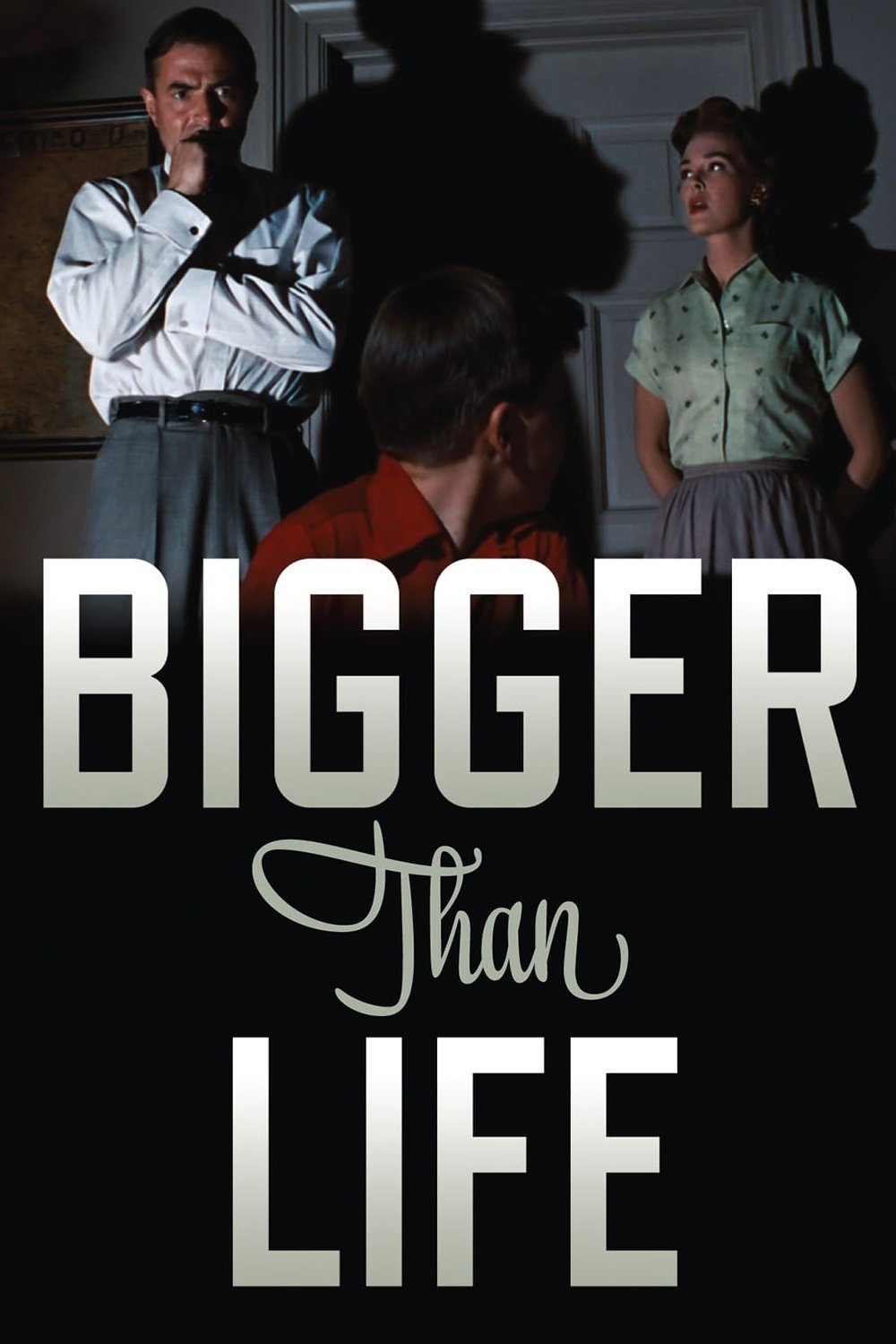
I can distinctly remember the sensation of watching “Bigger Than Life” for the very first time—it felt as if a veneer I hadn’t known existed was suddenly peeled away from the so-called ‘perfect’ American home. It was not at all the traditional classic film experience I imagined it would be, and I found myself immediately disarmed by the way the film’s bold color, camera angles, and swelling emotions unleashed a kind of unease I wasn’t prepared for. There was nothing quaint or dated about it. If anything, I was surprised—and even a little unsettled—by how immediate and dangerous the drama felt, even though the setting was unmistakably 1950s suburbia.
Honestly, I expected a gentle, maybe even moralizing drama about family. Instead, I felt like I’d stumbled upon a volcano simmering under the perfectly-manicured hedges of Eisenhower-era America. There is a kind of raw, untamed energy at play here that doesn’t require me to have any knowledge of James Mason’s previous work or Nicholas Ray’s directorial eccentricities. As a newcomer, I felt drawn in by the contradictions: I wanted to be comforted by the safe, retro world that unfolded visually, but the story absolutely refused to let me. Watching it, I kept thinking, “How could a film from this period be so bracing? So unsentimental? So direct in confronting vulnerability and social pressure?”
Each time the narrative pressed in closer on Ed Avery, I felt my own tension ratchet up, as if the movie were quietly asking me: what would I do if my life’s familiar routine suddenly fractured? What if someone I loved—a parent, a spouse, a neighbor—began to unravel in ways I couldn’t understand or control? Those are not antique questions. I was struck by how freshly relevant they are, decades after the film first screened. Sitting there, I wondered if anyone watching in 1956 felt the same hunched anxiety I did—the sense of walking a tightrope over the abyss of everyday life, hoping never to look down and see how fragile normalcy really is.
On a purely sensory level, I was floored by the use of Cinemascope and those blazing, saturated colors. Instead of feeling distant or “retro,” the visual storytelling drew me in. The boldness of the reds and golds, the strange fevered pace, actually made me feel more plugged into the characters’ inner lives. I didn’t just ‘watch’ the movie—I felt invited into an emotional whirlwind, my feelings pulled and twisted in directions I could never predict. That’s rare for me with older films, and it made all the difference. The first viewing lingered in my memory as an unsettling, almost haunting experience—one that challenged what I thought I understood about classic Hollywood storytelling.
Emotional Moments That Resonate
For someone approaching this film in today’s world, the most powerful moments are the explosions of raw feeling that so often break through the placid surfaces. I still get chills thinking about the sequence where Ed Avery, gripped by the effects of his medication, turns his frustration and dread into something volcanic—thundering through the house, lashing out at his wife and child. In that moment, I felt the atmosphere in the room shift: no longer was it just a movie about a father; it was about the vulnerability of the entire family structure, about how quickly warmth can curdle into fear when the rules change overnight.
What truly hit me, though, wasn’t just Ed’s transformation, but the devastating helplessness etched across Lou Avery’s face. The pain of watching someone you love turn unrecognizable felt universal, and I found myself transported beyond the specifics of the plot, imagining what it’s like to love someone you can’t reach. Even now, as I recall Barbara Rush’s performance, a knot forms in my stomach; the film never lets us take comfort in easy answers, and that refusal feels bracing, even liberating, compared to the tidy resolutions of many other films from the era.
Strangely, I was equally moved by the quieter moments, those brief interludes when Ed tries desperately to regain his composure, to assure his family (and himself) that things will return to normal. I saw so much of my own fears about failure and imperfection reflected in those forced smiles and brittle reassurances. When Ed tells his son, “Everything is going to be all right,” with a trembling voice, it shook me in a way that felt intensely personal. It reminded me that beneath our masks, the effort to hold things together can be exhausting—and sometimes, it simply cannot be done alone.
The crescendo of the film—when Ed’s unraveling threatens to destroy his family for good—is, for me, one of those rare cinematic moments where the emotional stakes feel as high as they do in real life. And yet, the aftermath isn’t simply one of defeat but a slow, painful reckoning: what happens after the storm, when fractures must be faced, and tiny steps toward healing become possible. That’s where I felt the film’s message truly landed—not in bombast or melodrama, but in the tender, tentative gestures offered in the aftermath of chaos. I left the film shaken, but also strangely hopeful, reminded of the resilience that often emerges only after all illusions have been stripped away.
How to Appreciate This Film Without Prior Knowledge
When I first sat down with “Bigger Than Life,” I was nervous that all the talk of “social commentary” and “suburban malaise” might mean I’d have to study up on mid-century America or be a devotee of Nicholas Ray’s filmography to understand what was happening. Fortunately, those worries vanished within minutes. The film, to my relief, asks nothing from the viewer in terms of expertise or historical context; it welcomes emotional openness instead. I found that all I needed was to let myself be present with the unfolding drama, to bring my own experiences of love, fear, and uncertainty to the screen. The film’s questions—about what it means to be “normal,” about the price of perfection, about the silent wounds we carry—are not homework topics, but living, breathing realities.
I encountered no barriers as a newcomer. In fact, I think approaching the film “blind”—not knowing about its infamous place in film criticism or the intellectual debates surrounding it—made the experience more visceral for me. I came to the Avery family as a stranger, reacting in real time to their joys and crises. The film’s emotional clarity opened doors that criticism sometimes shuts. There were no arcane references; everything unfolded with a sense of immediacy. At no point did I feel left behind. The cultural details—rolling pins, lunch pails, PTA gatherings—were less important than the tidal waves of emotion crashing beneath the surface.
I also realized, midway through, that it wasn’t necessary for me to “solve” the movie or parse every visual metaphor to be moved by it. If I noticed the washed-out blues in the kitchen or the too-bright reds in Ed’s feverish confrontations, that was a bonus, but it was never a requirement. As someone who often worries that classic films might be “homework assignments” instead of revelations, this film was a revelation in itself. It convinced me that classic cinema can be powerfully direct, even if I come to it with no more preparation than a willingness to feel deeply.
To anyone uncertain about dipping their toes into older films, my honest advice is to come as you are, and let the story wash over you. If you’ve ever worried about failing at life’s balancing act, or struggled to help a loved one in need, you’ll find yourself right at home. The universal questions at the heart of “Bigger Than Life” don’t need to be decoded—they need only to be recognized, reflected upon, and perhaps shared with others brave enough to watch alongside you.
Who This Film Is Best Suited For
- Viewers who are curious about family dramas that refuse easy answers
- People who want to experience emotionally intense, visually striking films, regardless of their age
- Anyone drawn to stories about the hidden struggles that unfold behind closed doors
A Beginner’s Final Recommendation
After my own journey with “Bigger Than Life,” I came away convinced that this film is an ideal starting point for anyone curious about diving into classic Hollywood. It never condescends, never expects its audience to be scholars or nostalgia-seekers. Instead, it extends a straightforward, deeply personal invitation: come witness what happens when the ground beneath seemingly perfect lives starts to quiver. If you’re looking for a film that engages you not with lectures but with the pulse of real emotion—terror, tenderness, confusion, resilience—then you are exactly the viewer this film is waiting for. I found that it didn’t just “hold up” over time; it pulsed with the kind of insight that feels even sharper, maybe even more necessary, in an era when perfection is an ever-present illusion.
What I appreciate most, and what I hope every newcomer feels, is that you don’t need to bring a scholarly toolkit or background in film studies. All that’s required is the courage to empathize, to let the film’s questions echo in your own life, and to see yourself in the faces lit up—sometimes harshly, sometimes tenderly—by the dazzling colors and grand shadows of Nicholas Ray’s world. If classic cinema ever felt intimidating to me, this film shattered those worries and welcomed me with open arms. I hope, as you watch it for the first time, you’ll feel the same rush of recognition: that even stories from the past can see directly into our present, and call forth an honesty we rarely allow ourselves.
For any first-time viewer unsure of where to begin, I wholeheartedly encourage you to press play. Let yourself be surprised by the rawness, the artistry, the way this film captures the bittersweet task of loving—both yourself and others—when all the familiar scripts fall away. “Bigger Than Life” rewards anyone willing to feel, to question, and to emerge a little changed. That’s the real magic of classic film, and this one brought it home to me, indelibly.
To understand whether timeless appeal still resonates today, modern reassessments are worth exploring.
🎬 Check out today's best-selling movies on Amazon!
View Deals on Amazon