
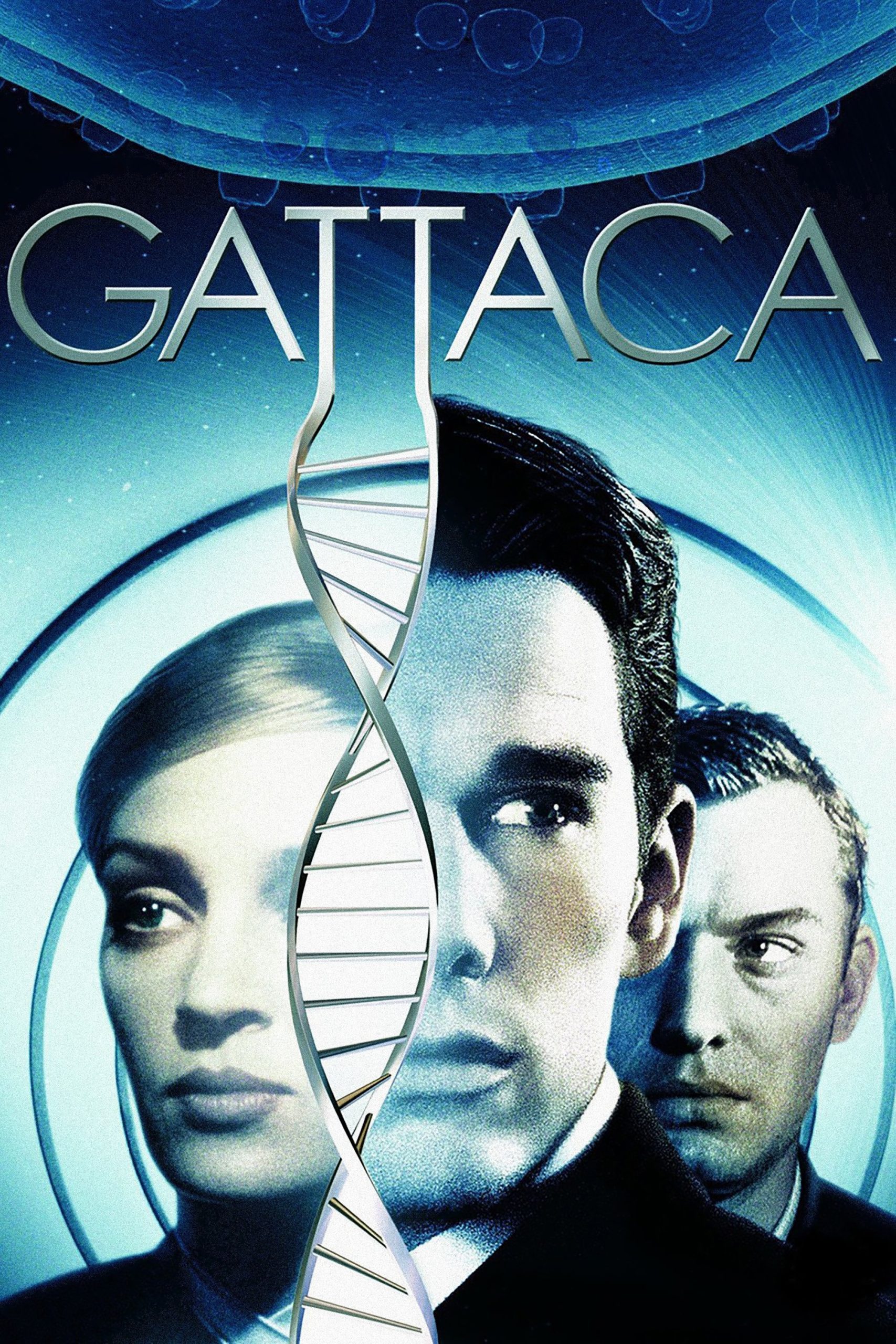
The First-Time Viewing Experience
Something stirring happens to me every time I remember my first encounter with Gattaca. I don’t just mean the visuals or the performances—though they hit their marks in quietly impressive ways—but the deeply felt curiosity that creeps up as the story unfolds. Even now, I can recall the hush in the room, the sense of possibility being simultaneously expanded and encased. Watching this film as a newcomer is like opening the blinds in a room you never realized was dark. Suddenly, you’re faced with cascading shafts of questions: What truly shapes a person? Do we surrender to fate or do we fight for our dreams, against all odds? Sitting through those first minutes, I was reminded how rare it is to see a movie that respects the audience enough to let ideas breathe.
There is nothing brash or bombastic about Gattaca; instead, the film pulls you into a world both eerily polished and fundamentally human. For me, the suspense didn’t come from car chases or pyrotechnics. It was that anxious empathy for a man’s struggle against categorization—a tension that lives in the marrow of this story. The experience, for a first-timer, is that of being delicately unsettled: the realization that the science fiction at play is not some distant future, but something uncomfortably close. I found myself scrutinizing the details, wondering how many of these imagined destinies already ripple through our own.
Every frame feels like a window through which I’m invited—almost compelled— to reconsider not only what I’m watching, but what it means for my own pursuit of identity. The minimalist production design, the bath of cool blue light, and the unhurried pacing combine to focus attention on the internal. On a first viewing, I was surprised by how quickly I cared about Vincent, the protagonist. It was almost reflexive, as if the movie quietly engineered a space in my heart for him. For anyone arriving at this classic today, those initial moments of identification and discomfort are striking. There’s an almost physical thrill in the gradual dawning: I’m watching not just one man’s journey, but a mirror reflecting questions I might be afraid to ask myself.
To me, seeing Gattaca for the first time isn’t so much about a plot twist or an impressive effect, but about a slow emotional invasion. Even as a seasoned viewer of classic cinema, I found myself blinking at the end, quietly changed. The movie’s atmosphere—suffused with longing and the ache of limitations—invites first-timers to sit with the discomfort, to lean in rather than turn away. I think that’s the magic. The film challenges without alienating; it gathers up the viewer’s vulnerabilities and says, “Yes, I know how that feels.” And if you’re patient enough to settle into its rhythm, it rewards that trust with a profoundly personal kind of awe.
Emotional Moments That Resonate
The first time I watched Gattaca, I was unprepared for how some scenes would burrow deep and linger long after the credits rolled. It’s not a film with sweeping grand gestures—its emotional blows land quietly, almost shyly, but with much greater force because of it. There’s one moment I keep returning to in my mind: when Vincent’s brother, Anton, challenges him to one last swim. The symbolism is elegant and devastating—two brothers, products of different choices, pitted not just against each other but against the labels placed upon them. What struck me most was not just the act itself, but the conversation afterwards. Vincent confesses he never saved anything for the swim back. Even years later, that vulnerability—his willingness to give everything without a safety net—still stirs something raw in me.
Another scene that caught me off guard with its emotional potency arrived quietly. Vincent’s struggles likely resonate with anyone who has ever felt “less than,” and I was taken aback at how intensely personal that feeling became as I watched. When he tenderly wipes away any stray traces of his true self, scrubbing away a world’s worth of prejudice encoded in his very DNA, I couldn’t help but reflect on all the ways people hide, adapt, or grit their teeth just to be accepted. The emotional weight of that daily erasure isn’t just acted—it’s felt, transmitted to anyone watching.
I’ve come to believe the most gutting moments in Gattaca thrive on silence. One of the most poignant images is Jerome’s face as he contemplates his own fate. Jude Law’s restrained performance quietly devastates, and I’m always struck by the dignity and quiet suffering etched in his posture, his eyes. I didn’t anticipate being so moved by a character grappling with second-place glory. What is it to fall short of perfection in a world that ensures only the genetically elite “should” succeed? As questions of worth and self-determination unfolded on screen, I found myself rooting not only for Vincent, but recognizing Jerome’s own silent cry for meaning. The pairing is heartbreaking, not because triumph is impossible, but because it is so hard-won and so rarely pure.
There’s a gentle cruelty at play as Irene (Uma Thurman) realizes her attraction to Vincent is laced with her own insecurities. The film allows their intimacy to blossom in fleeting, fragile exchanges—an accidental touch, a glance sustained. Watching them find solace in each other, I felt a sense of hopefulness knotted with pain. It’s a love story defined less by declarations and more by who they risk being in one another’s presence. That sense of quietly daring to be seen, perhaps for the first time, left a lasting impression on me. For those watching Gattaca now, these hushed but piercing moments remain as striking as ever, each one echoing into the spaces between what’s said and what remains desperately unsaid.
How to Appreciate This Film Without Prior Knowledge
I’ll admit, before I watched Gattaca, I worried I might miss key sci-fi references or cultural cues. I remember thinking I should brush up on the genre, read about genetic engineering, or at least be familiar with the film’s reputation. But those concerns evaporated minutes into watching. The beauty of this film, in my experience, is its accessibility; there’s no need for scientific expertise, or to decode a tangle of allusions, to be drawn in by its human drama. When I watched it the first time, I let go of the pressure to “get” everything, and found myself swept up, on my own terms, by the film’s empathy and clarity.
There’s a refreshing simplicity to the world-building, one that trusts the intelligence of the viewer without requiring specialized knowledge. I didn’t find long-winded expository monologues or a dense technical lexicon. Instead, what stands out is a sensitivity to character and motive. The movie works as a metaphor as much as a “what-if” scenario; I could approach it almost as I would a fable, anchored by emotion rather than fact. Even now, if someone asks me for tips before watching, I encourage them: Don’t worry about the science, focus on the heartbeat at the film’s center. The questions posed are age-old—what does it mean to be “enough”?—and that’s what makes them timeless.
I think part of the film’s magic lies in how it welcomes new viewers. Even if you haven’t encountered its themes before, the movie encourages you to meet it where you are. I never felt it was testing my literacy in bioethics or my ability to recognize homage to past sci-fi classics. If anything, the narrative unspools in such an inviting way that I wanted to watch alongside others just to discuss what we each brought to it—no prerequisites, only honest engagement. First-time viewers often tell me they’re relieved by how emotionally direct and intuitive the movie feels. In my mind, that’s a mark of greatness: a film that opens itself to anyone willing to listen, to wonder, and to care.
Even now, I advocate approaching Gattaca as an exercise in empathy. Let the questions roll over you, and resist the urge to leap ahead. The film rewards patience, contemplation, and above all, trust—in the story, in the craft, and in your own readiness to feel something unexpected. You don’t have to “study” to experience all it has to offer; all that’s required is a willingness to be moved by a story that speaks quietly but carries undeniable force.
Who This Film Is Best Suited For
- Anyone who questions the limits of possibility—because I think Gattaca has a way of haunting those who crave something bigger than circumstance.
- Viewers who appreciate thoughtful, character-driven storytelling—I always recommend it to friends who value introspection and moral complexity over spectacle.
- People looking for a film that lingers after it ends—this is for those who don’t just seek entertainment, but a lingering resonance and a nudge to reconsider what it means to belong.
A Beginner’s Final Recommendation
Whenever someone asks me if experiencing Gattaca for the first time is too heavy, too bleak, or too esoteric, I always feel compelled to reach for words that do justice to the quiet hope it instilled in me. I remember sitting through the credits, humbled by the stubbornness of human aspiration beating beneath the film’s glassy surface. I want every new viewer to know that this is not a cold, sterile dystopia, but a deeply sincere invitation—to wonder, to empathize, and to hold fast to your own convictions. My experience was one of awakening; I walked away with questions, yes, but also with a strengthened sense of possibility.
If you’ve never seen Gattaca, my advice is to approach it with vulnerability, not apprehension. Each time I revisit it, I’m reminded that its brilliance lies not in spectacular plot twists, but in its unwavering faith in the human spirit. You don’t need to come armed with prior knowledge or technical expertise. Instead, bring only your own hopes, doubts, and readiness to be moved. There’s a unique satisfaction in witnessing a character carve out their own worth, in defiance of everything laid out against them—it’s a story as old as storytelling, and yet it finds new urgency within you as you watch.
As a classic, Gattaca still speaks in a voice that feels startlingly present, echoing questions that grow more relevant with each passing year. Watching it for the first time is not about deciphering a relic, but about feeling something startlingly honest. My hope is that you’ll give yourself the space to let that honesty in, to discover that, sometimes, the most profound revolutions happen in the smallest acts of defiance. I left my first viewing feeling both challenged and uplifted, carrying away a lesson about grit, grace, and the beautifully uncertain edges of what we call destiny.
To understand whether timeless appeal still resonates today, modern reassessments are worth exploring.
🎬 Check out today's best-selling movies on Amazon!
View Deals on Amazon