
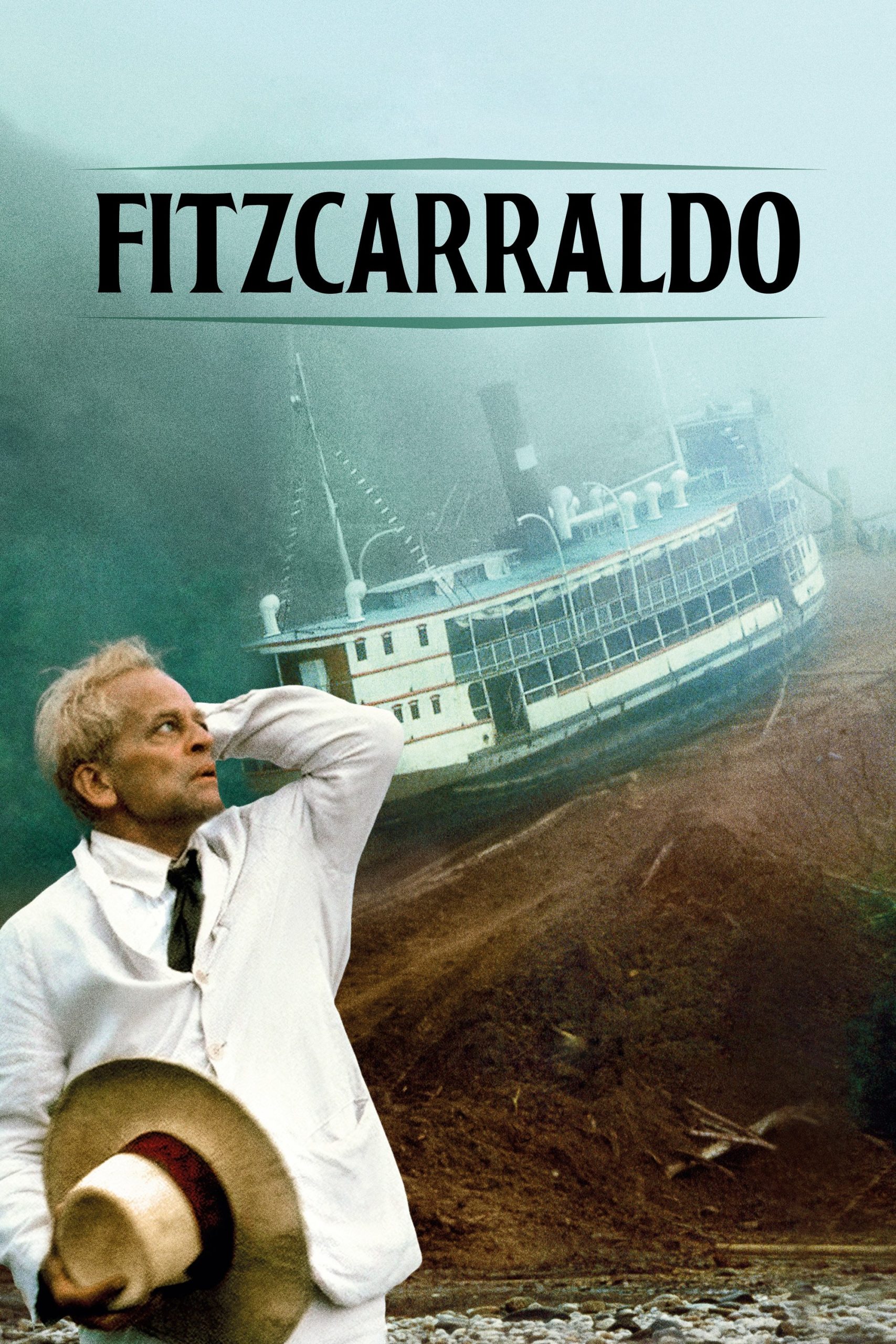
The First-Time Viewing Experience
I still remember the unsettled anticipation that coursed through me the first time I watched “Fitzcarraldo.” I didn’t reach for it because I knew what kind of story it would tell or the reputation it had as a “classic”—I picked it up out of curiosity, almost skepticism, after hearing whispers about a man dragging a steamship across a mountain. I soon found myself swept into a world that felt equal parts dream and fever, where the boundaries between legend and sweat-soaked reality seem to dissolve before your eyes. For me, it was like being transported not just to the Amazon, but to a mental state where ambition, madness, awe, and disarray mingled together. That first viewing, I quickly realized, was not about following plot points but more about surrendering to a force of nature—one that left me dazed, exhilarated, and maybe a bit haunted.
The film exudes an intoxicating unpredictability, and on my first watch I could barely settle into my chair before feeling tugged from comfort into wildness. There’s a kind of anxious wonder I experienced, as if each scene might give way to chaos or sudden beauty without warning. The natural world doesn’t just frame the actors—it engulfs them, and by extension, me as the viewer. I felt almost conspiratorial, drawn in by the camera’s lingering on mud, water, sweat, and jungle, as if I were privy to a secret expedition, uncertain whether I wanted to turn back or press on.
What I didn’t expect was how the film’s music and softness would contrast so achingly with the brutality of the story. The soundtrack, the slowness, and the sometimes surreal humor—these left me surprisingly emotional. I found myself laughing at absurdities that barely seemed scripted and feeling my pulse quicken during moments of peril where the line between actor and role blurred in ways I hadn’t experienced before. To witness Klaus Kinski’s Fitzcarraldo feels less like watching a performance and more like facing a force of obsession, one that pulls at something restless inside anyone who has ever dreamed of something immense, impossible even.
My first impression was that the movie was less concerned with explaining itself and more interested in being felt and endured. I was drawn into a rhythm of unfiltered experience; sometimes frustrated by how little seemed to “happen” in a conventional sense, other times overpowered by the scale or strangeness of what unfolded. For anyone fresh to Herzog’s style or classic international cinema as a whole, I suspect you’d recognize my mixture of awe and vulnerability—the feeling that you are not just watching an artistic achievement, but that you are being changed or challenged by it.
Emotional Moments That Resonate
There were scenes that hooked me so deeply that, despite being composed decades ago, they felt startlingly present and raw. When I first witnessed Fitzcarraldo gazing up at the mist-clad Andes, declaring his intent to haul an entire steamship over a mountain, I felt a strange blend of disbelief and admiration. It left me reflecting on how far compulsion can carry a person, and whether such dreams are foolish, noble, or both. It was never just about the plot device; for me, it echoed any moment in my own life when a goal seemed outsized, yet pressing on appeared to be the only option.
But the film’s power to grab at your heart isn’t limited to acts of bravado. I found great poignancy in the quiet exchanges, especially the supportive tenderness between Fitzcarraldo and his companion, Molly—a woman who backed his vision even as its impracticality mounted. In these soft moments, I recognized a believable faith that recognizes someone’s wildest ambitions and stands beside them anyway. That relationship, to me, lent the chaos a fragile kind of humanity, making the setbacks and little victories all the more affecting.
Perhaps the most shattering emotional beat, as I first experienced it, was the near-wordless final success: after unimaginable toil and risk, Fitzcarraldo finally moves the ship, only for his grand dream to deflate in the light of reality. The thrill of triumph gives way almost instantly to anticlimax—yet, there’s a resilience in how he still manages to salvage some joy, gifting the town an impromptu opera from the ship’s deck. I remember being struck by the bittersweetness of that sequence: failure not as an ending, but as a transformation. In today’s relentless culture of achievement and spectacle, that honest reckoning with both folly and fulfillment resonates, inviting us to cherish beauty and camaraderie even when triumph looks nothing like we imagined.
And then there are those sequences of raw, dangerous physical labor—scores of indigenous people, mud-slicked and straining, working in unison to pull the steamboat over impossible terrain. In that cacophony of shouting, engine roars, and jungle sounds, the boundary between fiction and behind-the-scenes reality seems to vanish. Even knowing, later, that Herzog’s crew endured these same struggles, I found myself moved by this shared human exertion, this testimony to what can be achieved—however absurd—when collective spirit meets impossible odds. These scenes lingered with me after the credits rolled, reminding me of our own contemporary struggles against forces that feel, at times, insurmountable.
How to Appreciate This Film Without Prior Knowledge
I came to “Fitzcarraldo” with little more than a passing familiarity with Werner Herzog’s name and almost no knowledge of German cinema from that era. If anything, my lack of background enriched the viewing; it forced me to engage with the film as a visceral, immediate experience. I remember feeling relief—and later gratitude—at how little I needed to ‘know’ in order to fall under the movie’s spell. This is not a film that rewards expertise so much as it awakens a sense of openness and presence in anyone willing to meet it on its wild, meandering terms.
When I talk with other first-time viewers, I always reassure them: you do not need to study film technique or South American history, or even speak German, to feel the current of longing, obsession, and hope that pulses through each frame. Herzog’s choices—his patience with a long take, his appetite for the visually poetic—were new to me, but none of that alienated me. Instead, I found myself responding instinctively, letting images and sounds wash over me in a way that transcended language or formal analysis. The more I let go of the need to “get it,” the richer my emotional reaction became.
This film extends a tremendous invitation to relinquish control, to allow yourself the kind of identification that children have with fairy tales: not dissecting them, but living inside their strangeness, their beauty, and their danger. My only recommendation would be to watch the film when you are free from distraction, prepared to allow the world it conjures to envelop you wholly. No reading beforehand is required; in fact, I found that each unpredictable twist had the greatest impact when I went in unprepared. There is, for me, a purity in that unmediated encounter—a sensation that will, I believe, be felt by anyone who simply opens themselves to what “Fitzcarraldo” has to offer.
Who This Film Is Best Suited For
- Those with a hunger for big, existential questions—if you’ve ever pondered the nature of human limits or what compels us to pursue impossible dreams, I believe you will see yourself reflected in Fitzcarraldo’s haunted gaze.
- Curious seekers of cinematic adventure—if you’re unafraid to linger with discomfort, astonishment, or wonder, and enjoy films that prioritize atmosphere and spirit over clear-cut narrative, this journey is for you.
- Sensitive souls with an appreciation for the dramatic intersection of art, chaos, and nature—if you find yourself moved by the collision of the beautiful and the brutal, and love films that situate their story within the thrum of a living landscape, “Fitzcarraldo” will feed your sense of awe.
A Beginner’s Final Recommendation
Every time I revisit “Fitzcarraldo”—or guide someone through their inaugural viewing—I am reminded that discovering classics is never a passive act. The film doesn’t condescend to you, and it doesn’t ask for credentials. All it truly demands is presence. If this is your first foray, let yourself feel what you feel; bewilderment, discomfort, or even boredom can give way to unexpected moments of revelation. I found it liberating to realize that I did not need to “get it” all, and that my unique response was as valid as any scholar’s. That sense of permission—to be lost, to be enthralled, to be changed—is, to me, one of the greatest gifts a classic film has to offer.
I urge any new viewer to come as you are, with curiosity and patience. See this not as a test or a museum piece, but as an adventure made richer by your own openness and sense of wonder. You might leave the film with questions, or a strange new sense of restlessness; you might, like me, feel unexpectedly seen. Whatever you experience, trust that your reaction is genuine and meaningful—sometimes, that first encounter with a classic is less about “understanding” and more about forming a personal, lasting connection. These films become timeless because they meet us, again and again, wherever we are.
To understand whether timeless appeal still resonates today, modern reassessments are worth exploring.
🎬 Check out today's best-selling movies on Amazon!
View Deals on Amazon