
The First-Time Viewing Experience
What I remember most vividly from my first viewing of “Farewell My Concubine” is the feeling that I was witnessing something as fragile and intricate as a butterfly’s wing, but as immense as history itself. I remember approaching the film with a sense of curiosity, knowing its reputation but wondering if it would envelop me—or remain at a delicate distance, too foreign or stylized to truly move me. Instead, I found myself swept up almost instantly, drawn into a world where every glance and every costume held significance, where the sweep of years left indelible marks on the lives of artists caught in the convulsions of time. My sense of self faded a little as I watched, replaced by an ache for the lives on screen, for the love and loss pulsing through each of them.
For a first-time viewer today, I think “Farewell My Concubine” feels both lushly cinematic and deeply intimate. I felt as though I was being offered a rare, precious window into another culture’s history, yet the film’s emotional truths—the longing, confusion, delusion, and devotion—felt absolutely universal. I was surprised by how quickly the film drew me past its supposed barriers: the lush Beijing Opera sequences, the stretches of period setting, and the unspoken codes between characters. These became doors rather than walls. Though the world on screen might at first seem distant—Mandarin language, 20th-century Chinese history, the traditions of opera—what I experienced was raw and almost familiar in the way it portrayed the things we live for and the wounds we carry. As the story unfolded, I felt as though I was being trusted to bear witness, to hold space for beauty and pain to collide.
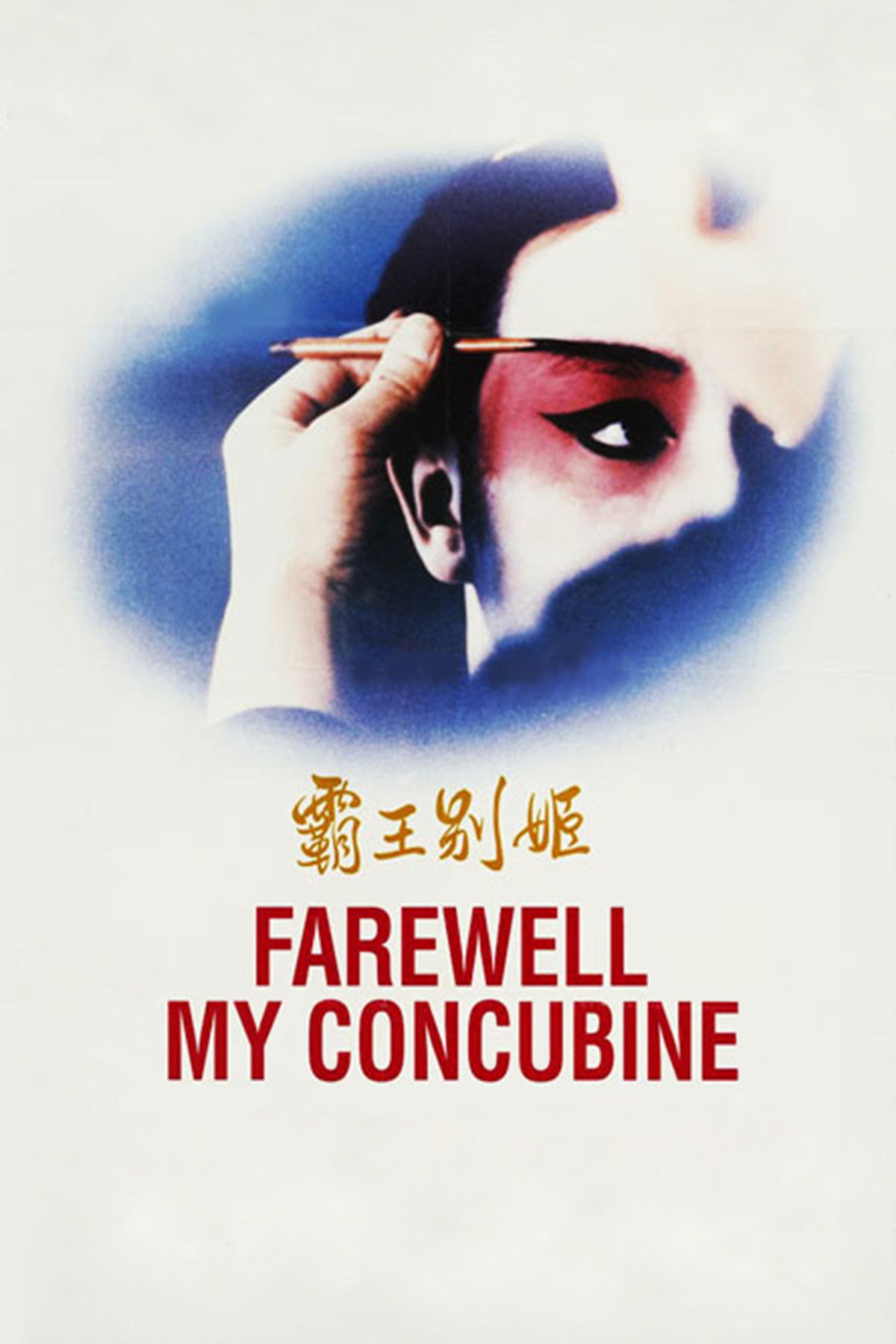
What truly rooted the film in my heart wasn’t just its ambition or artistry but the way it lingered on vulnerability—how the characters’ hands trembled while painting their faces, the tension in a half-whispered line, the heartbreak in the repeated gestures of the opera. My own senses became heightened, almost as though the film’s visual beauty swept me into a higher state of attention. There’s a moment early on when the camera lingers over the faces of young children forced into brutal discipline for art’s sake, and I felt a shock—an almost physical recognition of what it means to shape one’s own identity under pressure. The sense of history’s weight pressing into personal lives was, for me, both awe-inspiring and sobering. And yet the grace with which director Chen Kaige navigates the most intimate spaces—love, jealousy, longing—makes this epochal film, on a first watch, feel alive in the present, pulsing like an exposed nerve.
Emotional Moments That Resonate
I often think about the way “Farewell My Concubine” connects across time precisely because it never flinches from the pain of its characters’ truths. The trauma of childhood, the struggle to find one’s place on stage and in life, the desperate clutch at love—all these are presented with an emotional directness that can take the breath away. For me, some scenes felt like an unspoken confession. When young Douzi, forced into submission and artistry at the expense of his own innocence, sings for the first time, the camera doesn’t just observe; it listens. I heard what he sacrificed—childhood, selfhood—in the trembling clarity of his voice, and I could not help but grieve a little for all lives shaped by the forces that surround them.
Yet it’s the fraught, enduring relationship between Cheng Dieyi and Duan Xiaolou that stays in the soul long after. Watching their interactions, I felt an almost unbearable tension: the thin line between love and dependency, between performance and reality. The performance of the Concubine for which Dieyi becomes famous—her willingness to love unconditionally, even to the point of annihilation—mirrors, heartbreakingly, his devotion to Xiaolou. When this boundary between stage and real life blurs, I felt as though the film was gently, painfully asking me to reckon with the stories I tell about love and the masks we wear. The emotional climax, when Dieyi takes the dramatic final step, struck me as both inevitable and devastating. The sorrow I felt then wasn’t the overwrought sadness of melodrama, but a quieter, deeper mourning for what cannot be healed or undone.
I remember, too, the precariousness of happiness depicted in the film—the fleeting moments of joy, like broken sunlight between rushing clouds. Juxian’s arrival as Xiaolou’s wife, bringing with her the hope of a new happiness, is one such moment. The triangle she creates is not merely a narrative device but an uneasy, painful expansion of possibility and heartbreak. I felt kinship with all three as they circled each other: how desire for belonging can both save and ruin us, how the pursuit of authenticity can put us at odds with those we love most dearly.
Perhaps the most stirring emotional moments involve not just loss, but the aching beauty of remembrance. Years collapse, and the characters, older and battered by decades of political change, long for what they cannot regain. In the weary eyes of Dieyi and Xiaolou as the Cultural Revolution roils around them, I saw the cost of living through history. I came away convinced “Farewell My Concubine” finds its deepest resonance when it acknowledges that survival and ruin are seldom clear-cut; that the pain of living is entangled with the art of remembrance, and sometimes, the only way to endure is to surrender to music, color, and gesture.
How to Appreciate This Film Without Prior Knowledge
When I first sat down to watch “Farewell My Concubine,” I worried that not knowing enough about Chinese opera or 20th-century history would lock me out of the film’s emotional core. I’ve since come to realize how unfounded that fear was. What matters, I discovered, is not intellectual expertise but an openness to feeling—allowing the film’s rhythm, its color and light, its honest performances, to wash over me. If I didn’t always recognize an opera reference or historical figure, it never took away from the sense of vulnerability, isolation, or longing the characters felt; those feelings needed no translation.
The language, the music, the habits of costume and protocol—these are rooted in another world, but I found that they became strangely familiar as the story unfolded. I often remind myself that art offers its own compass, if I only trust my senses. The visuals alone—the texture of costumes, the faces alive with paint and feeling—were enough to pull me deeper into the narrative. Whenever I felt lost, I let the actors’ eyes and voices anchor me, because pain, jealousy, and love are things I know from my own life, even if expressed here in ritual and performance.
In fact, not knowing “everything” allowed me to surrender to the film with fewer preconceptions. I could receive it, first and foremost, as a story about how people endure what the world puts them through, and how art both wounds and saves them. There’s an immediacy to the experience: I was there not as an expert, but as someone willing to be changed. Even the more stylized elements—elaborate makeup, exaggerated gestures—became, to my surprise, bridges rather than barriers. The film acclimates me gently, teaching me its language through repetition and emotion. When opera performances bookend moments of private pain, for instance, I found myself understanding the stakes because my own pulse seemed to echo with the music and heartbreak on screen.
Over the years, I’ve learned to trust “Farewell My Concubine” to meet me more than halfway. If I approach it with the willingness to be moved, to be unsettled, and to sit with its ambiguities, it rewards me with an experience more immersive than any set of facts could provide. No expertise is required—only empathy, and a hunger for stories about the cost and consolation of being alive.
Who This Film Is Best Suited For
- Lovers of emotionally complex, visually evocative storytelling
- Viewers drawn to narratives about art, identity, and the intersection of history and personal fate
- Those new to world cinema who are willing to let go of preconceptions and feel their way through unfamiliar settings
A Beginner’s Final Recommendation
If you find yourself standing at the threshold of “Farewell My Concubine” and wondering whether to venture in, I would urge you to trust your own curiosity. Every time I revisit my own first encounter with this film, I’m reminded that there’s strength, not weakness, in being open to feeling unsettled or even lost for a while. “Farewell My Concubine” has a way of expanding the boundaries of empathy—guiding me, gently and inexorably, toward understanding lives shaped by forces outside their control, and the miraculous stubbornness of love amid chaos.
I want to reassure you: your experience with the film will be entirely your own, and that’s what makes it so precious. Don’t worry about recognizing every reference or cultural detail; let the emotional current carry you, and notice when your heart skips or aches in response. There is such deep meaning in every gesture, even if its historical roots are unknown to you. What I cherish most about my first time watching is how I became more receptive to the utterly human confusion of loyalty, self-sacrifice, and longing—feelings we all grapple with, dressed here in colors that are both strange and familiar.
I hope you let yourself be drawn into the beauty and turmoil of the film without fear. If you stay present to its sorrow and its music, its haunted eyes and painted faces, you may discover truths that linger long after. My own advice is this: open your heart, allow space for discomfort, and let the film reshape what you expect from cinema. Sometimes, after that first viewing, I found myself thinking differently about what it means to love—impossibly, stubbornly, in the teeth of history.
To understand whether timeless appeal still resonates today, modern reassessments are worth exploring.
🎬 Check out today's best-selling movies on Amazon!
View Deals on Amazon