
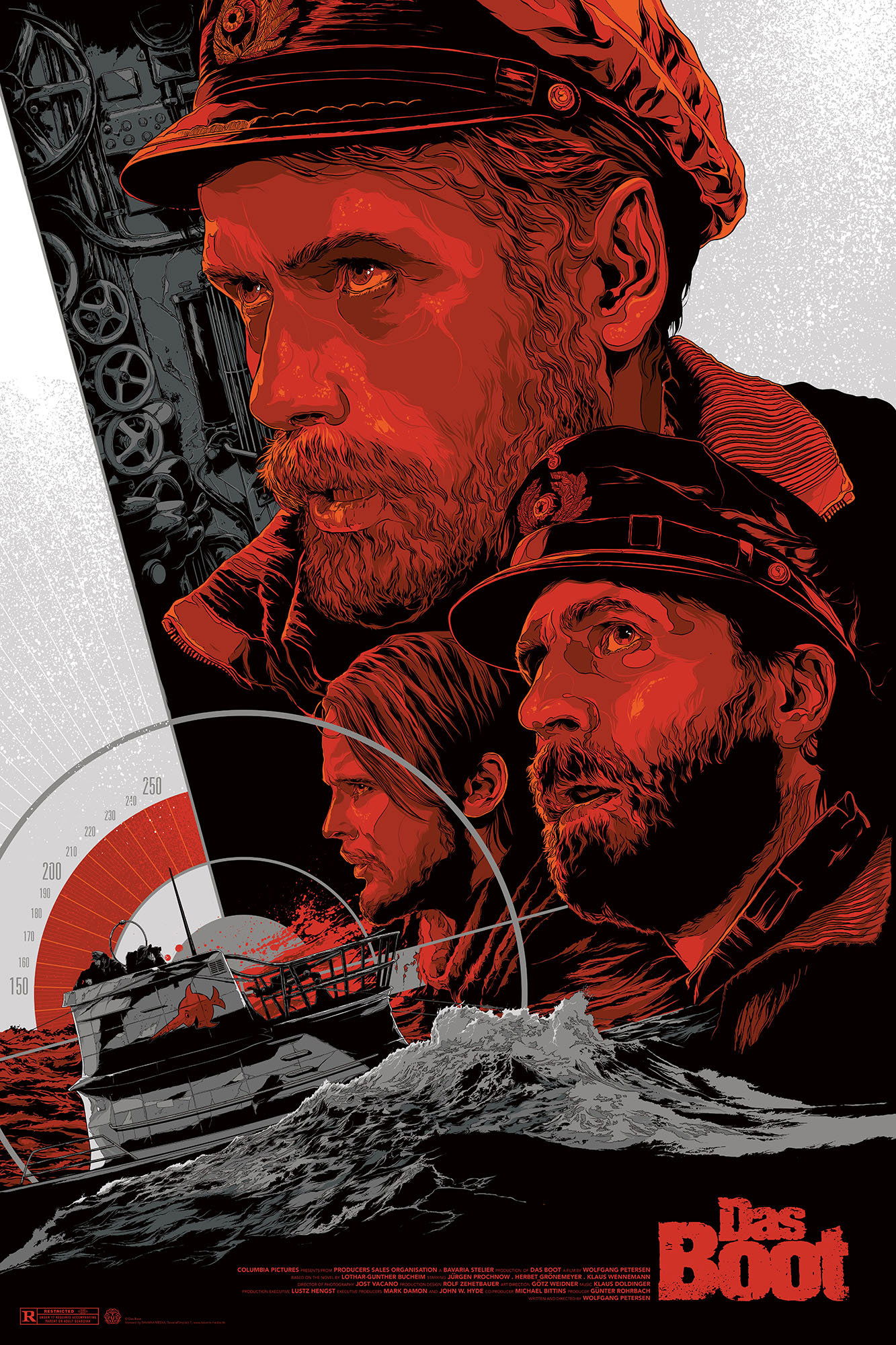
The First-Time Viewing Experience
There are very few films that have left me feeling as physically present in a story as when I first watched Das Boot. Sitting down to this German classic, I remember the uneasy anticipation that built up from the very first frame. I hadn’t expected a film set almost entirely inside a submarine to feel so intimate, so tactile, and yet I found myself drawn in closer with every scene. I could almost taste the recycled air—thick with sweat, oil, and fear. I’ll admit, before watching, I imagined a traditional war movie with action beats and patriotic speeches, but soon realized that Das Boot offers something much more personal and unsettling. Hoping for answers about heroism or easy moral closure is gently, but relentlessly, subverted by the film’s realism.
The rhythm of life inside the cramped U-boat, the heartbeat of the engines thrumming through the metal, struck me most. Rather than making me an onlooker, director Wolfgang Petersen pulled me down among the sailors, letting me feel their fatigue, boredom, camaraderie, and unshakable dread. That first viewing, I did not so much watch the film as I survived it, emerging into the credits with my nerves scrupulously frayed. There’s no preparation for how intensely claustrophobic and personal this experience can be, nor for the surprising moments of lightness and even humor that punctuate the darkness.
What stands out to me—and what shapes the first-time viewing—is the realization that every sound, every shadow, becomes loaded with the possibility of doom. The fear isn’t loud or brash; it’s slow and creeping, burrowing in like water through rusting steel. I found myself not only invested in the fate of the crew, but also strangely aware of my own physical reactions: gripping the armrest during a depth charge attack, holding my breath through long silences as enemy ships passed overhead. Watching Das Boot today, I feel the film’s sense of pressure and vulnerability is just as terrifying, just as immediate, as I imagine it was four decades ago. It feels even more isolating in the age of constant connection—here, technology is primitive, every choice could mean life or death, and every man is stripped down to raw emotion.
There’s something profoundly unsettling about how the film resists glorification. I wasn’t met with grand orchestral swells or monologues convincing me of the justness of war. Instead, I received the private worries, petty arguments, and small human victories of a handful of men trapped beneath the sea. The boredom is as real as the terror, and for a first-time viewer, it’s both exhausting and exhilarating in the best possible way. I couldn’t help but wonder if I’d have the strength, or maybe just the endurance, to live hour after hour under the threat of annihilation.
If you have ever wondered whether an “old war movie” could still make your heart pound, I found Das Boot as bracing and authentic as the first time I saw it—unsoftened by the decades. What surprised me most in my own introduction to the film was how quickly the characters began to matter, no matter their nationality or the historical context. The film does not ask me to pick sides. It just dares me to care, right alongside the crew, whether or not they make it back home.
Emotional Moments That Resonate
When I recall my initial journey through Das Boot, it’s the emotional notes that left the deepest tracks in my memory. The human stories beneath the uniform leap forward far more than any spectacle, and as a modern viewer, I found myself leaning into their vulnerabilities. One scene that still lingers in my mind is a simple meal, shared in tense silence as the men listen for distant dangers. The humanness of that moment—the way a laugh bubbles through nervousness, the exchange of glances that speak volumes—felt to me as vital as any battle scene. I realized then how rare it is to be drawn into a story where the quiet is as perilous as the noise.
For me, the most heart-wrenching moments are often the small, almost unremarkable ones. A tired smile from the captain, the resigned way a crewman stares at his bunk before collapsing from exhaustion, or the frenzied chaos of a sudden emergency. What truly caught me off guard was how easily I projected myself onto these characters—caught between loyalty, self-preservation, and the undeniable fragility of hope. There’s a haunting beauty when someone recalls life above the surface: a field, a lover, a favorite song. Each recollection is made sharper by uncertainty, a contrast to the relentless steel and gloom that encases them.
During my first watch, I expected the film’s emotional force to land with battle scenes, but I found myself holding back tears in moments of quiet despair. There’s a devastating authenticity to the scenes when the men, battered and hollow-eyed, attempt to repair their battered submarine after an attack. Watching hands shake, faces streaked with oil and salt, I felt struck by the realization that no amount of training can properly inoculate a person against terror. The film refuses to offer solace or distraction; it forces me to confront the exhaustion and desperation that become their only constant companions.
One of the film’s emotional high points for me was seeing the transformation of the crew’s camaraderie—the initial bemusement of the seasoned officers at the arrival of a young, inexperienced war correspondent, and how by the end, those lines blur. Watching these men, stripped of bravado by weeks of tension, I understood anew what it means to rely on one another in the most unforgiving of places. It’s a lesson that feels universal to anyone facing adversity, whether in wartime or the many small wars of everyday life.
The ending, so often discussed by viewers, hit me with a weight I honestly didn’t expect. I won’t give away specifics, but I will say that the emotional resonance comes not simply from loss or survival, but from the clarity with which the film stares down hope and futility at once. Emerging into the world after the credits, I felt both hollowed out and newly aware of life’s precariousness. That’s the kind of emotional legacy that, for me, sets Das Boot apart.
How to Appreciate This Film Without Prior Knowledge
I’ll admit, before my first viewing, I knew little about submarine warfare or the historical context of German U-boat missions in World War II. I was worried I’d miss important references or wouldn’t fully understand the stakes. That anxiety evaporated within the first fifteen minutes. The most comforting realization for me was that Das Boot never assumes expertise on the part of its audience. Instead, it welcomes anyone willing to be present for these men’s stories and their ordeal.
What most surprised me was how quickly I understood the emotional universality of the narrative. I realized that you don’t need to speak German, know military hierarchies, or be well-versed in naval tactics to be swept up in the drama. The cinematography and sound design do so much of the storytelling work. The metallic thud of torpedoes, the desperate clamor of tools against leaking pipes, and the dark, sweat-streaked faces needed no translation. I always felt what was at stake, simply by feeling the weight of what the crew was experiencing, moment by moment.
For anyone hesitant because they fear a confusing or densely technical film, I can personally reassure you that Das Boot is far less about tactics and more about humanity. You’re invited to connect, not calculate. Even as the camera lingers on the controls and dials of the submarine, I never felt lost; rather, I felt curiosity growing. My empathy was the only passport I needed. I learned as I watched, not from exposition, but from trial, error, frustration, and small moments of triumph mirrored in the faces around me.
What helped me most was going in open to the film’s pace. Living in an age of rapid-fire editing and constant spectacle, I sometimes struggle with slower rhythms. Das Boot moves with a patience that rewards attention. By letting myself surrender to its flow, I became attuned to those understated details: the tap of water, the flicker of emergency lights, the fatigue settling into every movement. Each minor disaster and each fleeting moment of calm are rendered vivid not through big explanations, but through pure experience. You don’t need to prepare or study. Just show up ready to feel, and you’ll find the film opens itself up with remarkable clarity.
On my first watch, I took comfort in knowing that many viewers—regardless of age or background—come to this film without prior knowledge, yet discover afterward a genuine respect, even awe, for what these submarine crews endured. The film offers that knowledge organically, through immersion and human emotion, never as a lecture. I discovered that the less I knew going in, the more the film affected me; ignorance became a vessel for surprise, empathy, and awe.
Who This Film Is Best Suited For
- Viewers interested in powerful human drama over conventional action
- People seeking films that challenge, unsettle, and move them emotionally
- Anyone curious to experience a classic that feels just as relevant and harrowing in the present day
A Beginner’s Final Recommendation
My strongest encouragement, as someone who vividly remembers their first encounter with Das Boot, is not to let the film’s reputation or historic setting feel like a barrier. What I discovered was something immediate and deeply personal. If you’re new to classic cinema, or even skeptical about wartime films, I believe this is exactly the kind of movie that can change your mind about what the medium can do. Its honesty, its lacerating humanity, and its immersive style make it an ideal gateway—not only into classic international filmmaking but also into stories that speak to the resilience and vulnerability we share, no matter where or when we live.
One thing I wish someone had told me before that first watch is that it’s perfectly natural to feel transfixed and exhausted by the end—that’s how you know you’ve truly experienced something rare. Don’t be discouraged by subtitles, by the runtime, or by the genre label. Instead, let yourself settle in, allow the film to guide you through its world, and trust your reactions. There’s no wrong way to respond—it’s the honesty of your own feelings that makes the experience most meaningful.
If you carry any apprehension about not “getting it” or not being moved, I urge you to trust in the sheer craftsmanship and the emotional openness of the film. My own first viewing left me with far more than I anticipated: a new empathy for strangers, a greater appreciation for cinematic storytelling, and an unexpected desire to recommend the film to anyone willing to listen. Das Boot rewards not expertise but curiosity and the simple bravery to face a story both raw and real. Enter as you are—you may be surprised at how deeply you’re affected, and how much this classic feels not like a relic, but a revelation.
To understand whether timeless appeal still resonates today, modern reassessments are worth exploring.
🎬 Check out today's best-selling movies on Amazon!
View Deals on Amazon