
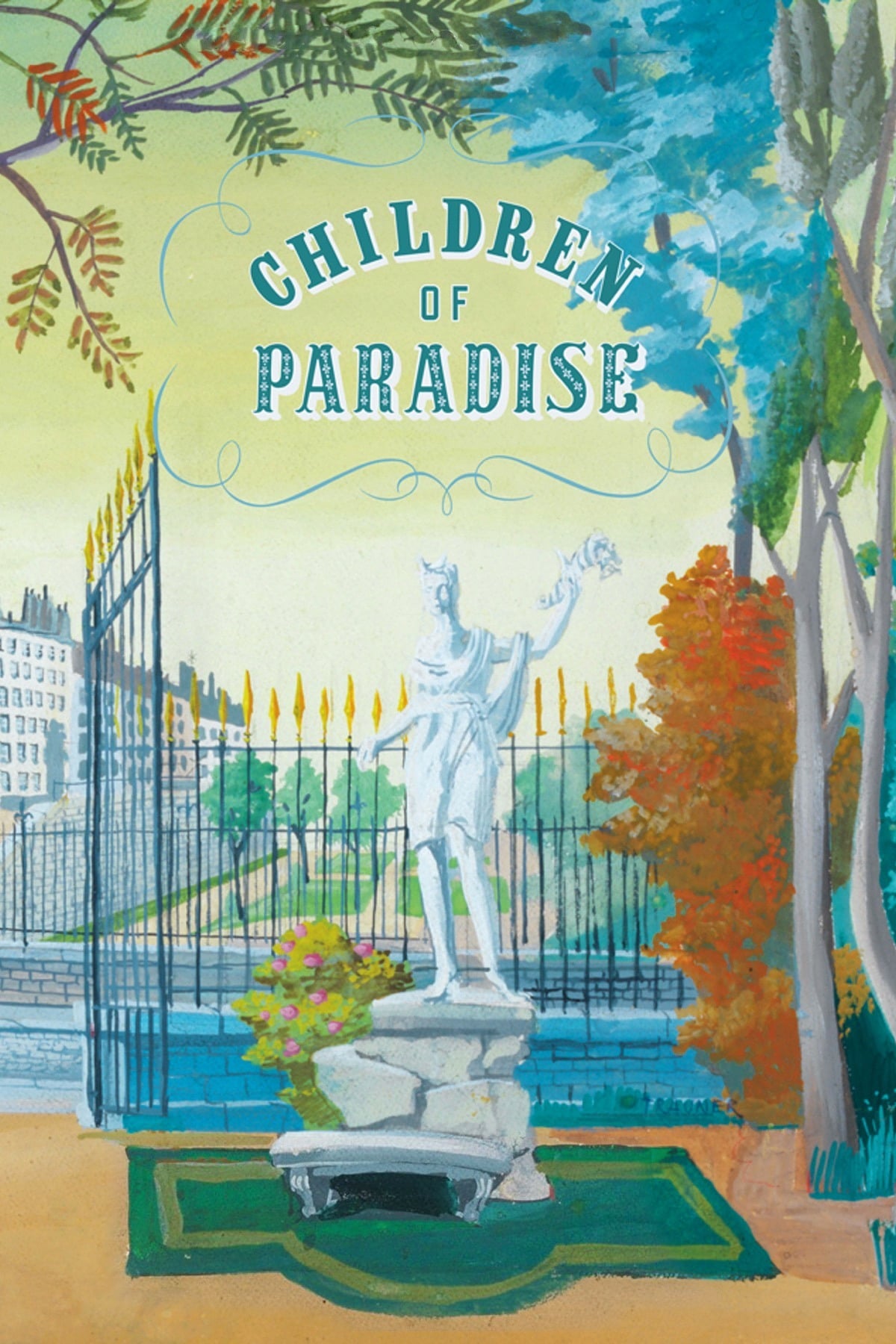
The First-Time Viewing Experience
Slipping into my living room on a quiet evening, I decided to finally indulge my curiosity for “Children of Paradise,” a film whose name felt like a whispered promise among classic film lovers. From the moment the opening fanfare faded and I was swept into the old Parisian world of bustling boulevards, vaudevillian stages, and lingering shadows, I realized I wasn’t just watching an old movie—I was tumbling down a painted rabbit hole into something vivid, dreamlike, and irresistibly alive. I remember thinking it almost felt unfair to call this “black-and-white,” because every frame seemed soaked in every color of human emotion. For someone encountering this for the first time, the sensation is almost that of stepping unseen into a mythic theater, where the boundaries between reality and artifice begin to blur; you peer at the screen with your ordinary eyes, sure, but soon enough, your heart is trying to catch up with the story as it swirls around you. I was struck by the immediacy: the subtle shifts in the actors’ faces, the way the ambient sounds of an imaginary Paris mingled with longing glances and wistful silences.
As I settled deeper into the experience, an unexpected intimacy took over. The spectacle—the colorfully raucous crowds, elaborate theater performances, and the poetic underworld—invited me in, but it was the film’s gentle, almost conspiratorial way of laying bare its characters’ yearnings that made me stay. I recall pausing several times, as if to reassure myself that a film made under such impossible historical circumstances and at such a distance from my everyday reality could speak as honestly as it did. Watching it, I felt I was holding something precious, aware that I was witnessing not only a story, but also the echo of its own creation—a masterpiece lovingly stitched together while the world around it was unraveling. I felt a trembling respect for how tenderly “Children of Paradise” asks you to observe people at their most vulnerable, their most ridiculous, and their most astonishingly human. I was moved by how, even if the trappings of the time were distant, the thematic ache of unrequited desire, missed connections, and the bittersweetness of hope still felt mouth-wateringly fresh.
Emotional Moments That Resonate
I carried several moments from “Children of Paradise” with me long after the film ended, partly because they reached for wells of feeling I hadn’t expected to find in a story ostensibly about actors and outcasts. What affected me first was how the character of Baptiste, the gentle mime, expresses his world of unspoken feeling. There’s a scene early on, where Baptiste’s pantomime—forlorn and expressive—manages to tell an entire story of love, heartbreak, and hope with nothing but gesture and a haunted, moon-like face. Watching his silent performance, I felt myself holding my breath, recognizing with a strange thrill the pain of emotions that can’t find words. The evocation of longing—so pure, so tender, so completely earnest—made me rethink how much can be said without saying anything at all. It’s a moment that feels as modern as it must have in 1945; it opens a doorway to any viewer who’s ever struggled to articulate what matters most to them.
Another resonant moment brewed in the stormy chemistry between Garance and her would-be lovers. When Garance stands amid the men who adore her, it struck me how deftly the film captures the ache and torment of wanting connection while knowing it might remain forever out of reach. I could sense all the limitations—societal, personal, circumstantial—pressing down on each character, and felt something uncomfortably familiar in their efforts to communicate desire and devotion, to gesture toward a happiness always just out of reach. In today’s world, where authenticity and vulnerability are cherished, these moments of raw honesty felt especially poignant and, frankly, a little overwhelming.
Later in the film, when the bright, ephemeral pleasures of the theater bleed into the shadows of each performer’s private life, I found myself unexpectedly moved by the way the film links the inevitability of loss with the beauty of performance. There’s a tremendously cinematic shot near the end: a crowd flooding away, swept by carnival chaos, while Baptiste is left standing alone—perfectly still and devastated. I recognized in that moment a remarkably modern brand of sadness: the strange solace in realizing our bravest acts of love may not be enough, and yet they remain beautiful in their fragile persistence. Every time I think about this sequence, I’m reminded of what it means to love other people’s stories—how we lose ourselves in them, and how, sometimes heartbreakingly, they slip away just out of reach. It leaves a reverberation in the chest that feels impossible to put aside.
How to Appreciate This Film Without Prior Knowledge
I’ll admit, before dipping into “Children of Paradise,” I worried I’d be out of my element. I’m not a scholar of French cinema; I only recognized a handful of the actors’ names. But as the lights went down and the music began, all such trepidations melted away. Truly, this isn’t a film that asks you to decode it—to identify historical references or perform cultural research before you’re allowed to be moved. Instead, I found the film generous and remarkably open-armed; it welcomes you regardless of your background. The biggest surprise for me was how universal its themes felt: love, self-expression, jealousy, the aches and raptures of performance. It’s crafted so that each moment of yearning and quiet heartbreak resonates in a language anyone can understand, regardless of where or when you’re watching.
What helped me most was simply giving myself permission to savor the atmosphere, to let the rhythm of the film settle over me like a lullaby. Without knowing all the context, I appreciated the texture of the world—its mixture of boisterous laughter and unspeakable longing, its parade of faces caught between the masks they wear and the truths they dare not utter. When I let go of the impulse to analyze, I found pleasure in letting the film’s visuals wash over me: the swish of a curtain, the play of shadow on stone, an actor’s trembling mouth as he delivers his lines. In a curious way, not knowing too much made the film feel even more alive; I felt as if I, too, was discovering Parisian theater’s backstage secrets for the first time. The film’s narrative threads are universal enough that my emotional compass did the rest—no French fluency or academic know-how required.
For anyone unsure if they’ll “understand” what makes this film great, I promise that all you need is a willingness to listen to the silences, to watch the gestures, to let yourself feel for the unlucky lovers and the fools who dare to hope. The bittersweet edge of those stories needs no explanation. To me, the beauty of “Children of Paradise” lies in how gently and completely it invites first-timers to join its dance—no prep work or prerequisites needed, just an open heart and a spare evening.
Who This Film Is Best Suited For
- Curious viewers eager to discover classics that speak deeply about love, loss, and the poetry of everyday life
- Movie lovers ready for immersive, emotionally textured dramas who seek substance and beauty over spectacle
- Romantics and thinkers alike—anyone intrigued by the blurred lines between art and reality, or who enjoy love stories with a dash of melancholy
A Beginner’s Final Recommendation
Looking back on my first encounter with “Children of Paradise,” the sensation that lingers most is one of quiet gratitude. The film didn’t just meet my hopes; it expanded what I believed cinema could do, with its fusion of performance and passion, tragedy and comedy, artifice and authenticity. I’d tell any newcomer that the key to watching this film isn’t to brace yourself for “importance” or to expect a stuffy museum piece; instead, let yourself be gently pulled along by its rhythms, its swirling cast of characters, its moments of heartbreak and hilarity. There’s a brilliance to the way it refuses to judge or explain its characters, inviting us instead to understand them with our own histories, our own hearts.
For me, the real transformation came in those tiny seconds when I recognized myself amid the chaos of longing—when I realized that all the heartbreak, hope, and tentativeness on screen still flutter in the lives of every real person who’s ever wished for love or meaning. I recommend approaching it not with the burden of reverence, but with open curiosity. Let yourself be swept up in the spectacle and the sorrow. Treasure the fact that, just as with its audience in 1945, the film hopes to dazzle and move you, not instruct or intimidate.
If you, like me, are sometimes nervous about approaching “Great Art,” I can only encourage you to take the leap here. “Children of Paradise” offers its gifts tenderly, laying its heart bare for anyone—novice or cinephile—to see. It doesn’t matter if you know the historical backdrop or if you’re fluent in French symbolism; all that matters is that you, even for just a few hours, allow yourself to fall under its spell. I have, and I emerged richer for it.
To understand whether timeless appeal still resonates today, modern reassessments are worth exploring.
🎬 Check out today's best-selling movies on Amazon!
View Deals on Amazon