
The First-Time Viewing Experience
Whenever someone asks me about my first encounter with “Bicycle Thieves,” I never quite know where to begin because what struck me wasn’t a single scene or piece of craft, but a steadily growing ache. There’s a subtle kind of gravity at work here—a gentle but inexorable pull—that I felt from the opening minutes. When I approached this Italian classic for the very first time, I admit, I expected something distant and academic. After all, it’s regularly championed in lists, dissected in film classes, surrounded by the aura that turns films into monuments instead of living, breathing stories. But instead of something old and cold, “Bicycle Thieves” offered me a window, recently opened, where life flooded in: raw, immediate, lucid.
The most surprising aspect of my first viewing was how modern the movie felt. The camera didn’t seem to sit high above the action; it moved with the characters, quietly present, tracking their daily struggle without judgment. Rather than dampening my empathy with reverence, it felt more like sitting beside someone on a difficult day, helpless to change the outcome, but fully present for every pang. From the moment Antonio finally secures work, I could feel the optimism expand—only to sense, a few scenes later, the quiet shattering when his bicycle is stolen. The tension isn’t delivered with the bombast of so many modern thrillers, but with an ever-tightening knot of worry: Will Antonio get his life back? What will happen to his family?
I also didn’t expect how natural and unadorned the world would appear. The film’s neorealist roots, something I’d read about in passing, turned out to be a far richer experience than textbook definitions. I found myself watching real streets, recognizing the weight on people’s shoulders, and thinking how, in some small way, these people could be my neighbors, my own parents, or even myself. Watching “Bicycle Thieves” for the first time is less like meeting a legend and more like realizing that the story you’ve heard others whisper about is, in truth, heartbreakingly ordinary. There’s an uncanny closeness to real life—the kind that invites me as a viewer not just to spectate, but to remember, to recognize, to share in quiet despair and fleeting hope.
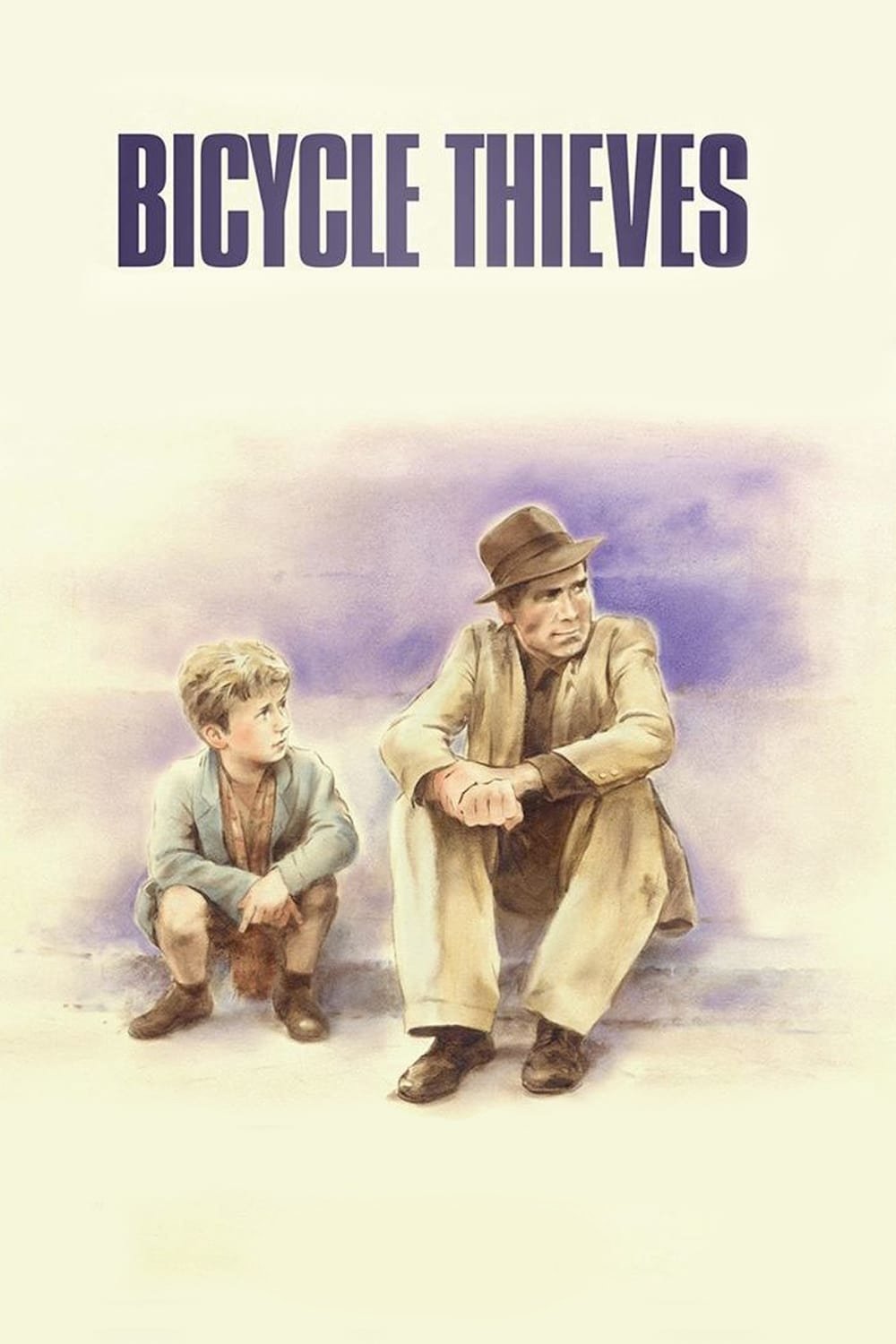
There’s no artifice in the performances, no distance between actor and role. An untrained, working-class cast conveys a lived-in honesty I rarely encounter elsewhere. I recall feeling instantly connected to the boy Bruno, not because he was written as a stand-in for childhood innocence, but because his emotions—his stubborn dignity, confusion, fatigue—were painted onscreen with plain honesty. For a first-time viewer, this matters tremendously: “Bicycle Thieves” is thoroughly approachable, and its humanity feels as fresh today as I imagine it did decades ago. That was the surprise for me—I was welcomed, not lectured, into this world.
Emotional Moments That Resonate
What has always lingered in my mind are the moments where silence does as much as dialogue. For someone watching today, certain scenes have a power that defies cinematic language barriers. I remember the scene in the rain, when Antonio and his son, after so much fruitless searching, briefly retreat to a tiny restaurant. The simplicity of bread and mozzarella, juxtaposed with their exhaustion, still takes my breath away. I felt, in this rare moment of reprieve, the longing for normalcy—the need to carve out a bubble of comfort amidst chaos. Bruno stares enviously at another family’s celebratory feast and in that quiet glance, I saw the cruelty of want and the vitality of hope.
It isn’t just spectacle or tragedy that resonates, but the quiet, unvarnished pain as Antonio’s struggles swirl into desperation. The tension in the church, with the lost bike almost within reach, reflects the soul’s tug-of-war between faith and futility. It’s a scene I carry with me because I could read doubt and hope mingling together on Antonio’s face—the kind of emotion that doesn’t flatten with time or repeated viewing. Even more piercing is the final act, where humiliation, pride, and need converge on a crowded Roman street. The ethics of Antonio’s choices might ignite debate, but in my heart I’ve felt the ambiguity, the ache of knowing that sometimes survival blurs the lines of right and wrong.
For me, the most searing moment, and one that I believe any first-time viewer will recognize, is the ending. There’s no sweeping music, no catharsis. Instead, Antonio and Bruno blend anonymously into a crowd. The camera lingers as father and son—hand in hand, dignity battered but their love intact—vanish into the thrumming city. In that moment, I felt deeply the cost of defeat yet remained strangely uplifted. The world isn’t set right, but neither is hope entirely vanquished. That mixture of sorrow and resilience, captured in one quiet frame, is the film’s emotional legacy in my life.
Even on a contemporary screen, surrounded by the distractions of modern life, I found that the universal language of struggle, love, and family needs no translation. These moments—full of small, truthful details—can still stop me in my tracks, years after my first encounter. The pain of disappointment, the courage of perseverance, and the shattering tenderness of a child’s faith in his parent: these things thread through each scene, inviting viewers not only to watch, but to feel deeply. “Bicycle Thieves” asks us not just to engage intellectually, but to remember compassion is timeless—and I think that’s why it still resonates powerfully with those seeing it anew.
How to Appreciate This Film Without Prior Knowledge
If there’s a single thing I wish I’d known before my first watch, it’s this: you don’t need a background in classic cinema or Italian history to understand and love “Bicycle Thieves.” I remember feeling a touch intimidated, worried that not knowing about neorealism or postwar Italian society might leave me adrift. But as the story unfolded, it became clear to me that context, while enriching, isn’t required for an emotional connection to this film. The characters’ struggles echo too loudly, too honestly, to be confined by time or place.
When I sit with this film, I feel as though I’m in conversation with it. “Bicycle Thieves” never lectures or preaches; instead, it reveals, inviting me to bring my own history and questions. Each shot, each exchange, contains space for my interpretation. The simplicity of the story actually opens doors. You don’t need expertise to see yourself reflected in Bruno’s loyalty or Antonio’s desperation. The film’s settings and customs may be rooted in a specific era, but its emotional pulse is global. The nervous energy of a family on the verge, the ache of a parent failing to protect a child—these things ripple through generations.
I often encourage friends new to classics to let the film wash over them, to follow the emotions rather than worry about “understanding” every scene. My own enjoyment grew from this surrender. I didn’t recognize all the Roman landmarks, nor could I always parse the small details of Italian daily life, yet what mattered came through in glances, gestures, and silences. If you’re watching for the first time, I’d advise letting go of the idea that you have to be an expert in black-and-white cinema. The honesty of what’s onscreen will meet you wherever you are.
If you’re worried about the pace—so different from contemporary movies—I would say: treat it as a virtue, not a hurdle. I found that the film’s gentle rhythm makes room for genuine empathy. You’re given a chance to breathe with the characters, to sit in their moments. In my experience, this openness made me a more attentive viewer, more attuned to the micro-expressions and nuances that turn ordinary acts into something quietly heroic. For new viewers, it’s this generosity—the film’s belief in your ability to feel, to inhabit, rather than analyze—that makes “Bicycle Thieves” such a powerful first encounter.
No guidebook or critical treatise could prepare me for the surprise of how direct and moving the film’s artistry is. Watching with fresh eyes, without preconceptions, I believe, often reveals the film’s true brilliance—its blend of realism and poetry. You won’t need to decode symbolism or trace heritage for the film to speak to you. What matters is simply being open to the experience, allowing yourself to care, even if that means feeling disarmed or vulnerable as the story unfolds.
Who This Film Is Best Suited For
- Anyone who seeks deep, emotional storytelling grounded in real-world struggles
- Viewers open to slower-paced films that prioritize authentic human experience over spectacle
- Those looking to explore the roots of cinematic realism, or anyone starting their journey into world cinema
A Beginner’s Final Recommendation
Having walked my own first, uncertain steps into “Bicycle Thieves,” I’ve come to believe that this film rewards courage—not the bold, brash kind, but the quieter act of letting oneself be moved. I started the film a little wary, suspecting a homework-like task, and ended up humbled by the insight and tenderness poured into every frame. If you’re approaching the movie for the first time, I hope you allow yourself to be surprised by its warmth, the directness of its emotion, and the clarity with which it sees ordinary lives.
The beauty of this classic, in my eyes, is its refusal to distance itself from the viewer. I never felt excluded by unfamiliarity or by the film’s age. Instead, I found myself welcomed into a fragile, yet fiercely loving father-son journey. Even if you’re unaccustomed to international cinema or stories without tidy resolutions, I believe there’s something bracing and quietly magnificent awaiting you here. The film offers empathy in place of spectacle—the sense that your own worries and hopes are mirrored, in some beautifully universal way, by those onscreen.
Take your time with it. Let the film’s rhythm settle, and allow yourself to listen, not just see. What you’ll discover isn’t a relic, but a story alive with yearning and possibility. I can’t promise you will leave the experience unchanged, but I can share that I still carry echoes of it—especially the final moments, full of heartbreak and uncrushable hope. If you trust your own instincts and remain open to feeling, “Bicycle Thieves” will meet you where you are: not with judgments, but with deep, resonant understanding. So grant yourself that quiet view, and let the film speak directly to whatever you bring with you.
To understand whether timeless appeal still resonates today, modern reassessments are worth exploring.
🎬 Check out today's best-selling movies on Amazon!
View Deals on Amazon