
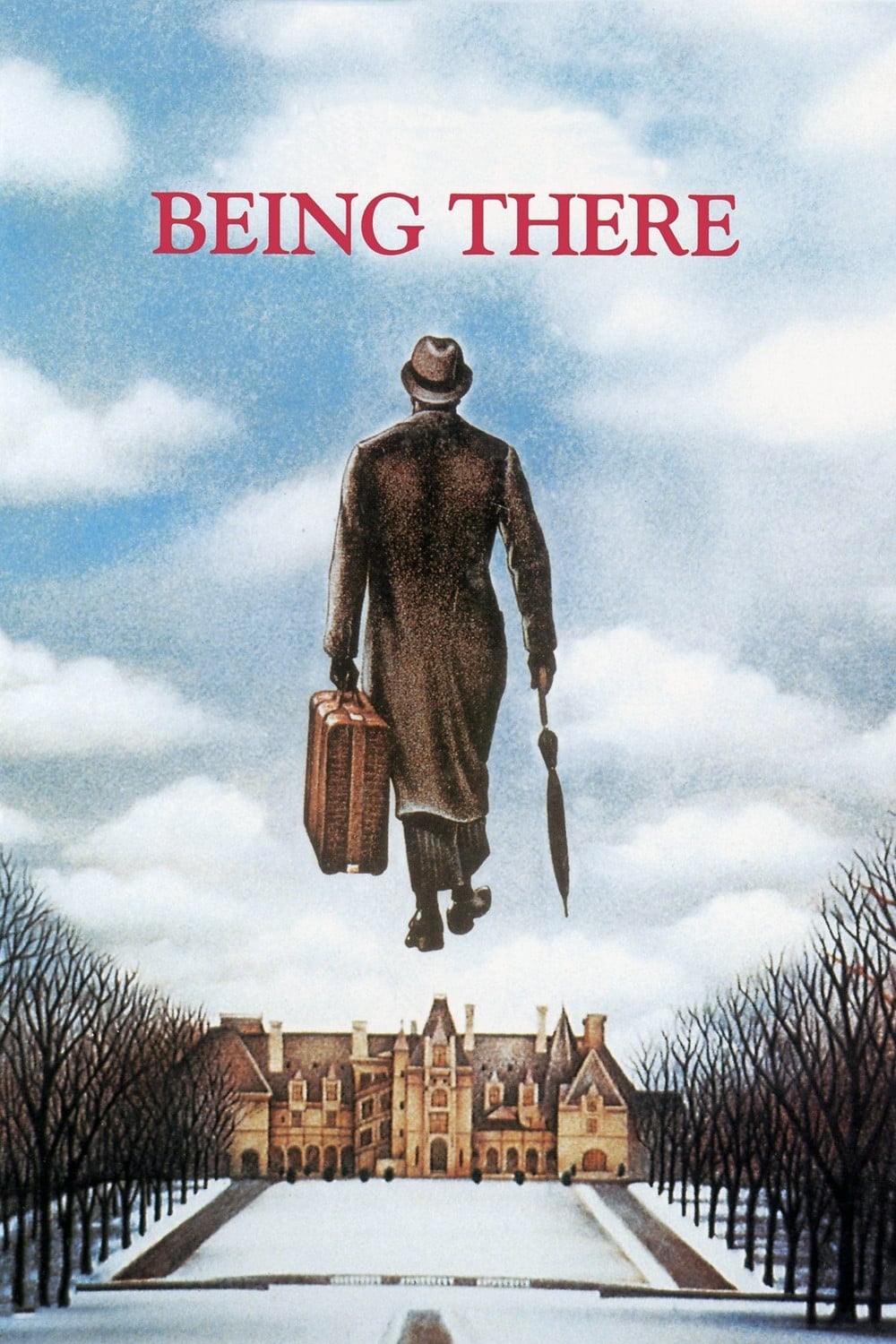
The First-Time Viewing Experience
The first time I watched Being There, I felt an odd, compelling tug—like I had wandered into a polished, mirrored hallway where meaning was always just slightly out of reach. I remember settling in, uncertain what to expect, only knowing that Peter Sellers was in it, and that the film carried a reputation for enigmatic wit. As the opening scenes unfolded, I was struck not by grand spectacle or narrative urgency, but by how quietly the film moved. The muted rhythm drew me in slowly, almost hypnotically, and I found myself becoming increasingly absorbed by the simplicity of Chance, the gardener. There was something almost meditative in watching him—his unassuming nature, his blankness that seemed, paradoxically, rich with potential. The experience was less like processing a story and more like sitting by a silent pond, waiting for ripples to form.
For someone coming to this film for the first time today, I imagine a similar sequence of reactions: initial puzzlement giving way to fascination, and then, perhaps, a kind of gentle awe. What surprised me most was how modern the film felt despite its unmistakable late-70s mood—its understated tone invites you, not to race ahead, but to pause and notice. I recall moments of laughter that almost startled me with their quiet boldness, mixed with a sense of melancholy drifting right beneath the surface. What’s uncanny is how the film doesn’t push you toward answers. Instead, it trusts you to find your own way. As a first-time viewer, I felt intellectually challenged, but in the warmest, most welcoming way—the movie seemed to say, “You don’t need to ‘get’ everything. Be present.”
The film’s gentle absurdity struck me on that first viewing. I found myself smiling at the subtlety of the social satire, but also a little uneasy at what the film quietly implies: that the world often rewards surface with substance. Even now, having revisited the film, I find that first encounter with Chance—the way he drifts serenely through rooms, so clearly himself and yet a canvas for everyone else’s projections—haunts me. Watching for the first time, you might feel a blend of incredulity, compassion, and reflective introspection. When the end credits rolled, I sat for a long while, mulling over how such a soft-spoken story could leave such an indelible mark. That lingering feeling, almost ineffable, is what makes witnessing Being There for the first time so singular.
Emotional Moments That Resonate
One of the most poignant moments, for me, comes when Chance stands awkwardly beside the dying man—his benefactor—and simply holds the remote control, switching channels as if trying to tune away reality. I wasn’t quite prepared for how sorrowful that felt. The quietness of that gesture, the blend of confusion and innocence in Sellers’ performance, made me ache for something I couldn’t name. It’s a moment that, I think, taps into the universal desire to shut out uncomfortable truths, and yet, here, it’s completely stripped of malice or intent. I felt a mix of protectiveness and sadness wash over me for Chance, and maybe, for the small places inside myself that want to avoid pain.
There’s another scene that lingers with me: Chance walking, almost childlike, through the bustling streets after leaving his sheltered existence. There’s something beautiful and heartbreaking in his unfiltered wonder. I was moved by how the camera lingers, letting us inhabit his sense of displacement without ever ridiculing him. At that moment, I experienced a welling sympathy—not just for Chance, but for anyone who feels lost in the relentless current of modern life. The film never mocks his perspective; instead, it honors his innocence, and for me, that was emotionally profound.
What’s most striking emotionally is how the supporting characters react to Chance’s simple utterances. I find myself torn between laughter and disbelief watching adults—powerful, educated, world-weary—interpret his plain words as deep insight. Their hunger for meaning is so palpable that it becomes a kind of silent plea. When Shirley MacLaine’s character looks at Chance with an almost desperate hope, I felt the loneliness radiating from her. The film is playful, yes, but beneath every comedic beat, there’s a raw yearning—people clinging to Chance’s every word because they want so badly for life to be clearer, simpler, more poetic than it is. It’s hard not to feel that twinge of recognition, thinking of all the times I’ve yearned for someone to tell me what things mean.
Of all the scenes, the film’s final sequence—Chance walking across the surface of the water—felt, and still feels, like a quiet revelation. The hush of the moment, the suggestion that perhaps sincerity, or even obliviousness, can perform miracles that cleverness cannot, left me speechless. It’s a moment that doesn’t explain itself, and yet, for me, it uncovers a profound emotional truth. I was stunned, experiencing both a sense of hope and melancholy. That image stays with me to this day, a reminder of the film’s gentle magic. For anyone watching now, these moments offer not only humor and satire but a vast, tender humanity.
How to Appreciate This Film Without Prior Knowledge
Whenever friends ask me if they need to bone up on late ’70s politics or Peter Sellers’ filmography before watching Being There, I always smile and reassure them: this film doesn’t require a guidebook. The beauty, in my experience, is that it welcomes unpreparedness. I remember hitting play for the first time, trailing only the vaguest idea of what awaited me, and I quickly realized that none of the above really mattered. The story unfolds with such deliberate clarity that you never feel left behind. If anything, coming in fresh makes the film’s oddities and revelations all the more thrilling.
There’s no puzzle to solve, no background homework necessary. I was amazed by how accessible the film’s humor felt. Even if the cultural targets might have shifted slightly over the decades, the film’s broader truths about public image, misunderstanding, and the desire to find meaning in randomness speak just as loudly today, maybe even more so. To me, the delight has always been in how directly Being There engages my curiosity. The movie assumes the best of its viewers: that we, too, can sit quietly with our confusion, that questions are more interesting than answers. I’ve found that my lack of context actually helped me appreciate the universality of the story—the way everyone projects onto Chance, the subtle critiques of celebrity and power, and the longing for simplicity.
Even the film’s slower pace—a style that might feel unfamiliar if you’re used to rapid-fire editing—invites you to lean in rather than zone out. The awkward silences, the pauses between dialogue, made me more attentive, not less. I remember realizing, partway through, that I was not just watching, but participating: reading into Chance’s silences, wondering what others would see in him next. In my view, the less you know going in, the more ready you are to receive the film’s gentle surprises. It’s a rare work that trusts you to feel your way through unfamiliar territory and is generous enough to keep you company on that path.
Who This Film Is Best Suited For
- Cinematic newcomers eager to experience smart, understated storytelling
- Viewers fascinated by social satire and character-driven humor
- Anyone in search of a film that inspires reflective, thoughtful conversation
A Beginner’s Final Recommendation
I’ve always felt that the best way to discover any classic is with an open mind, and Being There is a wonderful example of why. This film rewards patience and curiosity, not prior knowledge or encyclopedic recall of movie history. When I first watched, I was just another seeker, hoping for something true and unexpected, and the film more than delivered. My experience taught me that you don’t need to decipher everything or even agree with every interpretation—there’s freedom in letting the strangeness and humor wash over you. Every time I see it, new meanings shimmer quietly between the lines.
So, if you’re standing on the threshold, wondering whether to step into this thoughtful, peculiar world, my advice is completely heartfelt: trust your instincts and give yourself permission to get a little lost. Be willing to see through Chance’s eyes for a couple of hours; you’ll not only encounter sly comedy and gentle absurdity but also a sense of melancholy and hope that’s both elusive and deeply comforting. Watching Being There as a beginner isn’t just about absorbing a story, it’s about opening yourself to its unique way of seeing. You may find yourself surprised by what resonates, and by how quietly profound this experience can feel. No two first watches are the same, and that’s the miracle at its heart.
To understand whether timeless appeal still resonates today, modern reassessments are worth exploring.
🎬 Check out today's best-selling movies on Amazon!
View Deals on Amazon