
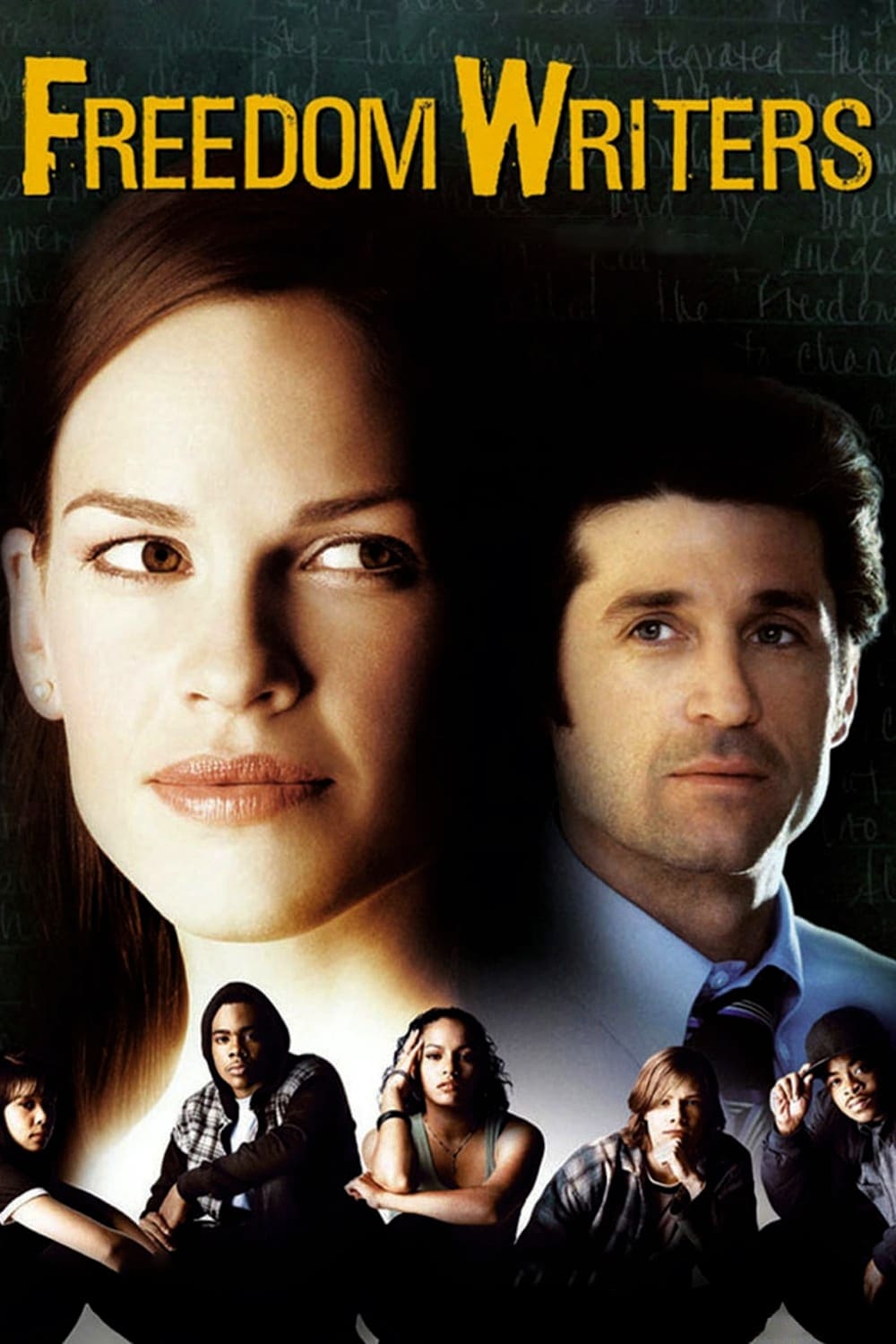
The First-Time Viewing Experience
Walking into Freedom Writers for the very first time, I remember bracing myself for a typical classroom drama—the kind that might feel a little out of date or too wrapped up in its own inspirational messaging. What happened instead was something far more intimate. I felt an immediate wave of curiosity, tinged with the hesitations that come from watching a film about education, race, and prejudice in the context of an earlier decade. There was a strange reverence I felt, knowing I was entering the world of a film that many have called “essential,” but that I had somehow missed in its heyday. I think a lot of first-time viewers may carry some of that weight, too—the question of, “Will this still matter to me? Will it reach me the way it reached others before?”
I was, honestly, a little skeptical. Expecting something perhaps overly sentimental, or trapped by the clichés of the “teacher-changing-lives” genre, I found myself gradually disarmed. My guard dropped as I started to recognize glimpses of my own high school experiences in the classroom chaos, the silent faces, the coded hierarchies. What struck me first was how quickly I was pulled into the urgency and noise of the classroom, with its relentless clatter and defiance, but also its surprising humor and authenticity. My first time, I didn’t know whose story was most important—was it the teacher’s fight for her students, or the students’ struggle just to be seen and heard? The line blurred, and I felt drawn into both at once. There’s a momentum to the film that I found almost contagious, a sense of being swept into a world where hope is both incredibly fragile and unexpectedly fierce.
It’s strange to admit, but I even found myself physically tense at times—shoulders hunched, jaw tight—as the students confronted challenge after challenge. There was no sense of cheesy afterschool specials here; instead, I noticed how deeply I wanted these fictional young people to catch a break, to have someone finally care for them, and to find their own light amid the shadows. That overwhelming desire felt intensely personal, as if I knew, on some level, what it was like to want things to turn out better than expected. By the end, I felt myself genuinely changed—a little shaken, a little hopeful, and intensely grateful for the ride I had just taken. First-time viewing, for me, was not just an act of watching, but of learning to let go of assumptions and letting the emotional current take over.
Emotional Moments That Resonate
When I think back on those first impressions, a handful of exquisitely emotional moments float to the surface, moments I suspect must connect powerfully with modern audiences, too. One scene that lingers in my heart is the reading of the students’ journals. There’s a rawness to those voices that cut through the screen, piercing through any lingering detachment. I can still recall the chill in my spine when the students, whose backgrounds and hardships initially felt almost too distant to fully understand, finally allowed their vulnerabilities and wounds to be spoken aloud. I recognized, with genuine awe, just how much pain—and possibility—lurked beneath their tough exteriors. I felt flooded with empathy, and more than a little anger at the injustices these young people face, both inside and outside the school walls.
Another moment, one that pulled at me even more, is the class’s collective reading of “The Diary of Anne Frank.” The students, once so dismissive of literature, become profoundly moved by Anne’s words and the parallels they see in their own lives. Watching them form connections across time and tragedy filled me with both sadness and inspiration. Their shared realization—that stories have power, and that their own stories matter—remains, for me, one of the most resonant cinematic depictions of what education can truly mean. I felt my own deeply-held beliefs about literature and empathy being reinforced and challenged in equal measure.
There’s another moment that jolted me: the “Line Game” the teacher initiates, where students must cross a line each time a statement applies to them—questions about violence, loss, and discrimination. I found myself standing, metaphorically, on that line with them, revisiting my own moments of pain and kinship. It was more than just a classroom exercise; it was a pivotal, almost sacred, space of shared vulnerability. That scene, in my eyes, captures the importance of simple truth-telling, and how mutual understanding can grow from the most uncomfortable revelations.
Most powerful of all, for me, are the quiet scenes—glances, hesitations, unspoken forgiveness—that punctuate the larger emotional fireworks. The teacher’s unwavering belief in her students’ worth, despite her personal sacrifices, evoked in me both admiration and a daunting sense of guilt. I realized how easy it is, in life, to walk away or not try hard enough, and how rare it is to stand fully behind someone else’s transformation. The film’s enduring capacity to evoke such a spectrum of emotions—from indignation, to hope, to bittersweet triumph—is what makes the first viewing experience feel so singularly affecting.
How to Appreciate This Film Without Prior Knowledge
Before my first viewing, I worried I needed to understand more about the real Erin Gruwell, or to come prepared with a background in social issues or contemporary history. That anxiety melted away about ten minutes in. Freedom Writers makes no assumptions about what the viewer brings to the table; it does the work of making its world instantly accessible, inviting, and painfully real. I believe that you don’t need to be an expert in education, or even particularly attuned to American social history, to find yourself swept up in what the film offers. It is welcoming, right from the start, in its recognition that we all have gaps in our understanding, and that it’s fine to simply show up as you are—curious, unprepared, a little hesitant.
Every time I rewatch the film, I am reminded of how effective its storytelling is for newcomers. All it asks is that you listen and feel. You do not need to track every historical allusion, or to recognize every reference to L.A. or gang culture. The truth is, authentic human emotion speaks louder than any background information. I deeply appreciate how the film privileges these emotional truths over didactic messages; I wasn’t bombarded with recitations or lectures. Instead, I was invited to witness transformation—messy, imperfect, unpolished—as it unfolds, trusting that what I bring to the viewing is already enough.
What allowed me to truly connect was giving myself permission to be surprised. I let my expectations drop away, resisting the urge to pre-judge the film on the basis of similar movies or what I had heard from others. Most importantly, I realized that the best way to appreciate Freedom Writers as a first-timer is to remain open to discomfort, to be receptive to unfamiliar stories, and to allow the characters’ journeys to challenge your view of what is possible—both in a classroom, and in life. There’s something tender about being introduced, for the first time, to a narrative that makes you feel both vulnerable and validated, regardless of how much or little you know going in.
I like to think that this openness is part of the film’s gentle wisdom: we are all, in various ways, beginners. Just as the students and teacher grow by having faith in the process, so too do I, as a viewer. Every emotional response I had felt legitimate and meaningful, untethered from expertise or prior experience. In fact, I now see that being new to the film can be an advantage; the surprises are sharper, the revelations more stirring, and the investment more immediate when you allow the story to approach you on its own terms. I feel no anxiety recommending this film to someone without background knowledge, because in my experience, it’s not what you know, but what you feel, that ultimately matters.
Who This Film Is Best Suited For
- Viewers seeking inspiration from real-life challenges and the power of empathy
- First-time watchers who appreciate character-driven drama set against complex social issues
- Anyone hoping to rediscover faith in the impact one person can have within their community
A Beginner’s Final Recommendation
If anyone had told me beforehand how deeply Freedom Writers would affect me, I might not have believed them. Yet here I am, encouraging other first-timers—perhaps even more so, those who doubt the film’s relevance in today’s world—to give it a fair, unguarded chance. There is something beautiful in uncovering a classic that’s new to you, witnessing its emotional truths reveal themselves one scene at a time. As someone who longs for stories of genuine connection and unvarnished hope, I found this experience uniquely nourishing. The first viewing is a journey in empathy: I felt welcomed, challenged, and, most importantly, moved.
I would urge anyone on the fence to approach Freedom Writers with the curiosity of a student and the courage to be emotionally open. You do not need credentials to feel, to reflect, or to care—qualities this film brings out in abundance. What matters is that you show up, willing to listen and to witness the transformation that takes place, both on screen and within yourself. Watching it, I sensed my own perspectives shifting, as if a window had opened onto lives and possibilities I had too often overlooked. It is rare for a film to ignite both outrage at injustice and hope for redemptive change without asking for anything in return except my attention and heart.
If you choose to sit down and experience Freedom Writers for the first time, you will not be alone. There’s a remarkable tradition of viewers—young and old, seasoned cinephile and casual audience member—who have found in its story a reminder of education’s potential to heal, inspire, and unite. My recommendation? Let yourself be part of that tradition. Allow the emotional beats to reach you; let yourself be vulnerable, just as the characters are. I believe you’ll find, as I did, that this film continues to speak powerfully, not just about classrooms or teachers, but about the shared need to be seen and to make a difference, if only for one person at a time.
To understand whether timeless appeal still resonates today, modern reassessments are worth exploring.
🎬 Check out today's best-selling movies on Amazon!
View Deals on Amazon