
The First-Time Viewing Experience
I’ll never forget the first time I sat down to experience “Central Station.” That film doesn’t simply unspool a story—it immerses me in sensations that are at once intimate and universal. Even now, I can close my eyes and recall that tender quietude in the opening scenes, the way everyday life in Rio de Janeiro’s central train station pulses with worn faces and restless energy. As the characters’ journey unfolds, there’s a slow, enveloping warmth that kept me cradled to the screen. I found myself recalibrating my own expectations for how cinema can make the everyday so achingly poetic.
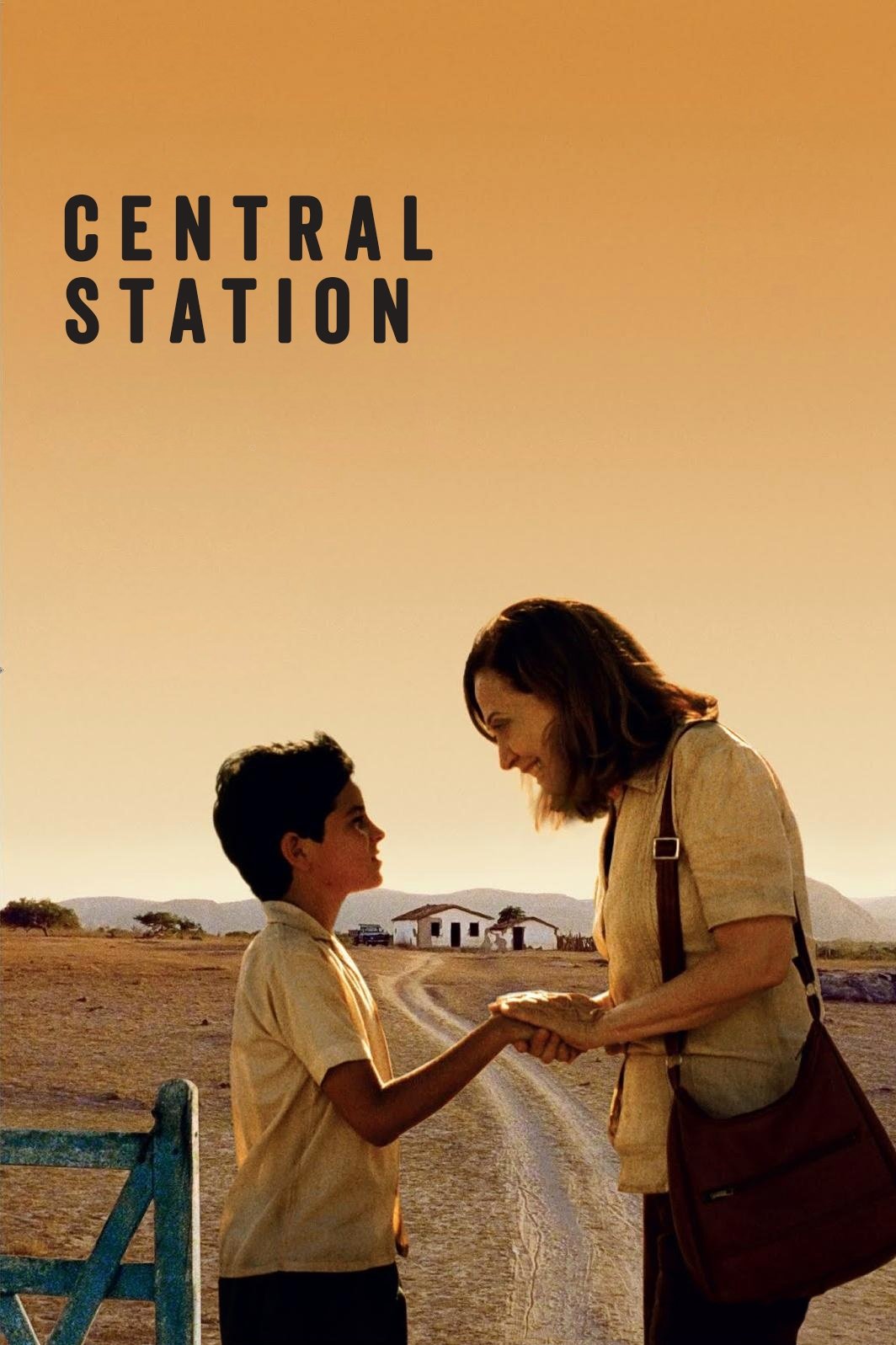
Encountering “Central Station” for the first time is not like plunging into the polished, high-tempo world of a Hollywood blockbuster. Instead, I experienced a gentle, almost shy invitation to settle into the world of Dora, an older woman scraping by as a letter writer, and Josué, a boy untethered by sudden loss. The film’s pace is deliberate, yet each moment feels infused with life’s quiet drama. I noticed how it asks me, softly but insistently, to listen with all of my senses. There’s a tactile quality to the camera work: the dust, the clamor, the smells and sunlight of Brazil’s railways fill my mind long after the credits roll. That first time, I didn’t just watch the film—I felt as if I traveled inside it, threading myself into the sparse, hopeful tapestry woven by its characters.
I vividly remember the sensation of finding myself just as vulnerable as the protagonists. I wanted to reach out and protect the boy, Josué, and I found myself emotionally entangled in the sometimes prickly, sometimes unexpectedly nurturing relationship that grows between him and Dora. My own guarded heart seemed to grow closer to theirs with every encounter—be it joyful, awkward, or quietly devastating. The first viewing becomes a lesson in empathy: not through grand gestures, but by lingering on small, authentic human interactions. I felt the responsibilities and regrets of age pressing gently against childhood’s raw longing for connection, and I realized that “Central Station” is a film that knew just how to humble me, inviting me to witness the profound beauty in the ordinary. Watching for the first time, I understood why some films are gently described as ‘healing’—this is one of them.
Emotional Moments That Resonate
If I had to choose the moments that stay with me most deeply, they would not be the grand plot points, but rather, the unexpected tears that spring up during quiet stretches of the film. There’s a particular scene that I revisit in memory every so often, when Dora and Josué board a bus to begin their search for the boy’s estranged father. Dora is hesitant, fussing and clearly out of her element; Josué’s eyes, meanwhile, flicker with hope and uncertainty. Sitting with them, I was struck by the mutual sense of being adrift—two unlikely companions tied together not by blood, but by circumstance. That silent understanding, the gentle resignation to journeying forward together, washed over me with a wave of unexpected empathy. The camera lingers, and I felt as if I was being spoken to directly about the mysterious ways people can choose, or be chosen, to care for each other.
What surprises me, and perhaps will surprise new viewers as well, is how the film tucks its most wrenching poignancy into the smallest acts—a sandwich halved and passed wordlessly, a shared cab ride that becomes a sanctuary, a letter composed in hope rather than certainty. The way Josué clings to his belief that he will find his father brought me right back to my own most vulnerable hopes. There’s a childlike faith in that journey; it made me reflect just how fierce and fragile hope can be, no matter one’s age.
For me, the film’s emotional core emerges most powerfully in the transformation of Dora herself. Watching her, I saw my own defenses questioned—the armor that I might wear against the world’s disappointments. When Dora’s surface brusqueness cracks in small, almost unremarkable moments—a smile, a confession, a furrowed brow softening—I felt my own heart ripple. Her arc is not a sudden revelation, but a subtle, dignified blooming. In one unforgettable scene, while writing a letter dictated by Josué, Dora’s voice and face betray an emotional resonance that had been, until then, tightly locked away. It’s in these quiet ruptures that I felt the exquisite pain and promise of human change. I can’t count how many times I found my eyes pricking with tears in corners of the film that seem almost inconspicuous, but whose emotional resonance lingers for days.
To this day, the ending remains difficult for me to talk about without a lump in my throat. There’s no melodrama, no soaring symphony—just the gentle parting of two souls who have come to mean something to each other, even as they must let go. I carry with me the bittersweet ache of watching Dora and Josué’s journey pause—not necessarily conclude—reminding me that real farewells are never truly final. The film’s most powerful moments, I have found, speak to the paradox of being human: how love redeems, even as it sometimes must release. I find myself returning to these moments in my mind, reminded that even the smallest kindnesses can blaze through loneliness and despair.
How to Appreciate This Film Without Prior Knowledge
One thing I want to reassure any new watcher about: you don’t need to study up or have any special knowledge to feel this film’s full impact. I came to “Central Station” without any command of Brazilian cinema, or any expertise about the history and context beneath each shot. None of that was necessary; the power of the movie lives in its ability to reach me as a person, not as a scholar. The language barrier didn’t matter—there’s a universality in its visual grammar, in its unspoken gestures and lingering silences, that crossed any gap. I could lean into the film on my own terms, pick up the threads that spoke to me, and let the rest simply wash over me. It made me appreciate how some stories require no guides, only willing hearts.
I used to worry that I wouldn’t “get” films considered classics without references, but “Central Station” melted that anxiety away. Every frame is constructed with a sensitivity to feeling, to what it means to be lost and found, to need and be needed. I realized early on that even when the characters are speaking words I might not know, their body language, expressions, and hesitations are effortlessly relatable. When Dora looks at Josué—the hesitation, the guilt, the tenderness on her face—is something I understood intuitively, without needing a backstory. There are layers for those who seek them, of course. But as someone experiencing it fresh, I was rewarded for approaching the film with nothing more than openness and patience.
“Central Station” is gentle with its audience, never flaunting its artistry or complexity; instead, it seems to whisper directly to whatever aches or hopes I happen to bring with me. I found myself appreciating the subtlety of its language, the patience in its pacing, and the authenticity of its performances without having to pin down historical or stylistic references. No preparation was needed: I found the most meaningful approach was to allow myself to feel with the film, to let its emotions and themes resonate naturally. If anything, I wish I could go back and watch it for the first time again—without preconceptions, just open to the beautiful, imperfect world it renders so vividly.
Who This Film Is Best Suited For
- Anyone drawn to quietly powerful stories about unlikely human connections
- Viewers who appreciate authentic, character-driven drama that unfolds at a reflective, unhurried pace
- Those seeking emotional honesty in filmmaking, especially people who are ready to feel moved rather than dazzled by spectacle
A Beginner’s Final Recommendation
If ever there was a film that rewarded an open heart and a little patience, I believe “Central Station” is it. My own journey with it began with curiosity, and ended in the kind of bittersweet gratitude I only feel for artworks that have genuinely touched me. I’d encourage anyone on the fence to let go of the pressure to “understand” every nuance or to analyze technique—let those quiet, genuine performances pull you in, and allow Dora and Josué’s story to unfold at its own pace. Trust that the film will meet you where you are.
I walked away from my first viewing humbled by the kindness and stubborn hope flickering throughout this story. What resonated most was not the resolution or logic of the plot, but the lived-in textures of lives colliding and transforming. The movie left me softer; a bit more contemplative about the lengths to which we go—often without really knowing why—to care for someone else. “Central Station” reminded me that it’s possible to discover something essential about myself, just by watching two strangers navigate hardship with tentative compassion. I hope your first time with this film leaves you, as it did me, feeling seen in your own capacity for empathy, and renewed in your faith in human connection.
To understand whether timeless appeal still resonates today, modern reassessments are worth exploring.
🎬 Check out today's best-selling movies on Amazon!
View Deals on Amazon