
The First-Time Viewing Experience
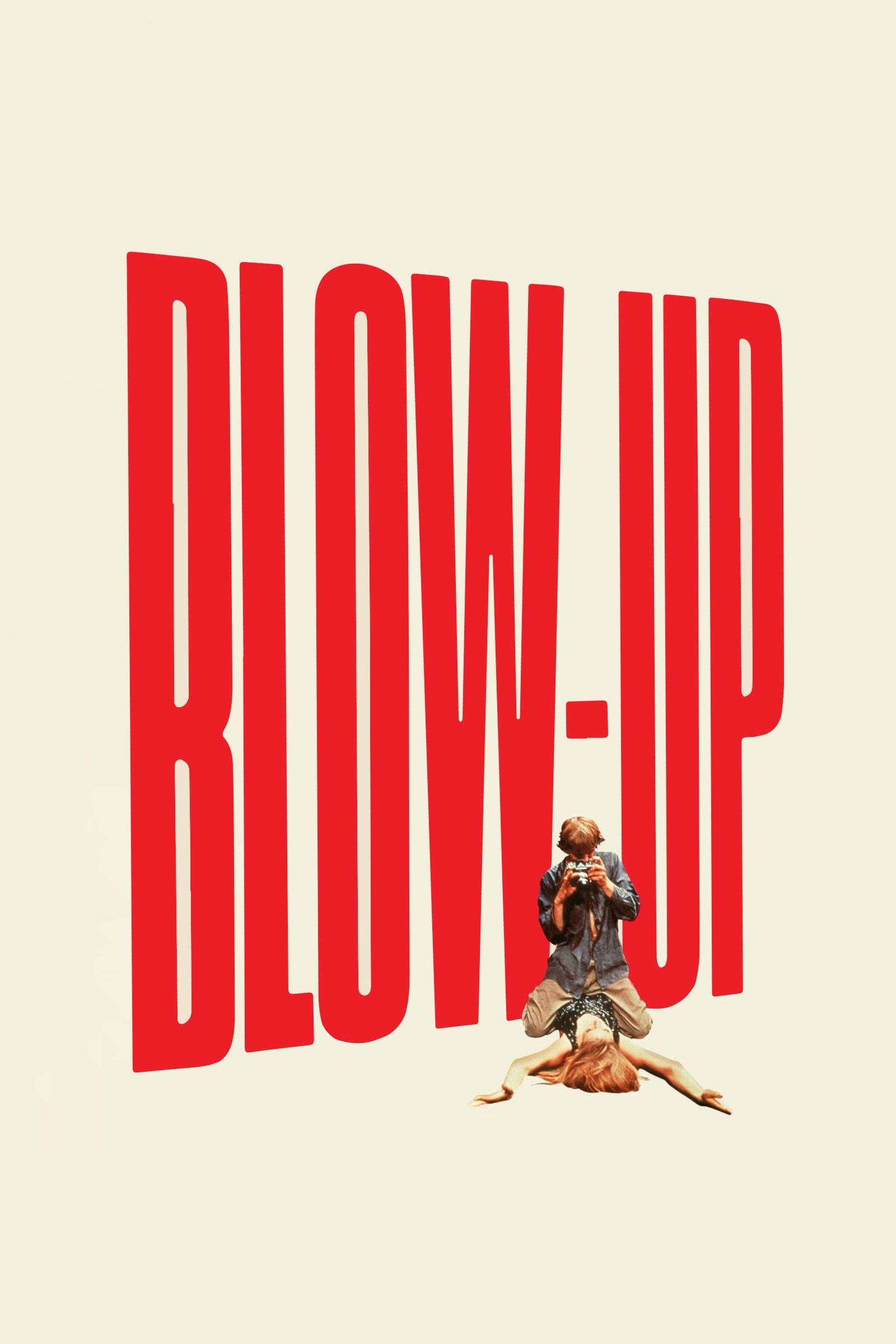
Nothing could have prepared me for the lucid strangeness of watching “Blow-Up” for the very first time. Instead of finding a cozy entryway into the swinging 1960s, I felt an immediate sense of unease, as if I’d opened a door marked “London” only to step inside a mirror where reality refuses to hold its shape. Early in my viewing, colors seemed too bright and sounds almost hollow, heightening my awareness of everything—each movement or silence suddenly felt heavy with meaning. I remember wondering if I’d missed something crucial in the first ten minutes, and I sensed that director Michelangelo Antonioni designed it that way. As the scenes unfolded—each one lingering, letting time stretch and swallow the usual beats of a mystery—I realized I was not merely being shown a story. Instead, I was being invited to participate, to search, to question everything I saw. The line between observer and participant erased itself, pulling me into a canvas of shifting meaning where even certainty dissolves. There was no comfort in plot or resolution; only a lingering, spellbound feeling that what I thought mattered might be only the surface of something larger and impossible to completely know.
From the first frame, I felt an unsettling mix of familiarity and disconnection—London looks recognizable, yet imbued with an almost alien quality. The film’s languid pacing challenged my usual expectations; instead of following a breadcrumb trail toward a conclusion, I wandered side streets with Thomas, absorbing the odd rhythms of his world. Sitting with this film for the first time, I sensed a gentle but persistent push to give up on certainty. Even the supposedly central “mystery”—what did Thomas really see in his photograph—felt like an elaborate invitation to ambiguity. With every slow zoom and every cryptic smile, I was encouraged to drop my guard and simply be. Looking back, I realize my first experience was less about understanding and more about letting the film provoke new questions inside me. A first viewing of “Blow-Up” is a submersion into uncertainty where meaning drifts and re-forms, each moment asking you to look twice at what’s in front of you, and twice again after you look away.
Emotional Moments That Resonate
Certain moments in “Blow-Up” caught hold of me so unexpectedly that I’ve seen them refract through my own thoughts long after the credits rolled. The sequence of Thomas obsessively enlarging his photographs—his hands trembling as he scrutinizes the grainy prints—struck a chord I didn’t expect. I felt his agitation, maybe because I know the urge to find solid proof in a world that rarely offers it. As he pins up enlargements on his studio wall, obsession transforms his creative process into near-madness, and I found myself aching for him to find clarity just as much as dreading what he might discover. In these painstaking, silent minutes, I felt a kinship with the way he stares and tries, again and again, to conjure certainty from a blur. The emotional resonance comes not from the “answer,” but from the all-too-human compulsion to make chaos cohere if only for a moment.
Another moment that lingers is the surreal tennis match near the film’s conclusion. Watching mime artists play with an invisible ball, and seeing Thomas eventually join their game, I felt a rush of confusion and empathy. This absurd scene left me quietly awestruck by its emotional force; it so perfectly captured that sense of uncertain engagement with reality, of accepting unreality simply because everyone else appears to. By then, the film had conditioned me to doubt the evidence of my eyes and ears. I thought—doesn’t this symbolize how we’re often swept along, half-knowingly, by the invisible patterns around us? For me, that strange, imagined tennis game felt more honest than any so-called conclusion could provide. It echoed my own experience of grappling with questions that defy concrete answers. Suddenly, the film’s suspense gave way to recognition: I, too, have played invisible games when the world refuses to cooperate with sense or reason.
Perhaps the quietest, most emotionally charged moments are those when Thomas finds himself utterly alone amid a city full of living, moving people. His loneliness, conveyed with glances and sighs, pierced through the “swinging” exterior of 1960s London. In watching him lose his bearings—not just in the external mystery, but in the meaning of his own actions—I caught painful glimpses of my own uncertainties. It isn’t so much about whether a crime took place, or what the photograph “means”: it is about being lost within the clamor of modern life. These scenes, I realized, still speak to anyone who has wondered if we ever really see the world as it is, or only as we suspect it ought to be. By the end, the film left me feeling not just puzzled, but vulnerably seen. “Blow-Up” aches with the emotional reality of searching for truth and coming face-to-face with endless ambiguity.
How to Appreciate This Film Without Prior Knowledge
Having come to “Blow-Up” knowing very little beyond its reputation, I expected to feel alienated or perhaps out of my depth. I soon discovered that the film doesn’t require any special expertise, historical awareness, or even a love of cinema to offer something meaningful. Antonioni’s work is often discussed as impenetrable or “art house,” but what surprised me is how directly it speaks to everyday feelings—doubt, curiosity, the desire to make sense of life’s randomness. My advice, after experiencing it firsthand, is to let yourself succumb to its strange spell without hunting for the “correct” interpretation.
If you’ve never walked into the world of 1960s London before, that’s not a hurdle; it’s a window. The film wraps its setting in such a vivid atmosphere that I felt instantly, viscerally invited to explore. Instead of orienting myself with references or background knowledge, I realized my only job was to pay attention—to the patterns of light, the distant sounds, the way people interact or look away. The film gives you permission to let go of plot-driven expectations. You don’t need to decipher swinging London’s culture, fashion, or music beforehand. Instead, I found it rewarding to let the music, the camera’s gaze, and the texture of each scene guide my experience. Even the mystery feels approachable because it so closely mirrors the experience of being lost in a new place: everything is fragmented, and meaning arises slowly through the act of looking and feeling, rather than decoding complicated history or symbolism.
What I wish someone had told me is that the deepest pleasure in “Blow-Up” comes from surrendering to the ebb and flow of uncertainty. You don’t need to “solve” the story or understand every choice. I felt liberated once I stopped thinking there must be a secret club of cineastes with the “answers.” Watching with fresh eyes is enough—in fact, it might even be preferable. Antonioni crafts an experience that welcomes speculation and wonder without exclusion. In my view, each viewer builds their own connection; you bring your own confusion and curiosity, and the film meets you there. I found not knowing to be its own kind of wisdom, and I now believe the film is, at its heart, a conversation rather than a puzzle to crack.
Who This Film Is Best Suited For
- Anyone who loves thoughtful, reflective cinema and is willing to embrace ambiguity instead of tidy conclusions
- Viewers intrigued by artistic exploration—those drawn to experimentation in visual storytelling, sound design, and unconventional structure
- Curious minds looking for a film experience that rewards open-ended questions and welcomes bewilderment as a valid response
A Beginner’s Final Recommendation
When I look back on my own first encounter with “Blow-Up,” I realize how grateful I am for approaching it without expectation. There was a moment halfway through, as I watched Thomas wander aimlessly down London side streets, that I felt like I was wandering beside him, half-lost and half-intrigued by the shadows stretching before us. Antonioni’s masterpiece is not so much a film that hands out answers, but a generous invitation to doubt, to wonder, and to find a peculiar kind of beauty in not knowing. It taught me that confusion can be illuminating; that stillness, silence, and unresolved questions are worth savoring. I urge newcomers to see their own uncertainty as the film’s real gift—there is no wrong way to experience “Blow-Up,” only your way. This is the sort of classic that plants a question inside you and trusts you to water it on your own. My confidence as a film viewer grew out of this very unease and wonder, and I’m convinced that “Blow-Up” holds unique value for any new viewer willing to be moved, puzzled, or changed. Let yourself go, meet the film as you are, and you may just find that its timeless uncertainties feel strangely, tenderly like your own.
To understand whether timeless appeal still resonates today, modern reassessments are worth exploring.
🎬 Check out today's best-selling movies on Amazon!
View Deals on Amazon