
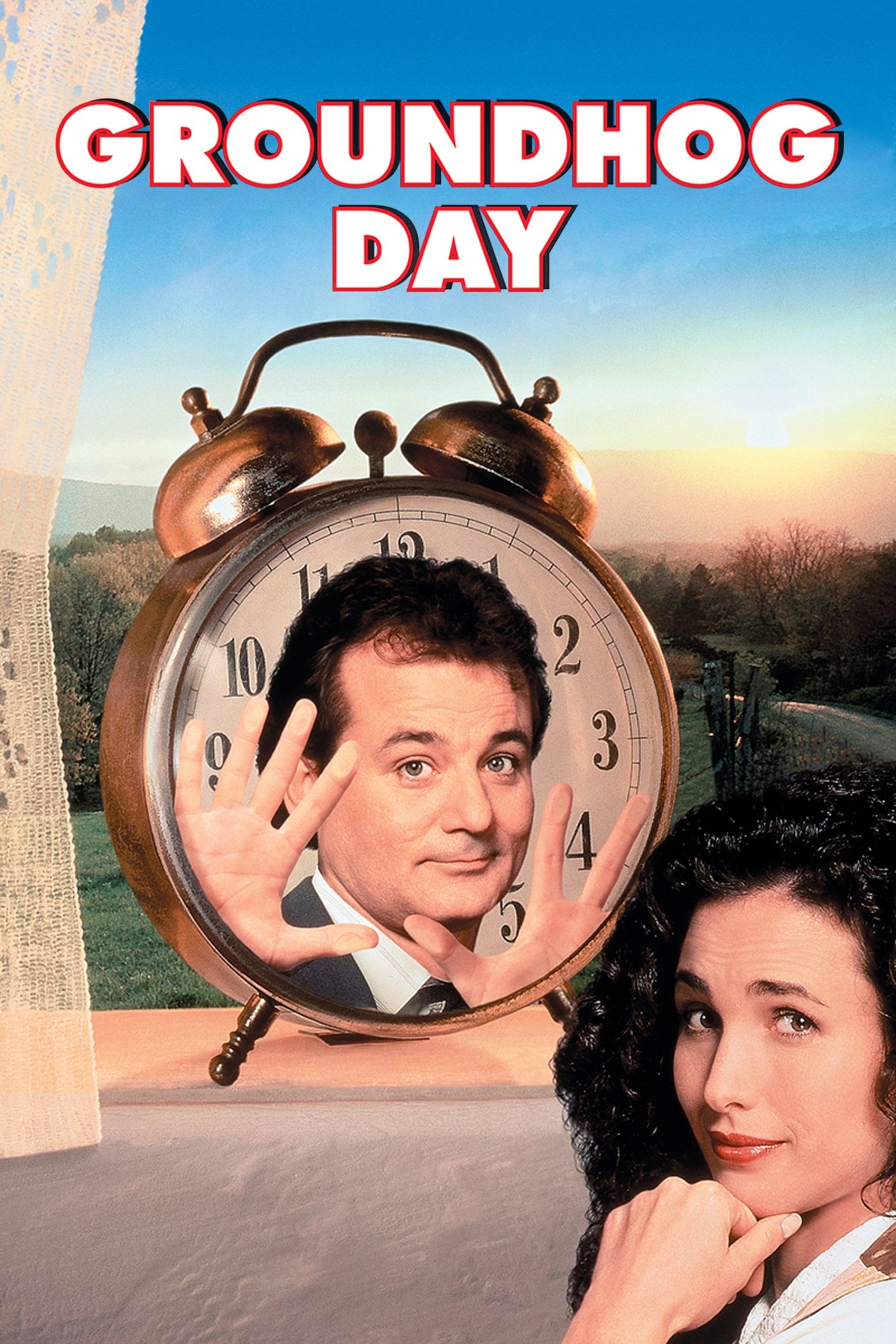
The First-Time Viewing Experience
I will never forget the first time I pressed play on Groundhog Day. Even as the opening credits flickered across the screen, I sensed something intangible—an invitation to let go of expectations, to surrender to a story that felt oddly familiar yet entirely unpredictable. My initial reaction was curiosity tinged with skepticism: how much emotional depth could a romantic comedy really promise, especially one structured around repetition? Within moments, the film surprised me by making me laugh out loud, then moments later, pause in genuine reflection. That whiplash between clever wit and introspection felt like meeting someone new and immediately feeling a connection, even if I couldn’t quite place why.
There’s a warmth that washed over me as I watched Bill Murray effortlessly become Phil Connors, but it was more than his deadpan humor that drew me in. I noticed my own emotional guard softening in tandem with his biting sarcasm on the screen. The endless loop of February 2nd isn’t just funny—it’s gently disorienting. The world outside the frame seemed to melt away as each repeated breakfast, icy puddle, and reintroduction became a strange comfort, almost hypnotic. With each cycle, I could feel layers of cynicism peeling back, both in Phil and, if I’m honest, in myself as well. The mundane setting, the seemingly small stakes—would winter end, would Phil ever escape—ultimately lured me into something much bigger. I found my senses heightened; even the snow seemed crisp, the offbeat characters in Punxsutawney oddly warm. Most of all, I remember thinking, “I know what it feels like to be stuck, to wish life would change, to wonder if today could be different.” The movie turned that universal feeling into a strangely hopeful experience. Watching for the first time, I didn’t expect to see my own longing reflected so clearly in a comedy from 1993. Yet scene by scene, Groundhog Day reached across the years and pulled me gracefully into its gently looping world.
Not knowing what would happen next, and feeling the playful tug of the premise, I caught myself leaning forward. Each repeated morning was a little more familiar, but never identical, and somehow, I realized that was the entire point. I wasn’t just observing Phil’s journey—I was participating from the safety of my own living room, wondering what I might do if given infinite attempts to get one simple day right. The first viewing left me with the giddy sense that I’d joined a secret club—one in which everyone, at some time or another, wakes up and wishes there was a do-over button. Groundhog Day makes that wish real, and for a brief two hours, it feels as if you’re living it, too.
Emotional Moments That Resonate
Even now, when I revisit the movie, certain moments hit me unexpectedly hard. The first time, though, the emotional undercurrents almost took me by surprise. There’s a pivotal scene—subtle, quiet—when Phil, after countless failed attempts to break the loop, sits in the town square and confesses his exhaustion and loneliness out loud to Rita. I remember my breath catching. Underneath the screwball humor and wry dialogue, I saw true vulnerability, the kind we rarely admit to anyone. That moment echoed a familiar ache—the sense of being stuck in routines or inward spirals of self-criticism. In that fragile space, the film seemed to assure me that this vulnerability is a gateway to change, not a wall.
Another moment lingered with me long after the credits rolled: Phil’s gradual acts of kindness, which at first feel petty or calculated, slowly transform into gestures of genuine empathy and joy. There was something astonishing the first time I saw him quietly save the life of a homeless man, or play the piano with abandon for a room full of strangers. These weren’t grand acts of heroism, but consequences of small, repeated efforts. I recall a swelling warmth, an almost childlike belief that change is possible. The film’s message—that real growth sneaks up on you while you’re busy trying to solve your problems—landed with a quiet but persistent force.
The idea that happiness is found not in escaping monotony but in embracing it fully felt radical to me. When Phil finally wakes up—not just from the literal time loop, but from his own emotional self-absorption—there is a tenderness to his rebirth. The film never lectures; it invites. The look on his face as he realizes a new day has finally come is quietly joyful, free of drama yet loaded with meaning. I remember being moved to tears—not because of a twist or tragedy, but because the film allowed its characters (and me, by extension) to believe in redemption. It’s astonishing how a single day, repeated endlessly, can become the backdrop for the entire arc of personal transformation.
Most of all, I was surprised by the longing I felt to hold onto that lesson once the movie ended: that even the smallest kindness, tried over and over, can touch not just our own lives, but the world beyond. There’s a reason Groundhog Day remains timeless—its emotional resonance is universal, even as the world changes around us.
How to Appreciate This Film Without Prior Knowledge
When I first approached Groundhog Day, I worried that I would miss the film’s “in-jokes” or perhaps not understand its cultural references, seeing as it was made before I could even drive a car. But I quickly realized that the beauty of this film is that it asks nothing of its audience except openness. I didn’t need to have seen Bill Murray’s earlier comedies, or to know anything about early-90s pop culture, or even possess a detailed understanding of how films about time loops work. The story unfolds with such a heartfelt simplicity that I found myself swept up by the universal nature of its questions: What would I change about myself, if given endless chances? Why do I repeat the same mistakes, and could life ever feel less repetitive?
There is an accessibility to the humor and the heart in Groundhog Day that surprised me. The jokes land not just because of clever writing but because they speak to anxieties and yearnings everyone understands. Whether Phil slips on ice for the third time, or Rita earnestly wishes for a “kind, generous, brave” man, these moments connect across generations and backgrounds. When I watched, I never felt left out or confused. The film’s pacing is patient, letting viewers find their own rhythm inside its loop. Even the structure, which might seem daunting—how do you keep track when the same day keeps repeating?—quickly becomes intuitive. I found myself anticipating little changes in each iteration, savoring the subtle differences and learning alongside Phil.
To enjoy Groundhog Day the first time, I let go of any urge to “figure it all out.” I realized I was not being tested as a viewer; I was being welcomed. Its themes—redemption, compassion, the possibility of new beginnings—require no expertise, just a willingness to watch with an open heart. What struck me most was how generous the film is with newcomers. It encourages discovery at every turn, never condescending or requiring prior knowledge. Instead, with each repeated morning, it gently reminds us that every day is a blank slate, no matter how many have come before.
Who This Film Is Best Suited For
- Anyone feeling stuck in a rut or seeking personal transformation
- Viewers who appreciate character-driven stories full of humor and hope
- People new to classic comedies, curious to see how timeless themes are handled with subtlety and warmth
A Beginner’s Final Recommendation
If there is one thing I wish I could convey to anyone about to watch Groundhog Day for the first time, it’s that you are in for something far richer than its reputation might suggest. My first meeting with this film felt like being guided gently through a snowstorm—disoriented at first, but eventually discovering clarity in the heart of repetition. The layers of humor, tenderness, and insight reveal themselves patiently, and I was grateful I allowed myself to step into the story without hesitation.
Watching as a newcomer, I found myself surprisingly invested, not just in whether Phil escapes the time loop, but in whether he truly transforms into someone I could root for. The film’s pacing opened up spaces for reflection, laughter, and the occasional pang of recognition at my own mistakes. There was no pressure to be an expert, only an invitation to see what might happen if today really could be lived differently.
I cannot recall another comedy that invites so much empathy and joy without sacrificing wit or cleverness. If you’re nervous about missing references or unsure whether a “classic” from the early ‘90s will feel dated, I say trust the film—and yourself. I walked away with more than amusement. I gained a gentle reminder that, even when life feels monotonous and predictable, a single choice can send ripples through every relationship, every motion, every day. I hope that, on your first watch, you too feel that same invitation: to take a second look at your own routine and discover what might change with only the smallest nudge.
To understand whether timeless appeal still resonates today, modern reassessments are worth exploring.
🎬 Check out today's best-selling movies on Amazon!
View Deals on Amazon