
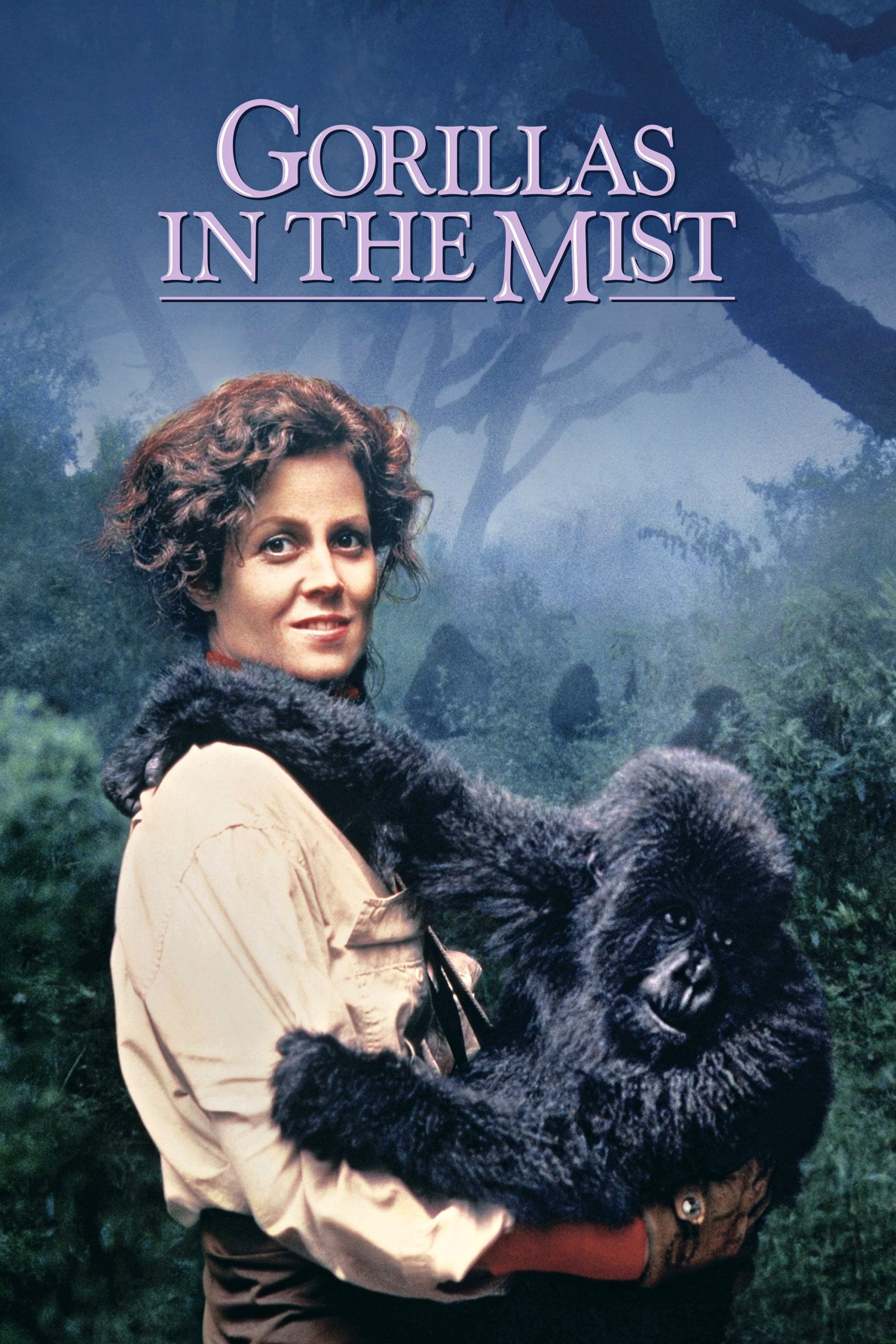
The First-Time Viewing Experience
Nothing in my lifetime of watching classic films prepared me for what it felt like the first time I sat down with Gorillas in the Mist. I remember curling up in my armchair, expecting a nature story or maybe even a dry docudrama, but what greeted me was something unexpectedly stirring—a film that softly reaches out, takes your hand, and gently pulls you into the heart of both vulnerability and conviction. I wasn’t just witnessing a biopic; I was stepping inside a raw, tactile world that pulses with rain, mud, and the quiet, fierce love between a woman and her beloved animals.
What struck me immediately was how the film’s pace reflects the slow-building awe that one feels when encountering something truly wild for the first time. The opening scenes seemed to hesitate, giving my uninitiated mind space to adjust—to feel the shock of isolation, the tingling anticipation of unknown jungle sounds, the enormity of a landscape both threatening and dangerously beautiful. Within the first fifteen minutes, I felt a mixture of humility and curiosity. I wasn’t sure I belonged in this lush, dripping ecosystem, and yet the film didn’t leave me behind. Even in its quietest moments, it draws first-time viewers like me into a space of quiet reverence.
I remember feeling an unexpected intimacy being cultivated before my eyes—not simply between Dian Fossey and the gorillas, but between myself and the very idea of wildness, of purpose, of devoting one’s life to something bigger than oneself. There’s a solemnity to the experience; the mist isn’t just cinematic weather, but a curtain being pulled back on something sacred. Every sound—the crunch of foliage, the distant call of an animal, rainfall pattering on massive leaves—felt rarefied. More than once, I had to pause, take a breath, and remind myself: I am only watching a film, and yet it feels as though I am being lovingly invited into an earthly monastery where silence and devotion speak louder than dialogue.
As a first-time viewer, I also felt an odd sense of tension mounting—not in the typical suspenseful sense, but in the emotional stakes slowly emerging from the fog. The story lingers on trust, on the arduous journey toward interspecies understanding, and even though I knew going in what the fate of Dian Fossey would be, the film manages to make each new encounter feel unpredictable. There’s a lived-in immediacy to the way the camera lingers on faces (both human and gorilla), and I found myself scanning for that recognizable glimmer of empathy and recognition in every close-up. I didn’t need a prior relationship with Fossey’s story to care; the film kindly welcomes newcomers and allows them to stumble alongside her, full of wonder and trepidation.
That first viewing left me quietly shaken. I had expected to learn about apes, but what I learned was how it feels to care, to risk heartbreak for the sake of protecting what might be lost forever. Gorillas in the Mist gave me a kind of emotional permission to be moved, to sit in awe, and to let the natural world—and Dian’s journey through it—feel both immense and intimately personal.
Emotional Moments That Resonate
Even after all this time, it’s the moments of silent communion in Gorillas in the Mist that lodge themselves deep within me. There’s a particular scene—etched permanently in my mind—where Fossey, played with aching precision by Sigourney Weaver, finally earns the tentative trust of the silverback gorilla named Digit. The very first time I watched their fingers nearly touch, separated by an invisible line of mutual fear and hope, I felt my own heart still. It’s not just an encounter between woman and animal: it’s a brief, tangible glimpse of connection, as though the world’s noise has ceased for a precious second and all that’s left is the possibility of understanding. Even on repeat viewings, this moment never loses its emotional shockwave.
But the resonance extends further than wonder. I found myself deeply shaken by the inevitable moments of loss—scenes where the vulnerability of the gorillas is laid bare before unsparing human cruelty. There’s a sequence in which Dian discovers the body of a beloved animal, mutilated by poachers, and her visceral grief became my own in that moment. I remember the ache—physical and real—as she gathered the animal’s remains, her hands trembling with rage and heartbreak, her scream reverberating through the mist. Very few films have ever made me feel a cause’s urgency quite like this one did, and I was stunned by how powerfully and simply it paints the cost of indifference. Even if I approached the film for its natural beauty, I was compelled—almost against my will—to reflect on my own responsibility for the world’s more fragile lives.
The emotional pull isn’t limited to the animals. I was also taken aback by the way the film handles Dian’s isolation. There’s an excruciating beauty in the shot of her sitting alone, silhouette outlined by the soft, ghostly light of the tent’s lantern—her only companions the sounds of the jungle enveloping her like a second skin. It made me think about how devotion, as thrilling as it can be, is also unspeakably lonely sometimes. I felt a prickle of recognition; who among us hasn’t, at least once, risked our comfort or relationships in pursuit of something we believed mattered? The film never flinches from this paradox.
And then there’s the transformation—watching Fossey shift from observer to protector, from outsider to guardian. It’s a gradual, sometimes painful evolution, and I identified with her longing to prove herself, to matter to something greater. Every setback wounds, every triumph feels stolen from the jaws of despair. By the film’s final embrace of hope, I realized I had undergone a transformation, too: from spectator to participant, from someone passively witnessing these lives to someone aching with the need to preserve them. It’s that deeply-felt journey—from hesitation to belonging, from learning to loving—that I believe continues to resonate with audiences who find themselves swept up in the story for the first time.
How to Appreciate This Film Without Prior Knowledge
Before watching Gorillas in the Mist, I worried that my lack of background knowledge about Dian Fossey, primate research, or even the basics of Rwandan geography might leave me feeling lost. What I discovered—much to my relief—is that this film doesn’t demand expertise. I never felt that the narrative was speaking over me or withholding understanding behind a veil of insider terminology. Instead, the filmmakers’ choices invite first-timers like me to discover and react organically, without pressure or pretense.
I approached the film, initially, as someone who knows little about the specifics of gorilla behavior or conservation history. What surprised me was how quickly I found myself invested, not because the film hand-holds or over-explains, but because it relies on universal feelings—curiosity, awe, loss, defiance. Through Weaver’s portrayal, I saw flashes of my own inexperience in her first clumsy, unguarded attempts to interact with the wild. The gradual pace, the repetition of small daily rituals, the focus on subtle gestures between Dian and the gorillas—all served to make the journey as approachable for a layperson like me as it might be for someone who entered with encyclopedic knowledge.
What mattered wasn’t the details of Fossey’s scientific breakthrough, but rather the empathy she felt toward the animals and the stubbornness with which she refused to turn away. I soon realized that to appreciate Gorillas in the Mist, I didn’t need to prepare myself with research or historical context—I just needed to open myself up to a willingness to see, to witness, to let the film’s emotional undercurrents carry me where they would. Even those moments where I felt uncertain or out of my depth (Should I understand this custom? Why is Fossey so reckless here?) became opportunities for connection rather than alienation.
I also noted how the film visually invites viewers to learn alongside Fossey, piecing together meaning from body language, tone, and the rhythms of the jungle rather than dialogue heavy with exposition. The faces—especially the eyes—do the teaching, and in many ways, I felt comforted, knowing that every important truth in the film would reveal itself through feeling, not through rote information. In fact, the less I knew going in, the more room I gave myself to be surprised, to be moved, to let the story rearrange my perceptions in real time. That, I believe, is where the magic lies for those stepping into the mist for the very first time.
Who This Film Is Best Suited For
- Lovers of character-driven stories who appreciate films that allow relationships—whether human or animal—to unfold at a natural, unhurried pace.
- Viewers seeking meaningful, emotionally immersive experiences, especially those drawn to true stories of transformation and the intersections between humanity and nature.
- Curious souls with little or no background in conservation, animal studies, or African settings, but who are open to being swept up by themes of vulnerability, activism, and personal sacrifice.
A Beginner’s Final Recommendation
Looking back on my first encounter with Gorillas in the Mist, what stays with me is not the trivia or even the historical accuracy, but the unmistakable feeling of being changed—however gently—by the experience. I urge anyone hesitating, perhaps worried that the film will be too heavy or bewilderingly specific, to trust that the story will meet them wherever they are. Allow yourself to be quietly transported; let the mist settle around your imagination and give yourself room to wonder, to grieve, to rejoice in the small, hard-won connections that give life its meaning.
It’s rare to find a film that opens up a landscape both literal and emotional with such patience and empathy. You’ll find yourself drawn in by the tactile beauty of rain-soaked forests, the sincerity shining through Sigourney Weaver’s eyes, the gentle choreography between two species weighed equally by fear and love. Even if, like me, you arrive without credential or context, you’ll leave with something much deeper—a small, seedling understanding of what it means to protect, to resist despair, and to find courage in caring when it would be easier not to.
Watching Gorillas in the Mist for the first time is an act of quiet courage. Let yourself begin, without burden or expectation. Trust that the film’s legacy is its invitation: to watch, to feel, and maybe, if you’re lucky, to find a touch of the wild lingering inside your own heart by the time the credits roll.
To understand whether timeless appeal still resonates today, modern reassessments are worth exploring.
🎬 Check out today's best-selling movies on Amazon!
View Deals on Amazon