
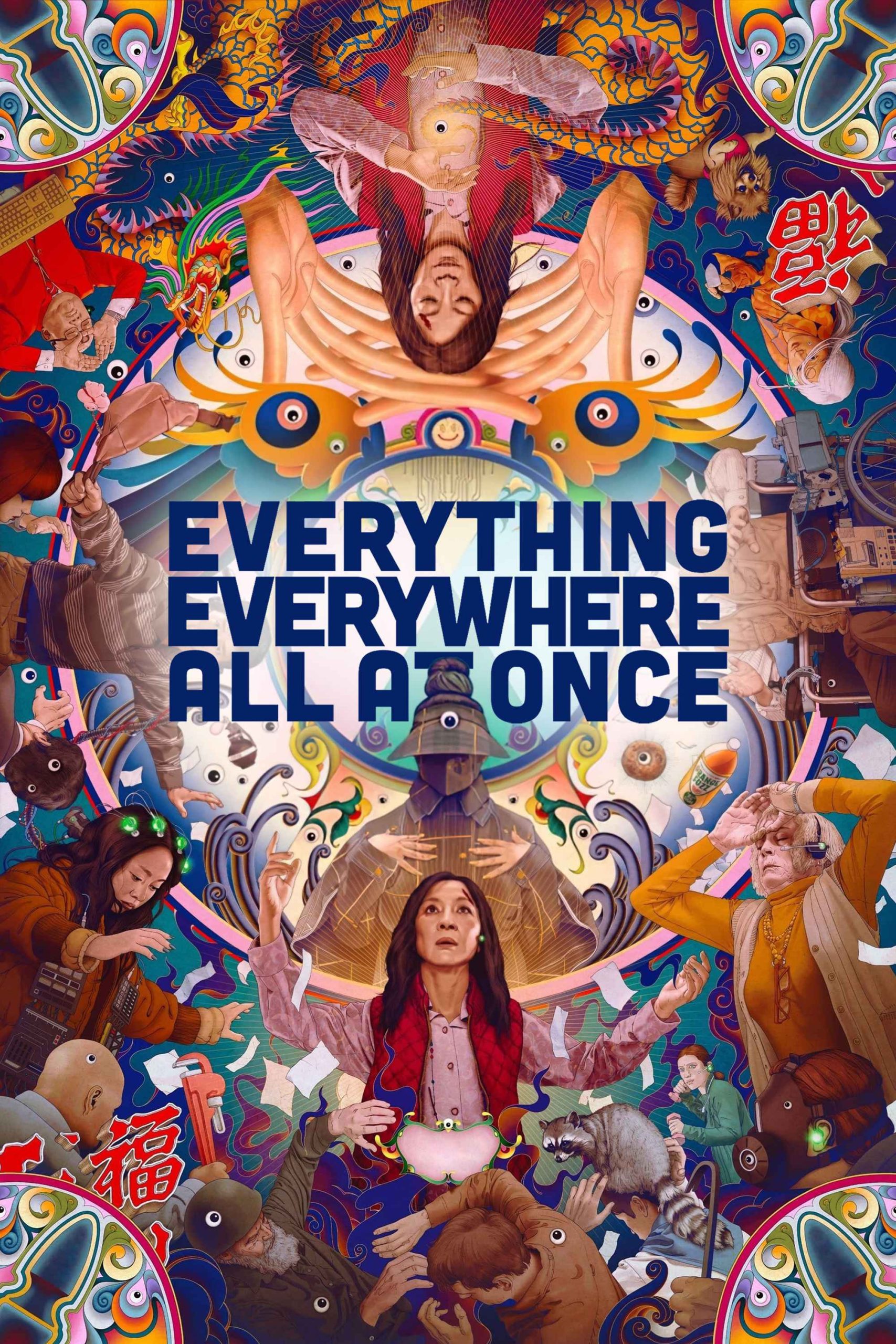
The First-Time Viewing Experience
When I sat down for my inaugural viewing of “Everything Everywhere All At Once,” I sensed immediately that I was embarking on something deeply unpredictable—an odyssey, rather than a straightforward cinematic journey. I remember my anticipation swirling into nerves, because this film came with a reputation for kinetic storytelling and audacious, genre-bending visuals, and I wondered whether I’d be able to keep up. Yet, as the opening moments unfolded, I quickly abandoned any expectation of passively watching. I found myself caught between laughter and awe, sometimes even confusion, as the film careened through timelines and realities with manic energy. There’s a disorienting thrill to this first encounter, but it’s the kind of bewilderment that feels intentional, almost like the directors were urging me to trust them and let go.
What struck me most was the way the film’s universe seemed both vast and intimate at once. For starters, the rules felt elastic—gravity, logic, even time itself seemed to yield to a raw emotional undercurrent. My mind raced to process the sheer volume of ideas and images flung onto the screen, yet beneath the technicolor chaos, I discerned a tender heartbeat. I recall moments of simultaneous hyperstimulation and stillness, where sound and color converged on big questions about identity, regret, and the multitudes within us all. Watching this movie for the first time, I was both overwhelmed and exhilarated, as if being pulled by a current I couldn’t see. I surrendered to the flow, and with each minute, I sensed the film was less about understanding than about feeling, less about answers than about permission to be swept away.
Thinking back to the first viewing experience, I also remember noticing how the movie’s bold style seemed to ask me: “Are you ready to let go of what you think a movie is supposed to be?” There’s a playful irreverence; one moment I was gasping at a martial arts sequence that collided absurdity with grace, and the next I was staring at a google-eyed rock in a silent desert. I could almost hear the filmmakers laughing gently with me, not at me. Few films have ever invited me to both participate and spectate so intensely. It felt communal, even though I watched by myself; I could sense the echoes of the thousands who sat, startled and delighted, before me. The movie dares first-time viewers to open up not just to its story, but to the uncertainty and wonder that define every human life.
Above all, my first encounter left me with the gift of surprise. At no point did I feel like I knew what was coming, and yet, by the end, I understood that was exactly the point. The ride might be wild, but the emotions—messy, uplifting, and raw—make it all feel achingly real. Walking away, I felt both transformed and comforted, inspired to see my own daily dramas in a new, more forgiving light. For anyone curious about how modern classics reveal themselves, let me just say, my first time was electrifying—this film doesn’t just entertain, it upends what I thought the medium could achieve.
Emotional Moments That Resonate
Every time I revisit my first journey with “Everything Everywhere All At Once,” a cascade of emotional images rushes back. There are scenes so layered with meaning, so dense with feeling, that even now just recalling them can draw an involuntary lump to my throat. I think of a quiet, almost unremarkable conversation where mother and daughter stand awkwardly in a parking lot. Their words fumble, their glances dart away, their gestures say everything. For me, that raw vulnerability—so far removed from the dazzling spectacle that dominates much of the film—is what lingers. I felt seen in their halting attempts to communicate, their longing to be understood despite the messiness of disappointment and love. It reminded me of my own moments, standing under dim streetlights or beside kitchen counters, searching for words with someone I love.
Another emotional high-water mark, strangely enough, does not involve words at all. There’s a point in the film where two sentient rocks—silent, still, nearly featureless—share a scene overlooking a barren vista. As I watched, I was amazed at how something so absurd became so touching. The subtitles stand in for dialogue, yet the scene’s emotional register is powerfully universal. I realized that even in silence, connection is possible, and in the strange logic of the multiverse, even the simplest elements become deeply resonant metaphors for loneliness, hope, and possibility. That moment underscored for me how the movie’s wild inventiveness is always rooted in something fundamentally human.
It’s impossible for me not to mention the sublime transformation of the film’s central character, Evelyn. There is a moment late in the film when the character, after an exhausting journey through infinite versions of herself, almost gives up. I remember a warm rush of empathy as I watched her teeter on the precipice of resignation, the accumulation of grief, frustration, and failure palpable in every slowed movement. But then something shifts—Evelyn makes a choice, not to battle but to embrace compassion. When she defies the tide of cynicism, forgiveness becomes a kind of superpower. I could feel my own heart swelling, reminded urgently that personal reckonings are not so different from epic battles; sometimes, loving well in small moments is the boldest act of resistance.
Modern viewers, myself included, can’t help but respond to these moments. We live in a fragmented world full of distraction, and the film’s emotional clarity is both challenging and restorative. I felt, for the span of its runtime, permitted to sit with contradiction and to savor complexity. Whether the emotion is delivered via fantastical cosmic set-pieces or trembling human faces, the feelings land, unexpected and profound. In those moments, this movie touches something shared, encouraging anyone who’s ever longed to be understood to keep trying, regardless of how many universes they have to traverse to get there.
How to Appreciate This Film Without Prior Knowledge
When I first hit play on “Everything Everywhere All At Once,” I was surprised by how little my encyclopedic knowledge of film—or lack thereof—mattered. I didn’t need to be versed in science fiction tropes or to hold a manual on interdimensional storytelling. I realized quickly that the film’s barrage of genres and references, from classic kung fu sequences to absurdist comedy skits, were less obstacles to understanding than invitations to accept bewilderment. In my experience, the movie almost begs viewers to come unprepared, to let it teach them its rhythm, and to coax them into laughter, bewilderment, and catharsis all the same.
For me, the best way to appreciate the film as a newcomer was to focus not on following every plot shift but on noticing what made me feel—where my heart sped up, where I giggled, where I teared up. The story moves at an almost feverish pace, but at its core is a constancy of universal emotion: fear of failure, love for family, regret, and hope. Whether I understood every multiversal rule or reference felt almost beside the point. What lingered were the film’s questions, not its answers. Was Evelyn the person she hoped to become? Could she mend what was broken? I learned, as I watched, that not only was confusion okay—it was part of the message. The film reassures me that bewilderment is a feature, not a bug.
I would urge any new viewer, as I urged myself, to relinquish the desire to “solve” the film on a first viewing. Instead, I let myself be moved, to find humor in absurdity and beauty in chaos. The less I forced myself to fit every piece together, the more I relished the dazzling fragments. Even without context, the characters’ struggles felt immediate and genuine. That, to my mind, is the secret to approaching this modern classic: expertise isn’t required, only curiosity and a willingness to feel. If you can bring that, the movie meets you more than halfway.
Who This Film Is Best Suited For
- Anyone who’s ever wished their life had gone differently and wondered “what if”
- Those looking for a film that blends comedy, action, and emotion in a wholly unexpected way
- Viewers hoping for a cinematic experience that surprises, challenges, and ultimately uplifts them
A Beginner’s Final Recommendation
Let me be utterly honest: “Everything Everywhere All At Once” is one of those rare, luminous movies that left me feeling more alive to possibility, to the poetry stitched within daily life. If you’re stepping in for the first time, give yourself over to the chaos—let the film’s wild barrage of ideas, sights, and emotions wash over you. Allow confusion; allow laughter; allow yourself to be moved in ways you can neither anticipate nor articulate. There’s no exam at the end, no secret to unravel. The beauty, as I see it, lies in the invitation to consider every version of yourself with compassion, to embrace contradiction, and to hold those you love closer, even in imperfection. I found that this film doesn’t just ask me to watch—it asks me to wonder, to forgive, and to hope.
If you’re nervous about whether you’ll “get” it, know that the only thing required is your presence and your heart. You might walk away feeling a bit dazed, or maybe you’ll feel energized and seen. Either way, you’ll have taken part in something astonishingly alive. In my experience, no matter your background or familiarity with modern cinema, “Everything Everywhere All At Once” makes for a revelatory first viewing. Every person is invited—no password, no prerequisite knowledge, just a willingness to feel and be surprised. As a beginner, you’re perfectly suited for the adventure this film provides. Don’t hesitate. Let the first viewing be messy, bold, and utterly yours, because that’s exactly how the film wants you to meet it: wide-eyed and open, with everything at stake.
To understand whether timeless appeal still resonates today, modern reassessments are worth exploring.
🎬 Check out today's best-selling movies on Amazon!
View Deals on Amazon