
The First-Time Viewing Experience
When I think back to my own first encounter with “E.T. the Extra-Terrestrial,” I vividly recall an immediate sense of wonder—a return to a time when the world felt immense and full of possibility. Watching it today, I’m struck anew by how the film seems to invite me, and any new viewer, into the wide-eyed perspective of childhood. There’s a tremulous anticipation in that first act, where suburban streets flicker with autumn leaves and shadows, where even the ordinary homework table or backyard shed seem electrified—with promise, with potential, with something about to change. What always surprises me (and what I believe many first-time viewers notice) is how genuinely the movie restores that forgotten feeling: the magic in the everyday, the unspoken hope that something extraordinary might happen in our own unassuming corner of the world.
I notice that, when watched for the first time today, “E.T.” has an ability to bypass cynicism almost immediately. Here is a film that doesn’t play its nostalgia for cheap sentimentality, but rather for immersion. It welcomes you with the language of small, lived-in childhood rituals—the moonlit bike rides, the hushed giggles, the earnestness of earnest children. Even though its images and story beats have been echoed in countless other films since 1982, seeing it with fresh eyes (or through the eyes of someone who has never before visited its magical world) is like discovering a hidden page in the storybook of your own youth. I feel a rising sense of connection to those onscreen: their trembling excitement, their anxieties, their unguarded hope. Watching for the first time, I find not just the anticipation of discovery, but a growing emotional investment—rooted in sheer empathy with these characters—by virtue of the film’s honesty.
What’s most striking to me, though, is how the film’s aura of friendliness seeps into the room. I watch the opening scenes and remember feeling that these characters—Elliott, his siblings, his overwhelmed but hardworking mother—could so easily be my own neighbors. The story doesn’t rush. Instead, it lingers, coaxing out the smallness and vastness of its world, letting awe root itself before the adventure takes flight. With each new reveal, I sense viewers—myself included—leaning forward, not only to see, but to believe. My heart races when Elliott first tiptoes into the shed; my curiosity ignites at the sight of E.T.’s luminous fingertip. Each moment feels accessible, almost like brushing against the possibility of the extraordinary in my ordinary life.
So, if you are sitting down for your maiden voyage with “E.T.,” my experience tells me you’ll ride a gentle wave of nostalgia even if you never knew the eighties firsthand. There’s something elemental about the tension and excitement: that yearning to belong, that desperate hope for connection, that aching fear of loss. I remember noticing that, even as an adult, all those emotions bubbled up anew—unexpected, luminous, and true. The film grants permission to feel as fully as a child might, and that’s a rare, precious alchemy for a first-time viewing, no matter the decade.
Emotional Moments That Resonate
When I let myself get swept into the emotional current of “E.T.,” it’s clear to me why so many viewers today still find themselves unexpectedly moved. The first moment that truly lands, at least in my own chest, is that tentative first meeting between Elliott and E.T. There’s a fragile hush as Elliott gently lays out Reese’s Pieces—an olive branch in candy form. It’s an act so simple and yet, in that scene’s soft lighting, it speaks of pure longing: to be understood, to make contact, to reach across the gulf of loneliness. I always feel, watching this, that I’m reliving my own first, nervous attempts at forming connection.
The film’s emotional richness isn’t confined to moments of innocence, either. My eyes sting each and every time I watch Elliott and E.T. form their unspoken bond—one so powerful that Elliott literally feels E.T.’s pain and joy. There’s no artifice to it. It reminds me of the invisible threads that tie us, whether we recognize them or not. I notice how modern audiences respond just as strongly, perhaps because the film so patiently earns that trust before asking us to care. The scenes in which E.T. is studied, isolated, and ultimately endangered hit with a sudden, desperate sadness. I sometimes detect a communal hush when I watch this with groups who’ve never seen it before—a shared ache that runs deeper than any surface-level peril. This is sorrow filtered through the lens of a child—raw, confused, and deeply affecting.
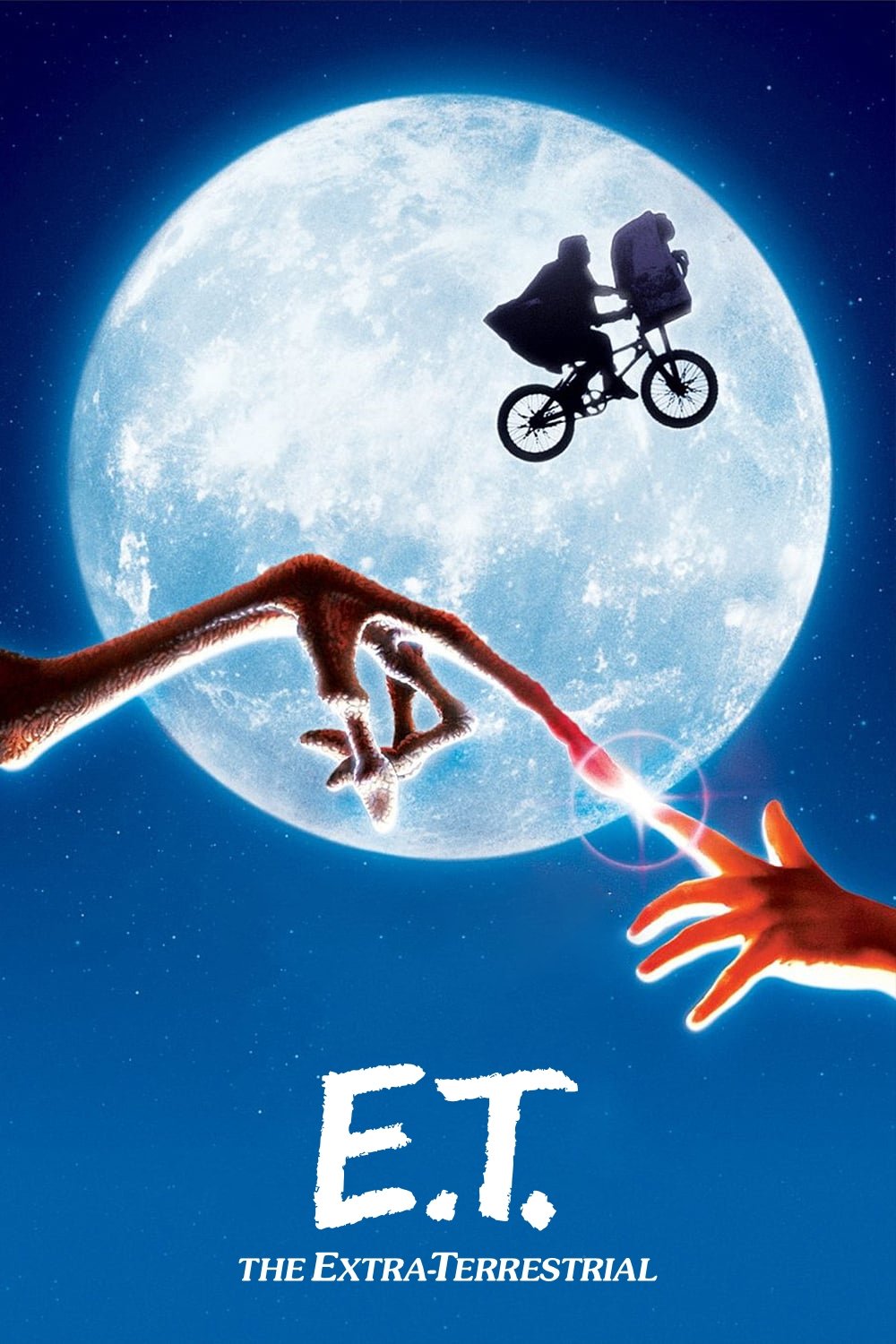
But there’s so much catharsis, too. For me, the most enduringly affecting moment is always the flight—Elliott and E.T. against that swollen full moon, the bicycle ascending as if buoyed by hope itself. It’s wordless, but layered: liberation from the rules of gravity and adulthood, a suspension of disbelief that feels like sheer grace. I’ve seen even the most jaded viewers smile here, wonder breaking across their faces despite themselves. That moment is a gift, a reminder that, sometimes, faith in miracles isn’t naïve; it’s what carries us beyond the doldrums of the ordinary.
Perhaps what still stirs me most, on every view, is the final farewell. Nothing can quite prepare me—or first-time viewers—for the honesty of that goodbye. I find my throat tightening each time at Elliott’s choked-back sobs, E.T.’s trembling gesture toward Elliott’s heart. “I’ll be right here.” It’s more than a line; it’s a benediction for every friendship forged and lost and hoped for. The scene isn’t afraid of grief, or longing, or the truth that love requires letting go. Every time, I’m reminded of what it means to love bravely, to say farewell while trusting that what matters never disappears. In that sense, I believe “E.T.” continues to offer a wellspring of emotional truth—a language of feeling in which modern viewers can find themselves reflected, affirmed, and seen.
How to Appreciate This Film Without Prior Knowledge
Sometimes I’m asked whether “E.T.” requires any familiarity with science fiction, Spielberg’s earlier work, or even eighties pop culture, and I can honestly say it doesn’t. What’s remarkable to me is that you can walk into this film knowing nothing beyond what the poster promises—a boy, a bike, a stranger from the stars—and you will not be left out in the cold. The movie introduces its characters and their world one gentle step at a time. Its special effects and design, while historically influential, don’t serve as in-jokes or Easter eggs for cinephiles; instead, they exist in service of a universal, deeply human story.
As I reflect, I find the greatest pleasure comes from approaching “E.T.” with fresh eyes and an open heart. The film goes out of its way to ensure that even its most fantastic developments feel rooted in emotional reality. Nuance and subtext bloom organically, and for me, nothing about the experience hinges on expertise or pop culture fluency. The dialogue is straightforward; the story is uncluttered; the motivations—loneliness, friendship, family, empathy—are easy to grasp, even if you aren’t well-versed in film history. I notice, too, that newcomers often feel surprised at how little background knowledge is needed to feel fully at home within the film’s world. There are no riddles to puzzle out, just feelings to experience.
If I could give any advice, it’s that you should allow yourself to be taken in, without holding the film at arm’s length. I tried, on my first viewing, to simply let the film do the work. It’s patient with you. It doesn’t demand that you guess what’s coming next or that you spot references. Instead, it rewards honest engagement, as if Spielberg is whispering, “Trust me, walk alongside these kids, and remember what it’s like to see something new.” That’s the marvel—“E.T.” loves first-timers. It’s a great equalizer. All you need is a willingness to remember what it’s like to hope, to fear, and to dream with open eyes. For me, that’s all it takes to fall under the film’s spell, and I suspect you’ll find the same.
Who This Film Is Best Suited For
- Anyone searching for a deeply emotional experience rooted in empathy and connection
- Viewers who love stories of childhood, family, and the aching magic of first friendships
- Those drawn to gentle, uplifting adventure rather than frenetic action or spectacle
A Beginner’s Final Recommendation
For anyone considering their first journey into “E.T. the Extra-Terrestrial,” I think of the bravery it takes to return to wonder, to risk encountering something new, even if that “something” is a beloved classic from before you were born. I remember my own skepticism—how could a movie with such a simple premise and such iconic status move me as deeply as it seems to move millions? But I let myself watch; I let myself feel. What I discovered was nothing short of astonishing: a story that did not lecture or manipulate, but invited me to feel young again. There’s tenderness here, and honesty, and the kind of quiet bravery that whispers encouragement to everyone who’s ever felt alone or longed for connection.
If you’re a first-time viewer, I want to reassure you: you don’t need a reason beyond curiosity. Come as you are. The film won’t judge your experience or measure your reference points. Instead, it asks only that you watch with an open heart, setting aside irony for sincerity. Let the film’s warmth carry you past skepticism; let yourself smile at silly moments, tear up at tenderness, and believe—even for just a little while—in the power of connection to bridge any distance. “E.T.” is a comforting lantern in the night, lighting the way back to feelings you might have thought were outgrown, but which live quietly inside us all.
I hope you find the courage to close your laptop, silence your notifications, and simply watch. You might discover new things about yourself in the glow of that moonlit bicycle ride or in the honest tears of a child who must say goodbye. Just know you are not alone in your experience. I see you—as an explorer, as a dreamer, as someone courageous enough to wonder. “E.T. the Extra-Terrestrial” will meet you right where you are, and I believe you’ll emerge from its gentle spell a little more open to the marvels tucked gently in your own world.
To understand whether timeless appeal still resonates today, modern reassessments are worth exploring.
🎬 Check out today's best-selling movies on Amazon!
View Deals on Amazon