
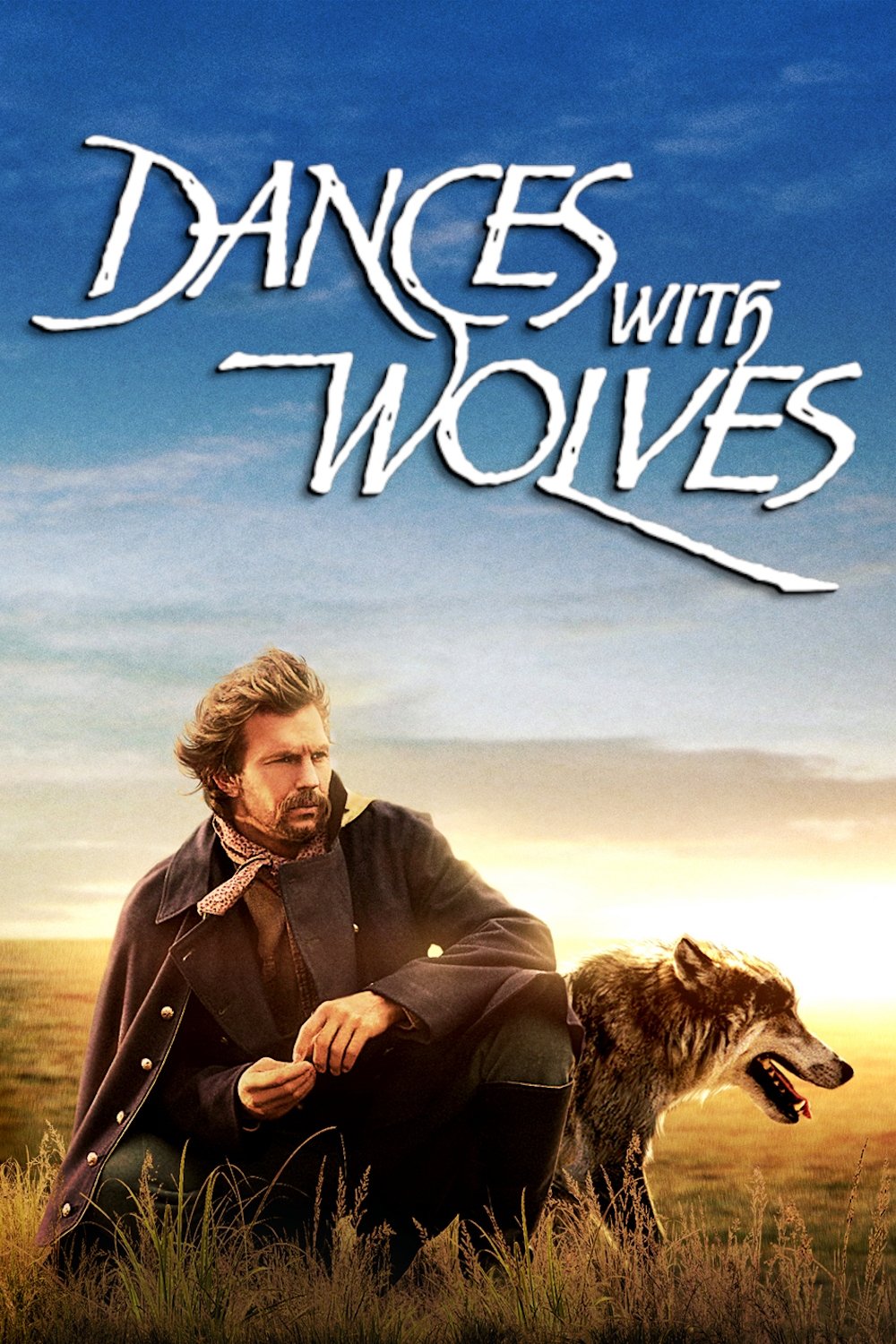
The First-Time Viewing Experience
When I sat down to watch “Dances with Wolves” for the very first time, I wasn’t prepared for the transformative journey the film would take me on. I remember expecting a Western in the most traditional sense: gunfights, rigid boundaries between “good” and “bad,” and a sweeping American landscape populated by classic tropes. Instead, what I encountered was an unexpectedly gentle unraveling of identity, connection, and the ache of understanding worlds outside my own. The opening scenes pulled me quietly into the loneliness of John Dunbar (Kevin Costner), a soldier on the raw edge of a country being reshaped. I found myself almost tangibly immersed in the vast prairie, feeling its openness—the wind, the sunlight, and the quiet—as if I’d wandered into another era.
My first viewing felt like drifting down a wide, unhurried river. I wasn’t swept away by instant action or drama, but by the slow gathering of emotion. There was awe in witnessing the landscape unfold, a world where silence means more than words and where every sound—the call of distant wolves, the rhythmic hooves, the gentle speech of the Lakota Sioux—felt carefully placed. I noticed my own initial tension, a modern impatience wanting answers and momentum, give way to something softer. Each time I saw Dunbar tentatively step further from his own culture, I felt myself stepping further into the film, questioning what it means to truly see and be seen by “the other.”
The most surprising sensation I experienced was vulnerability—a readiness to feel heartbreak and hope with the characters. There was very little familiar footing, no wink to the audience reassuring me that I was “in on” the film’s world. Instead, I was asked to listen. The patience of the camera, the willingness to let moments breathe, made me realize how rare this approach is even now. Looking back, I understand why so many people still recommend this movie to first-time viewers: it’s not trying to impress with spectacles or cleverness. It’s inviting you to witness, and in that witnessing, to feel the full complexity of discovery, loss, and fragile human connection.
I remember distinctly the way time seemed to slow in those first hours. My attention shifted from the usual cues—plot points, loud drama—to the subtle grace of a story unhurried by modern conventions. I didn’t need a roadmap. I was just there, walking into the wind, alert to every sound, every uncertain step, every flicker of understanding that crossed Dunbar’s face. Now, looking back, I realize this is exactly how the film wants to be seen for the first time: without armor, awake to awe, and softly unsettled by what is possible when walls begin to crumble.
Emotional Moments That Resonate
As much as the pacing and lyricism initially took me by surprise, it was the emotional core of “Dances with Wolves” that reached deepest. I still remember the first time I watched Dunbar tentatively reach out to the wolf he names “Two Socks.” Beneath the surface simplicity of a man and an animal, I found something universally poignant: the longing to connect, the risk of extending trust, and the almost childlike wonder of being noticed by a wild and wary creature. Every gesture in those interactions—a hesitant hand, a sidelong glance—felt like an echo of my own moments of uncertainty in new situations.
There is a quiet scene that lingers with me: Dunbar sharing his first tentative meal with the Lakota. Language is a chasm; misunderstanding hovers in every awkward silence. Yet despite the strangeness, the simple act of sitting together at a fire, of eating and listening, feels monumental. I was reminded that so much human history is built not by grand gestures, but by the courage to sit beside someone you are supposed to fear and to see them, and yourself, anew. In these hushed exchanges, I saw how the film honors patience as a radical act of empathy.
For me, the moments of sorrow struck just as hard as the crescendos of joy. I find it nearly impossible to forget the growing sense of foreboding as Dunbar’s relationships deepen—a bittersweet knowledge that, even in moments of genuine togetherness, forces beyond his and the tribe’s control are looming. There is a particular scene, late in the film, where the possibility of understanding shatters under violence and mistrust. Every time I watch it, I’m shaken by the heartbreak of realizing that history’s crushing weight will not pause for love or kinship. The tears I shed felt less like responses to one character’s suffering and more like a mourning for the missed connections of an entire world.
Equally powerful is the film’s recurring motif of transformation—from enemy to friend, from stranger to beloved, from soldier to seeker. The emotional arc isn’t tidy or neatly resolved. What moved me most was how “Dances with Wolves” acknowledges the pain of growth: the trust that must be repeatedly earned, the sacrifices that cannot be undone, and the tentative hope for reconciliation despite overwhelming odds. It reminded me that empathy is always, in part, an act of grief. Each time connection is forged across cultures, another old certainty quietly slips away.
That, to me, is the secret heart of the film’s emotional resonance. It doesn’t romanticize the journey, nor does it shy away from sorrow. Watching it today, I sense the echoes of my own efforts to understand and be understood in an often divided world. In this way, “Dances with Wolves” hasn’t lost its ability to comfort, unsettle, and inspire. Its greatest emotional moments ask me to confront both the cost and the necessity of opening myself to difference—something I find as urgent and moving now as it must have felt in 1990.
How to Appreciate This Film Without Prior Knowledge
When I first watched “Dances with Wolves,” I had almost no expertise in classic Westerns, nor did I know much about American frontier history beyond the barest outlines. I was a little nervous: would my lack of context leave me lost, unable to pick up on the film’s deeper intentions? What I quickly discovered, with a sense of immense relief, was that the film makes no such demands. The story welcomes newcomers with open arms, inviting us simply to observe, to feel, and to trust the slow unfolding of its world.
The artistry of “Dances with Wolves” lies in its accessibility. You don’t need to carry a background in Native American studies, military history, or Western cinema to be moved by its images or touched by its characters. I was immediately caught up in the stunning imagery—golden sunsets, unending plains, the living presence of the bison and horses. Even if I didn’t initially recognize the historical nuances, the sense of place alone was absorbing. The director’s patient camera pans, the way quiet moments linger, and the universal language of gesture all made me feel welcome, included, and attentive.
I noticed that the film rarely lectures or tries to “teach” in a didactic way; instead, it asks the viewer to experience. Scripts heavy with exposition are swapped for scenes of real, sometimes awkward, communication. I found meaning not in my intellectual understanding, but in the shared silences, the tentative laughter, the first time a character recognizes a word spoken in another’s tongue. These moments are all that’s necessary to follow the film’s journey; the emotional truth of the story, after all, transcends technical detail.
Perhaps most reassuring is how the film guides you patiently. Never did I feel shamed for not knowing who the Lakota were, or for not anticipating the historical tragedies that would shadow the film’s later acts. The story unfolds with humility, allowing you to simply be present in each exchange, each quiet transformation. I appreciated that my experience as a “beginner” was not only accommodated, but welcomed—that curiosity was more valuable than expertise. I felt, genuinely, that my lack of prior knowledge wasn’t a barrier but a kind of bonus, freeing my impressions to form naturally and unfiltered.
If you’re about to step into “Dances with Wolves” with little background—perhaps you’ve heard about its awards or legacy but never seen more than a still image—my own journey should reassure you. The film’s beauty and power do not hinge on historical fluency. They emerge in the slow-growing trust, both between the characters and between the story and its viewer. That’s what makes it such a rewarding experience for first-timers: the chance to be surprised and changed, just as Dunbar is, by what you find when you arrive in an unfamiliar place with an open heart.
Who This Film Is Best Suited For
- Those who are drawn to character-driven stories of transformation and empathy
- Viewers who appreciate cinematic landscapes and meditative pacing over rapid action
- Audiences interested in stories that challenge cultural boundaries and foster understanding
A Beginner’s Final Recommendation
I wish I could convey to every first-time viewer how much courage and kindness is waiting within “Dances with Wolves.” Walking into this film for the first time, I felt the weight of its length, the uncertainty of a setting I didn’t fully understand, and the hesitance that comes with tackling a “classic” often spoken of with reverence. But those worries melted away, replaced by a sense of belonging and discovery that only deepened as the film progressed. Watching Dunbar find not only a new home but new aspects of his own humanity, I recognized a quietly profound invitation: to step beyond what I already know, to see the world with new, humble eyes.
This is not a film that races to its revelations. It rewards stillness—the willingness to listen as much as to watch. If you allow yourself to enter its rhythms without expectation, you’ll be surprised at how deeply it resonates. I came away with more questions than answers—a sense of awe at what connection can mean, a quiet sadness for what is lost when we fail to bridge our differences, and a strengthened conviction in the transformative power of empathy. If you arrive with an open mind, the film will meet you generously at that threshold.
Looking back, I can say with certainty that I didn’t need anything more than patience and a willingness to feel deeply. “Dances with Wolves” isn’t just a love letter to the American plains or to a vanished way of life; it’s a testament to the bravery required to look beyond ourselves. For new viewers, unsure of their footing, this is a film that will hold your hand, walk with you, and leave you forever changed. My own experience as a first-timer proved that the heart of this classic beats as strongly now as ever. Give it your full attention—and let yourself be transported by the quiet magic it so gracefully unfolds.
To understand whether timeless appeal still resonates today, modern reassessments are worth exploring.
🎬 Check out today's best-selling movies on Amazon!
View Deals on Amazon