
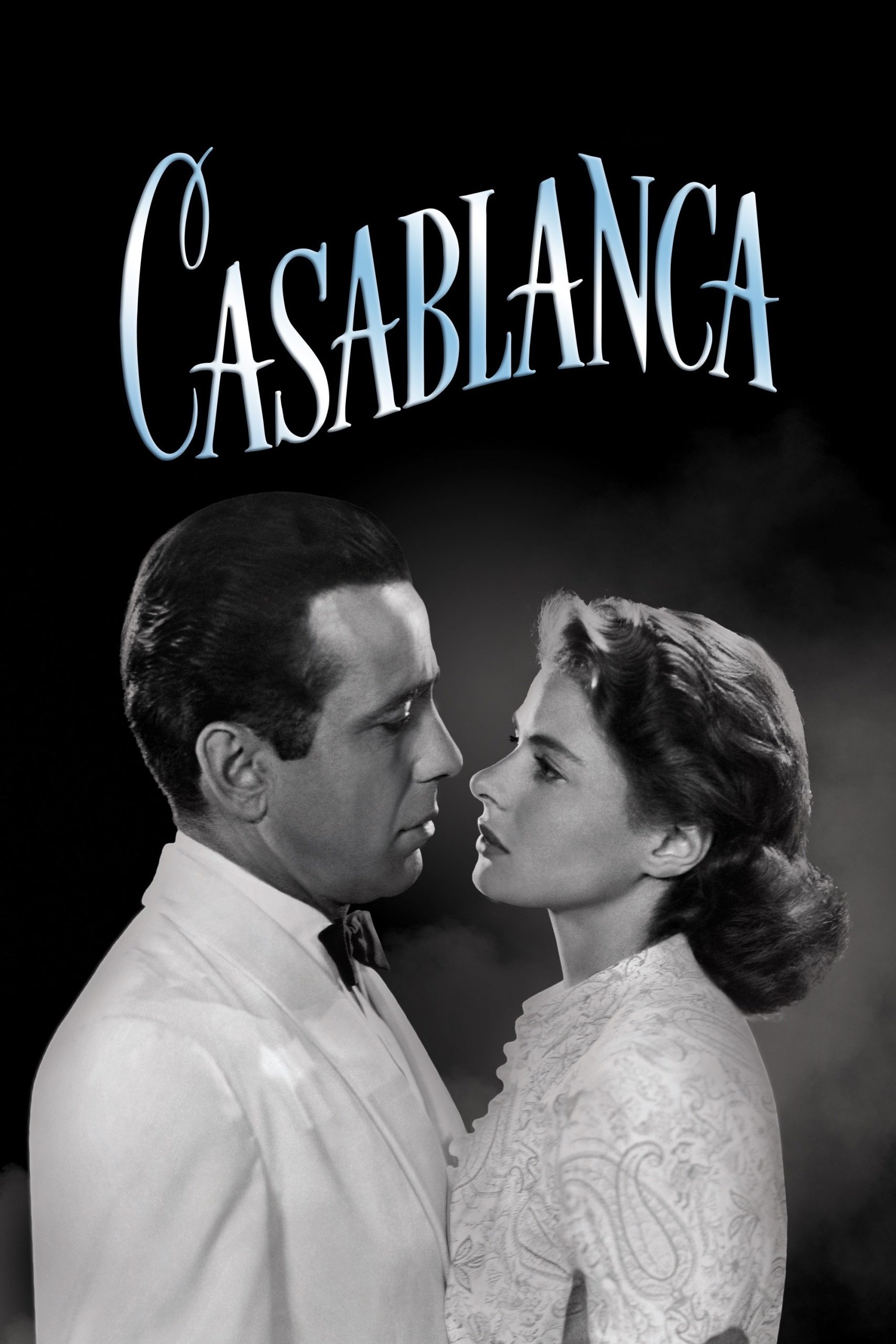
The First-Time Viewing Experience
Sitting down to watch Casablanca for the very first time was not just the act of pressing play on an old film; it felt almost like opening a faded letter sent from another world, one where hope and heartbreak sit side by side in a smoky night club. I remember how my anticipation grew as the opening notes played—there was a strange sense of reverence, mixed with nervous curiosity, that I rarely feel before a movie. What struck me almost immediately was not just the vintage atmosphere—the crisp black and white, the murmuring crowd, the swirl of well-cut coats—but how quickly I sensed the film’s gravity. Despite having absorbed so much of its reputation through cultural osmosis (“Here’s looking at you, kid”; “of all the gin joints…”), there was a palpable freshness as I watched the narrative open up, intricate yet instantly inviting.
I realized, only a few scenes in, that I wasn’t watching a museum piece: I was, instead, being swept into a living, breathing tapestry of human longing, uncertainty, and resolve. Casablanca, with all its wartime intrigue and mythic romance, still speaks with remarkable directness. I found myself responding not to the artifact of “classic cinema” but to real characters who suffered, desired, and faltered in ways that resonated far beyond their period costumes. I didn’t expect the dialogue to sparkle, or the subtle undercurrents to feel so alive. As the film unfolded, I felt not just entertained but engrossed—as if I were quietly eavesdropping on the crossroads of history and the human heart, my own doubts and vulnerabilities reflected back at me through the haze of Rick’s Café Américain.
What really stood out to me as a new viewer was how Casablanca didn’t require me to “know everything” about 1940s politics, or even classic Hollywood. The sense of universality—what it means to love and lose, to make impossible decisions—was instantly relatable. I found my heart tightening with every whispered secret, every sidelong glance. I could feel the weight each character carried, their hopes for escape and their burdens of duty blending seamlessly into the elegant shadows and somber piano melodies. For me, that initial viewing was an immersion—an invitation to feel what it means to be caught in history’s tide and still try to reach for something utterly, achingly personal.
Emotional Moments That Resonate
If there is one thing I took away from my first encounter with Casablanca, it is the memory of the film’s emotional grace notes—the ones that linger long after the last line is spoken. I remember feeling unexpectedly swept up in a moment that many people mention but cannot adequately prepare you for: the swelling voice of “La Marseillaise” rising in defiance against the Nazi anthem. Even as someone watching decades removed from the war, I felt chills run along my arms. Watching the faces in the café—faces full of fear, pride, some with trembling lips—the scene startled me into understanding how real courage can be found in small communal acts. It was a reminder that the struggle for dignity and hope isn’t found just in grand gestures, but in the ways people come together when it matters most.
Another emotional high point for me was the sequence where Ilsa sits with Sam at the piano. Her request, “Play it, Sam,” felt so laden with longing and regret that I could almost taste the bittersweet air between them. As “As Time Goes By” rings through the night, I was struck by the sensation of time folding in on itself—how memories, both joyful and painful, can be rekindled fresh again, no matter how hard we try to bury them. For me, this song wasn’t just a piece of nostalgia, but a trigger for my own stored-away heartache, and a sign that the most personal pain is often invisible to everyone else.
Of course, I can’t forget the ending—the impossibly poignant choice that Rick makes. Watching him, I felt both broken-hearted and strangely uplifted. His sacrifice is carried out with an understated dignity that stayed with me long after the credits. I remember seeing Rick’s transformation, how cynicism gives way to something tender and brave, and I was moved by how quietly but decisively he acts for the sake of someone else’s happiness. That emotional ambiguity—the way my admiration mixed with a deep sense of sorrow—left me reflective and, ultimately, hopeful. What hit me most was the way Casablanca manages to honor the complexity of the heart: there are no easy answers, and sometimes, love’s greatest acts are the ones that ask us to let go.
Looking back, I see that my emotional response was not rooted in the spectacle or plot twists, but in the film’s persistent kindness to its characters—a kindness that, I believe, is as radical now as it was in 1942. It honors the courage to care, even when it means personal loss. My own view of heroism shifted as I watched: I understood, perhaps for the first time, that greatness so often looks like quiet resilience rather than a grand finale.
How to Appreciate This Film Without Prior Knowledge
When I first approached Casablanca, I worried that I might be too far outside its world to truly understand it—or that I’d be distracted by the weight of its “iconic status.” My fears, as it turns out, were unfounded. The film quickly disarmed me by speaking a universal language—one of longing, regret, and hope—that requires zero expertise, only an open mind and heart. There is an ease, a gentleness, to how Casablanca tells its story: it does not assume you know the stakes, nor does it expect you to recognize the actors, fashions, or historical references scattered throughout. I found myself learning through osmosis, guided not by exposition but by the rawness of the performances.
For someone concerned that not knowing the details of World War II would be a barrier, I can say with confidence that the politics are painted in broad, emotional strokes. What matters is not the specifics of occupation or resistance, but the feeling of being trapped by fate and yearning for escape. In a way, Rick’s ambiguous moral stance—someone who “sticks his neck out for nobody”—became a mirror for my own uncertainties. I didn’t need a primer on Vichy France or the Free French; instead, I latched onto the immediacy of desire and fear evoked by the characters’ faces and voices.
Even the dialogue, frequently quoted and often parodied, quickly lost any trace of preconception for me. I heard words spoken not as catchphrases but as genuine expressions of soul. The simplicity with which Ilsa and Rick reveal their wounds to each other made me realize that vulnerability is no less powerful when delivered in formal, old-fashioned tones. Instead of feeling distanced by the film’s age, I was reminded of the ways that longing and love remain effortlessly legible, no matter the decade.
I also discovered that appreciating Casablanca means giving oneself permission to simply feel: to let the music, lighting, and atmosphere wash over you, and to spend a little less time parsing out “meaning.” My first viewing felt less like a history lesson and more like a shared, intimate conversation. I realized I didn’t need to interpret every glance or fret about missing subtext—much of the film’s emotional resonance is immediate, and any “loss in translation” is quickly compensated by the sincerity of the film’s spirit. For those willing to meet it halfway, Casablanca rewards trust, not expertise.
Ultimately, I found there was something nourishing—even freeing—about this approach. The wisdom I gleaned from my viewing came not from analysis, but from allowing myself to be swept into the swirl of uncertainty and hope that these characters live with. Casablanca taught me that classic films can offer not just nostalgia, but a kind of emotional companionship—one that asks only that you bring your own heart to the screen.
Who This Film Is Best Suited For
- Anyone new to old Hollywood who wants to experience why these films still matter: I found Casablanca incredibly accessible, even as it gently introduced me to the pacing, aesthetics, and vocabulary of a different era. If you’re curious about what makes “the classics” endure, my experience is that this is a perfect entry point.
- Viewers who crave stories built around moral complexity and emotional ambiguity: What moved me most was how the film resists simple answers, preferring instead to linger in the twilight between duty and desire, self-interest and sacrifice. For me, this was deeply satisfying—not just as drama, but as a meditation on choice.
- Anyone searching for emotional connection, whether through grand romance or the quiet dignity of resilience: My own sense is that if you’re drawn to films that reward empathy and savor the subtler textures of feeling, Casablanca will speak to you directly, regardless of your experience with classic cinema.
A Beginner’s Final Recommendation
If I can offer anything to someone approaching Casablanca for the first time, it’s this: trust your instincts and let yourself be moved by whatever strikes you most. The beauty of the film, for me, lies in its gentle invitation to reflect—not just on the fate of Rick and Ilsa, but on the nature of love and courage in all our lives. I discovered that even though history, politics, and black-and-white style might seem like barriers from a distance, they quickly melt away in the warmth of the film’s humanity. Each time Rick or Ilsa quietly weighs the cost of their decisions, I found myself pondering my own crossroads—where have I been selfless? Where have I clung to heartbreak or let go for something greater?
One of the pleasant surprises of my journey was realizing that sentimentality doesn’t have to mean naivete; in fact, what Casablanca manages so masterfully is to blend nostalgia with genuine, lived-in heartbreak. If you worry about not “getting” everything, let that anxiety slip away—the film rewards attention, but never punishes innocence or inexperience. On the contrary, I found that my openness, my willingness to be surprised, made the whole experience richer.
Looking back, I see Casablanca as a companion for moments of uncertainty or change. It’s a film that offers consolation just as much as it offers drama. For me, it affirmed that the ache of letting someone go, or the struggle between what we want and what we must do, are woven into the fabric of being human. I would urge new viewers not to treat it as an “assignment,” but as a rare opportunity for emotional connection: sit quietly, let the shadows and music enfold you, and trust that the film’s magic will find its way in. Even on that first viewing, you are never alone—generations have been exactly where you are, hearts open and minds ready.
To understand whether timeless appeal still resonates today, modern reassessments are worth exploring.
🎬 Check out today's best-selling movies on Amazon!
View Deals on Amazon