
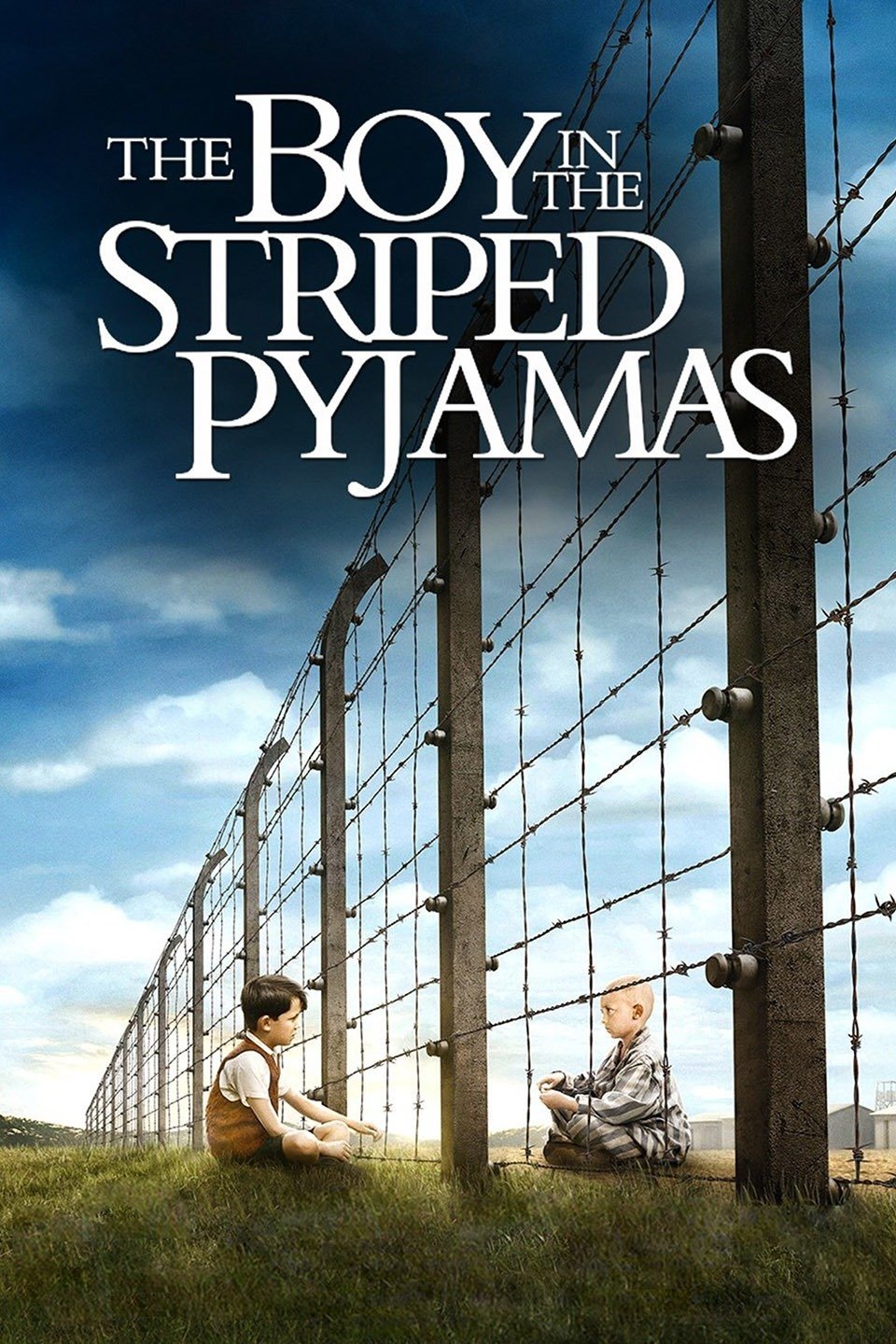
The First-Time Viewing Experience
I will never forget the uneasy anticipation pulsing through me before I experienced “Boy in the Striped Pyjamas” for the first time. There’s something about the early moments of this film—a sense of ordinary childhood converging with unspoken menace—that caught me almost off-guard. Sitting there, I wasn’t just a passive observer; I became an emotional participant, swept up in how the film carved innocence into such fraught territory. Each frame whispered a warning, yet I couldn’t look away. Watching this film now, in a world so different and yet so familiar in its uncertainties, I feel time folding in on itself—reminding me that stories of friendship, misunderstanding, and hope exist even at history’s darkest edges.
For me, a first viewing isn’t just about what the film shows on screen, but about how it starts to rearrange the furniture inside my head. “Boy in the Striped Pyjamas” managed to blur the simple joys and mindless games of youth with the terrifying consequences adults create, and I found myself questioning, almost minute by minute, what I thought I knew about both innocence and cruelty. As the story revealed itself through the eyes of Bruno, the naïve young protagonist, I kept feeling this clash between my own desire for reassurance and the pressing certainty that some revelations cannot be undone. Every glance between characters, every quiet question, landed familiar yet newly intense, as if I was just learning how fragile a child’s worldview can be.
What struck me most on that first watch was how the film doesn’t race to its destination. Instead, it lingers in the gaps—conversations that hang unfinished, moments where someone looks away rather than answer. I found myself feeling a deep discomfort, almost guilt, for knowing more than the characters did, and yet feeling powerless to intervene. Watching it now, that feeling is no less powerful; the context of a modern audience only makes the unease sharper, as I weighed what it means to witness history filtered through a single, innocent gaze. The experience is almost meditative: a gradual tightening of the heart that leaves me haunted by what lingers unsaid. If you are anything like me, you’ll find your own boundaries tested—not by cruelty on display, but by the ache of recognition in Bruno’s small acts of kindness and confusion.
Each time I revisit those opening scenes, I find myself wishing for a different outcome, even while understanding, more with every viewing, that the film’s power lies specifically in refusing comfort. If you are sitting down to this film for the first time, like I was, you may find your own expectations quietly overturned. The emotional journey is not just about how the story ends, but how you find yourself changed, unexpectedly, by the journey of trying to understand it.
Emotional Moments That Resonate
It’s never the grand, sweeping moments that leave the greatest mark on me with “Boy in the Striped Pyjamas.” Instead, it’s the subtle gestures—the ones you might almost miss—that pulse with the most meaning. Watching the moment when Bruno first encounters Shmuel at the fence, I felt the old ache of making a new friend when the world seems enormous and confusing. The fence becomes a character in itself, a reminder of lines drawn not just by barbed wire but by the stubbornness of belief. When their hands tentatively meet across the divide, I sense how even the smallest invitations to kindness can be acts of resistance, however innocent their intent.
There is a moment, mid-film, when Bruno tries to puzzle out the incomprehensible world the adults have built around him. For me, this is where the film’s greatest sadness lies—not in what is told, but in what is felt and left unexplained. I remember Bruno asking sincere, almost heartbreakingly naïve questions about his friend’s life on the other side: “Why are you always here? Why do these men shout so much?” These questions land like stones in my chest, perhaps because I’m aware of the answers even as the children are not. The gentle horror of these scenes, to me, is how they mirror the instinct in all of us to seek understanding, even when truth is too heavy to hold.
One particular sequence stays with me every time: Bruno sneaking scraps of food to Shmuel, despite being told not to speak to him. Their fleeting moments of laughter and invention—sharing stories, exchanging tokens—felt like tiny rebellions against a tidal wave bearing down on them. In those cracks of brevity, I saw the power of human connection to persist, even in places of unspeakable pain. To me, this is what sticks: hope refusing to bow, even as circumstances conspire to swallow it whole.
The climax, wrenching and abrupt, left me breathless the first time and still pins me to my seat, no matter how many times I return. It is not just the shock of what happens, but how the film’s gentlest moments—two boys clutching hands, a mother in wordless agony—echo far beyond the silence of the theater. Even days after my first viewing, I found myself mulling over the look in each character’s eyes during those final minutes. What haunts me most is not the tragedy alone, but the deep sense of “what if”—what if someone had listened, what if a line was crossed sooner, what if innocence could insulate against the world’s cruelty. The film picks at these impossible questions, and I find that every time I see it, my answers grow more complicated, more compassionate, and more restless.
“Boy in the Striped Pyjamas” never lets me forget the humanness behind history. Its most resonant moments find their way into the quiet places inside me, challenging the certainty that the past can ever really be left behind. The tenderness between the boys, the confusion in their parents’ eyes, the small kindnesses shown in the most unlikely circumstances—all these linger with me longer than the film’s runtime. I think there is something profoundly honest in how the film refuses tidy resolution, trusting instead that audiences, like me, will carry these echoes forward, reshaping how we see our own world.
How to Appreciate This Film Without Prior Knowledge
When I first sat down to watch “Boy in the Striped Pyjamas,” I came armed with little more than a single line from a friend: “It’s a film you won’t forget.” I knew the faintest outlines—a wartime setting, a child’s perspective—but beyond that, I entered without the weight of specific expectations or detailed background. I think this is where the film holds such generous power for a new viewer. I didn’t need a deep understanding of World War II or the Holocaust to feel the story’s full impact. The film, through the purity and confusion of its characters, invites me to discover, along with Bruno, the heartbreak wrapped in innocence.
What freed me most as a first-time viewer was the realization that I didn’t have to come prepared with names, dates, or knowing nods. All I needed was the willingness to watch—really watch—how children try to make sense of an adult world that offers them few answers and even fewer safe spaces. In many ways, I realized the film’s greatest strength lies in its simplicity. It speaks a language of curiosity, empathy, and fear that’s universal. When Bruno stumbles and apologizes for his brashness, or when Shmuel glances nervously at the guards, I recognize a tangle of emotions I’ve felt as a child: loyalty, longing, confusion, and the ache of injustice even before I had words to name it.
For anyone watching with fresh eyes, I’d say the key is to allow yourself to experience the slow unfolding, not as a historical lesson, but as a story of people treading between hope and heartbreak. You don’t have to analyze the policies in the background or track every symbolic gesture. Simply notice the ways characters care for (or fail) each other. Let the questions the characters ask become your own, and let yourself feel the complexity of not always having answers. That, to me, is where the richest appreciation comes to life. You’ll find, as I did, that the film trusts its audience enough to let feeling do the teaching, rather than insist on any prior knowledge.
What matters is what you bring to the screen: your curiosity, your patience for ambiguity, and your openness to sit with discomfort. If you’re someone who worries that not knowing the “facts” will hold you back, I promise—this film opens itself up to every viewer willing to listen to a human story. It doesn’t require you to be a scholar, just a person willing to feel deeply. For my part, I’m always grateful that my own first experience was shaped by fresh eyes and honest reactions. That, more than expertise, is what this film deserves.
Who This Film Is Best Suited For
- Anyone drawn to moving stories of friendship born in unlikely circumstances
- Viewers with a curiosity about how children perceive and adapt to social injustice, even when they cannot name it
- Those ready to engage emotionally and reflect on history through intimate, personal narrative rather than distant fact
A Beginner’s Final Recommendation
If you’re considering “Boy in the Striped Pyjamas” for your own first watch, I want you to know I believe it rewards every ounce of your attention. The story may be set in the shadows of catastrophe, but the illumination it offers comes not from crushing detail, but from the persistent light of honest connection. My first experience with this film left me shaken, but also deeply grateful—for the reminder that our hearts still respond to stories of hope and pain, no matter how often the world tries to numb us.
I would encourage any newcomer, without hesitation, to bring your most open self to this viewing. There is no pop quiz on dates or ideologies waiting at the end, no checklist of references to keep up with. Let yourself attend to the looks between the boys, the words left unsaid, the bravery it takes to reach across boundaries real and imagined. When I first watched, my understanding grew with every silent promise between friends, every devastating reveal that innocence, once lost, cannot be put back together. And each time since, I find my empathy deepening—for the characters, and for the real-world histories that shaped them.
What matters most is not wrestling with facts or finding historical accuracy in every corner, but sharing in the reality of what happens when we see, truly see, the world through a child’s uncertain gaze. As a film lover and a believer in the power of cinema to move and transform us, I can say that “Boy in the Striped Pyjamas” is more than worth your time—it’s a gentle dare to bear witness, to stay awake, and to let yourself be changed. If you are ready to travel through pain in pursuit of understanding, and to honor the brightness of friendship when it’s most frail, you’ll find a rare and honest film waiting for you here.
To understand whether timeless appeal still resonates today, modern reassessments are worth exploring.
🎬 Check out today's best-selling movies on Amazon!
View Deals on Amazon