
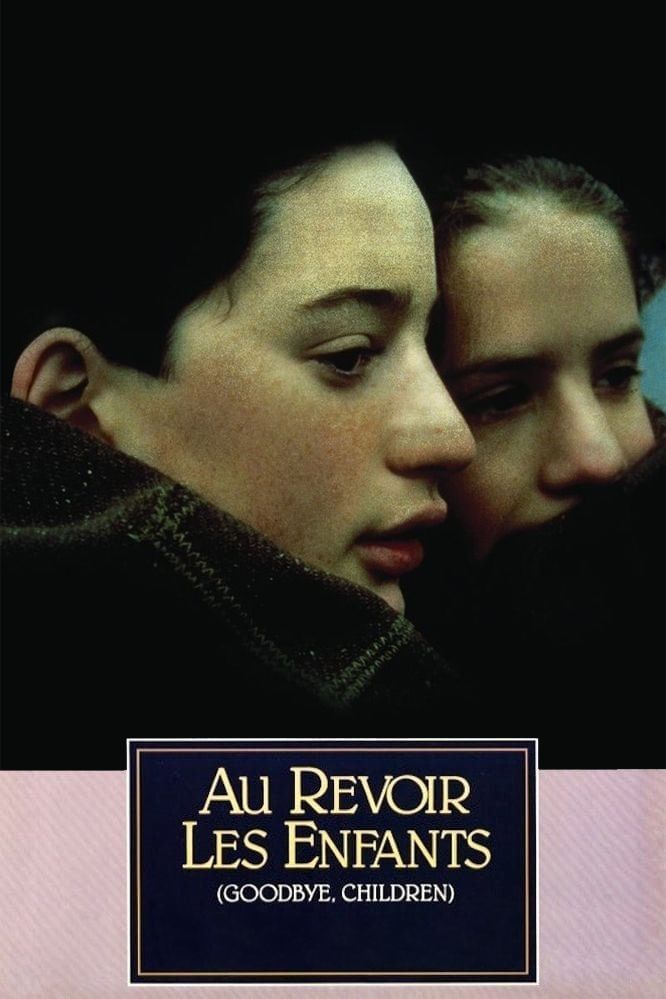
The First-Time Viewing Experience
There’s an awe that comes over me every time I think back to experiencing “Au Revoir les Enfants” for the very first time. It was a quiet evening and, admittedly, I felt both excitement and a gentle anxiety—I knew I was about to step into a film with a monumental reputation, but I wondered if its subtle artistry would reach me as deeply as its legacy suggested. As the opening frames flickered to life, with their muted colors and measured grace, I was instantly transported to another world, one wrought not with loud spectacle but with tender, palpable atmosphere. For me, the movie’s pace initially felt like wandering through a memory—unhurried, full of unspoken meanings, inviting me to listen not just to dialog but to silences, glances, and the way light moved across a face. I felt an immediate intimacy with the young protagonist, Julien, even before I could articulate why. There is a textured quietness to the way director Louis Malle lets us inhabit the cloistered world of a boarding school in Nazi-occupied France, making me hyper-aware of every footstep, every subtle gesture.
What surprised me most during that first viewing was how quickly the veneer of childhood comfort began to shimmer with unease. The film holds up a mirror to innocence, but with just enough fog on the glass to sense fragility. I found myself on edge, sometimes without knowing why—the bare corridors and casual games between the boys turned weighty because of what wasn’t said. Familiar acts—sharing bread, exchanging glances at an evening reading—carried charged significance in ways I hadn’t anticipated. By the time I registered the danger looming beneath the routines and rituals, my connection to the characters, to their uncertainties and affections, felt so raw and immediate. Every smile, every quarrel, became precious against the backdrop of a world pulled gradually out of orbit by forces far greater than themselves.
I noticed that, for first-time viewers, “Au Revoir les Enfants” is less about following a narrative than about absorbing atmosphere and emotional nuance. There’s a gentle slowness to the film that might feel unfamiliar at first—Malle trusts that even new audiences can adjust to this rhythm, drawing you into moments where nothing “big” happens, only for these small moments to expand in meaning as the story progresses. I was surprised by how much I found myself thinking back to my own childhood: how schools felt both safe and unknowable, how friendships could become lifelines, and how sometimes, even in the thick of play, I felt whispers of vulnerability I couldn’t fully name. Watching this as a newcomer to the film, I became acutely aware of how the personal and historical are entwined, and how one innocent gesture or secretive glance can carry the weight of an entire era.
The emotional gravity didn’t arrive like thunder; it drifted in, barely noticeable at first. I found myself so invested in the daily rhythms of the boys’ lives that, when brief notes of dread entered the picture—furtive glances between adults, whispers, code words—I felt them like distant rumbles, setting my nerves alight. The film’s understated style, which might have felt remote at first glance, quickly evolved into a language of its own. By the film’s closing stretch, the intimacy I felt with Julien and the enigmatic new student, Jean, made every small event pulse with unspoken urgency. I ended my first encounter with the film feeling deeply haunted, as if I had lived through a memory both beautiful and irreparably sad. That sensation clung long after the credits rolled, echoing quietly in my heart.
Emotional Moments That Resonate
Diving into “Au Revoir les Enfants,” I was struck by the understated but deeply affecting emotional pulses that seem tailor-made to ripple through contemporary audiences, perhaps even more so today. One moment that permanently etched itself into my own memory came when Julien, driven by a mixture of rivalry and fascination, hovers at the threshold of Jean Bonnet’s privacy. There’s a spellbinding tension built into those small exchanges—curiosity glimmers in their glances, but what lingers beneath is far weightier: the fear and longing for connection, the ache of secrets we don’t fully understand but know are dangerous. When I watched Jean light the Sabbath candles in secret, the room suddenly became charged with vulnerability and tenderness. For me, this act—quiet, almost sacred—felt like watching someone unclasp their heart in a place that absolutely demanded secrecy. I could feel modern anxieties about difference, inclusion, and belonging filtering through these scenes, making their emotional power feel astonishingly fresh.
Another scene that lingered with me—and, I suspect, pierces most first-time viewers—is the simple kindness Julien’s mother extends to Jean during the uncomfortable, stilted lunch in town. I was keenly aware of how the film lays bare the cracks in everyday normalcy, making one small gesture feel monumental. The way the boys fidget and test social boundaries at the table is achingly familiar—almost universal—but the knowledge of what is at risk imbues these minor exchanges with a sense of solemnity. For me, witnessing these little human exchanges under the shadow of oppression emphasized how every act of generosity or cruelty resounds powerfully in times of uncertainty. It’s not about grand declarations but the thousand quiet ways in which courage or fear is revealed.
Though I was prepared for heartbreak, nothing could quite shield me from the shattering impact of the film’s final scenes. When the secret is exposed—sudden, shocking, and yet inevitable—the emotional blow is both restrained and devastating. The school courtyard, which had been a field of noisy games just scenes earlier, transforms into a silent stage of loss and betrayal. Julien’s final look, his desperate but helpless expression, struck me as one of the most honest portrayals of childhood guilt and helplessness I have ever encountered on screen. What I found most powerful was not what is said, but what remains painfully unsaid—a lesson I think modern audiences, accustomed to explicitness, find deeply affecting. The pain inhabits the spaces between words, hangs in the air like a question that will never be answered. I often reflect on how, in witnessing the moment when innocence is irreversibly pierced, I felt my own sense of safety waver, as if I too had glimpsed an unknowable peril at the edge of my world.
The resonance is not only in sorrow. There’s a luminous, persistent hope in the everyday rituals—the music lessons, the nighttime conversations, the mutual teasing—that holds a persistent candle against the darkness. I remember watching the tender moments of camaraderie—the boys’ banter beneath their bedsheets, the nervous laughter after a prank—and feeling that, here, the film was offering a map to resilience. Even in oppressive times, pockets of joy and understanding flicker into life. This emotional layering—moments of translucency threaded through with darkness—felt, to me, both entirely specific to its period and wholly relevant to the anxieties and yearnings of today’s world. I came away feeling that the film’s power rests in how gently it insists that even in the most precarious circumstances, the bonds between people retain the power to redeem and devastate in equal measure.
How to Appreciate This Film Without Prior Knowledge
If someone had told me before I watched “Au Revoir les Enfants” that I needed deep historical context or fluency in French to understand its nuances, I might have approached it with trepidation. In reality, I discovered that the film’s most profound gifts unfold naturally, requiring only openness—not expertise. I entered the viewing with little more than a vague awareness of its wartime setting, and soon realized that what mattered most was allowing myself to experience, rather than analyze, its unfolding events. I quickly felt permission to set aside intellectual anxiety and simply pay attention to the emotions blooming in each scene. The film doesn’t lecture or presume; instead, it immerses me in the everyday world of its characters, letting the stakes and context reveal themselves through the eyes of a child. I never felt judged for missing details—if anything, my own feelings of confusion and curiosity mirrored those of Julien. It was as if the director trusted that, by being present, I would recognize the rhythms of fear, hope, and sorrow that transcend era or language.
Every time I revisit the film or reflect on my introduction to it, I’m reminded of how deeply universal its themes are. Even if I didn’t know the intricacies of French history or the specifics of wartime Europe, I understood what it meant to want to belong, to fear secrets, and to yearn for friendship in a world trembling with uncertainty. I realized that emotional truth is instantly legible, even when the symbols or references are unfamiliar. The silences, the exchanged looks, the coded language of adolescence—these are things anyone can recognize, drawing us in regardless of our background. On that first viewing, when the adults whispered in worried tones or the boys eyed each other with suspicion, I felt a pulse of recognition: these dynamics are alive any time and any place people are forced to navigate the forbidden or unknown.
One gift the film gave me was freedom from the need to decode every detail. I learned to trust the experience, finding extraordinary richness in the film’s willingness to be subtle and ambiguous. If I missed a line or failed to grasp a reference, the emotional undercurrents were there to guide me. In fact, my limited knowledge allowed me to connect more deeply with Julien’s perspective; we were both outsiders, peering into mysteries, piecing things together with instinct rather than authority. I often encourage other newcomers to let the film wash over them, letting their questions linger rather than rushing to answer them. There’s a unique pleasure in feeling temporarily out of one’s depth, discovering meaning in the shared space of uncertainty. I found that the film made me a participant in its world—not by asking for expertise, but by welcoming my openness and empathy.
In the end, I realized that the beauty of “Au Revoir les Enfants” is how gently it offers its lessons. You don’t need to know the outcome of history or the theological underpinnings of the boys’ education to mourn their losses or cherish their brief joys. As a first-timer, I became invested simply because I was willing to feel, and to register the humanity beneath the surface. This, more than any plot device or historical roadmap, is the real entryway into the film’s abiding power. I came away believing that anyone—regardless of background—can unlock the film’s wonders; all it requires is a willingness to respond.
Who This Film Is Best Suited For
- Lovers of films that capture the inner worlds of children, and who crave insight into the complexity and subtlety of youthful experience
- Viewers drawn to reflective, quietly powerful stories about the bonds and betrayals that shape us, regardless of time or place
- Those searching for a film that gently explores courage, difference, and heartbreak within intimate settings, rather than through sweeping spectacle
A Beginner’s Final Recommendation
If you are thinking of discovering “Au Revoir les Enfants” for the first time, know that you are in the best possible hands. I remember how uncertain I felt sitting down to watch—nervous, even, about whether I was “ready” or “cultured” enough to appreciate a lauded classic. But what I found was a film more compassionate and inviting than I ever could have anticipated. If you come to it open-hearted, you will be met with a story that trusts you to see, to feel, to grieve and rejoice alongside its characters. I found my own hesitations dissolving as the film unfolded, replaced by a profound connection not only to Julien and his friends but to my own sense of vulnerability and resilience. I’ve returned to the film many times since, and each visit rewards me with new insights—but nothing compares to the tenderness of the first encounter, when so much of the film’s magic was still shrouded in possibility.
If you have ever loved a childhood friend, or nursed a secret, or felt the enormity of a loss you couldn’t change, this film will find its way into your soul. You do not need background knowledge or expertise—only the courage to let the film’s honesty move you. The world it depicts may at first seem distant, but as you watch, I believe you’ll find yourself reflected in its quiet truths. My advice is to let the film proceed at its own tempo, to spend time with the silences and soft heartbreaks, and to allow yourself to be changed. “Au Revoir les Enfants” remains timeless not because it shouts its message, but because it whispers it in the language of ordinary feelings—making newcomers, including me, feel as though we have discovered a rare and generous secret.
To understand whether timeless appeal still resonates today, modern reassessments are worth exploring.
🎬 Check out today's best-selling movies on Amazon!
View Deals on Amazon