
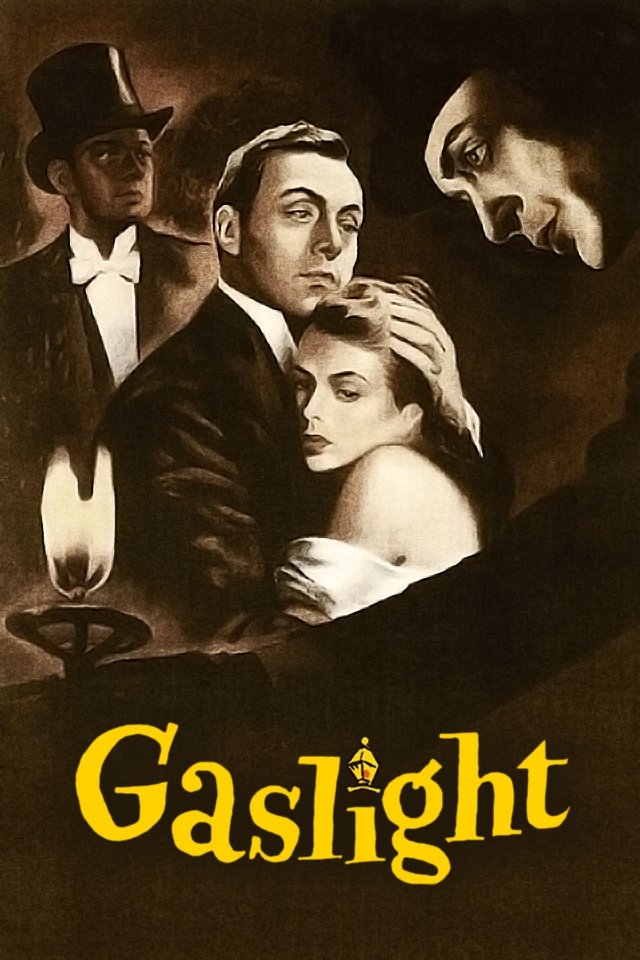
The First-Time Viewing Experience
As I recall the first time I watched Gaslight, what struck me most wasn’t the antique flavor of its setting or the stiffly formal costumes, but the immediate, almost suffocating sense of mystery and apprehension that seemed to weave itself around me from the moment the film began. Seeing Ingrid Bergman’s face awash in shadow and uncertainty, I felt myself perched on the edge of my seat even before I realized how deeply the story would pull me in. The old world elegance of the decor and the Victorian-era fog creeping through the windows felt both cozy and claustrophobic—a delicious contradiction that made my heart race, tempering awe with a faint dread.
The experience was altogether different from what I had expected of “classic Hollywood.” I didn’t sense the emotional distance some older films create for modern viewers; instead, I found myself gripped by the intense, psychological drama. My focus was drawn to the flicker of lamp light, the anxious glances, the unspoken tension between characters. There’s a rawness to being on the outside of Paula’s (Bergman’s) desperation—her vulnerability summoned a tightening in my chest, a sense of protectiveness that I never anticipated. I remember marveling that, after all these years, a film could still create that kind of authentic alarm in me, as if the walls of that London townhouse were crowding in, not just on Paula, but on me too.
That first watch planted me right in the heart of the film’s enduring puzzle: the terrifying suspicion that reality itself might be slipping away, that love may not be safe. The lavish grandeur of its sets and the echoes of a world long past didn’t alienate me—they magnified my curiosity. Would the shadows finally recede? Would truth come to light, and at what cost? These weren’t distant stage-bound dilemmas, but urgent, personal questions. Each creak of the floorboards, every flickering gas lamp deepened my anticipation and made me confront how easily trust can unravel when doubt is expertly sown.
In a way, discovering Gaslight for the first time is reminiscent of being alone in an unfamiliar old house. I wandered its corridors, both enchanted by the elegance and wary of what lurked behind closed doors. For many new viewers, I imagine, the shock comes from how relevant the emotional manipulations and anxieties feel, no matter how antique the environment. The film nestles quietly in one’s mind, intent on tugging at your confidence in what you see and know. That sense of thrilling disorientation, the tug-of-war between belief and doubt, is what lingers long after the credits have rolled.
Emotional Moments That Resonate
Whenever I guide someone through their first encounter with this film, I always find myself thinking about the emotional architecture—the way tension isn’t just built, but finely calibrated, moment to moment. I’ll never forget how my pulse ticked up every time Paula reached out, trembling, for assurance, only to watch her world grown colder and more isolated. Certain scenes left a stain on my memory. The smallest sound—a footstep overhead, a gaslight dimming imperceptibly—landed like thunder. For me, few things felt as searingly real as witnessing Paula’s gradual doubt in her own perception, the psychological unmooring that is all too universal, as she’s steered into questioning her own sanity.
I felt a distinct ache when Paula, her voice wavering, tries to explain what she’s experiencing to her husband, only to receive gentle, chilling dismissal. In those moments of gaslit confusion, I saw a reflection of real-world experiences far beyond the film’s period setting: the self-doubt that comes when someone you love erodes your confidence. The spectacle of Paula shrinking behind her own uncertainty, begging quietly to be believed, hits hard because it’s performed with such subtlety and vulnerability. Every glimmer of her anguish resonated with the part of me that’s felt unsteady, unsure, for reasons I couldn’t immediately explain.
Yet there are emotional peaks that ascend from the fog. I can’t help but recall the hope that flickers when Paula senses an ally—Charles Boyer’s villainy makes the mere possibility of rescue feel momentous. For me, the first significant emotional release comes when Paula dares, in the smallest ways, to stand her ground—to push back against the manipulation. These moments are whisper-soft, but their impact is enormous; they offer a sense of catharsis and empowerment that still feels radical. Each time she gathers her resolve, I found myself rooting for her, desperate for her to reclaim agency, urging her forward wordlessly from my spot on the couch.
What startles me most, watching this film in the twenty-first century, is how its intimate scenes of psychological warfare feel relatable and immediate. The film distills universal fears: Am I losing my grip? Will others believe me? And do I deserve better? Those questions might be dressed in lace and brocade, but they pulse beneath the surface with modern relevance. Seeing Paula’s face flicker between hope and despair made me reflect on the resilience required to trust yourself when everything around you conspires to undermine that trust. Those are the moments I still carry, long after the last frame: moments of heartbreak, moments of sly courage, tiny gleams of recognition that pass between character and audience like a secret, unbreakable pact.
How to Appreciate This Film Without Prior Knowledge
Before I watched Gaslight, I was a little concerned that I’d need a cheat sheet on Victorian culture or classic Hollywood tropes to really “get” what I was about to see. That worry evaporated within the first twenty minutes. What I quickly realized—what I hope every new viewer discovers—is that the movie requires no expertise, no knowledge of vintage genres or historical backdrops. The basics are intuitively grasped: the confusion, the longing, the slow build from suspicion to revelation. The film speaks in the language of emotions, which has lost none of its power or clarity across decades.
As someone who came to classic films without a deep well of background knowledge, I found it freeing to simply surrender to the story. The psychological cruelty and the longing for validation feel universal. I noticed that the costuming, the ornate furniture, the rigid etiquette—they become less intimidating once I focused on Paula’s face, the carefully wrought emotions, the simple, gut-level truths at stake. The acting feels immediate and raw. I realized that even if I missed an allusion or didn’t recognize a supporting actor, none of that diminished the haunting spell the film cast. In fact, my lack of expectation made the suspense all the more bracing.
Sometimes, watching older films, I expect the pacing to feel sluggish or the acting to come across as stiff or distant. But Gaslight surprised me. Its pacing is deliberate but never dull. Each moment seems to simmer with internal tension, waiting to boil over. I wasn’t watching relics play at drama—I was immersed in a live struggle that gripped me, often in spite of myself. One of the most rewarding parts of coming to this film fresh was getting swept away precisely because the story defied my expectations about what “old movies” can feel like. It proved, in real time, that anxiety, heartbreak, and triumph are instantly translatable across eras.
I find that not knowing the twists doesn’t just make the suspense sharper. It also means there’s genuine pleasure in surveying the production—letting my eyes wander over the sumptuous sets, the play of shadow and light, the subtle details cropping up in the margins. Being a beginner frees me from intellectual over-analysis and lets me appreciate the craftsmanship in a visceral way. My best advice? Approach the viewing with openness. Let each waver in Bergman’s voice, each chilling smile from Boyer, land without preconception. The story, and its dark enchantment, finds its way in.
Who This Film Is Best Suited For
- Anyone who’s felt gaslighted or manipulated and wants to see that dynamic rendered with artistry and empathy
- Lovers of psychological thrillers who crave atmospheric, intimate storytelling over explosions or spectacle
- Viewers curious about classic cinema who worry that “old Hollywood” can’t possibly deliver relevance or thrills today
A Beginner’s Final Recommendation
When friends ask me whether watching Gaslight for the first time really measures up to modern suspense films, I always find myself smiling—not because the movie belongs to another time, but because the emotional core it reveals is as relevant now as ever. I remember how nervous I felt, worrying I’d miss the point or struggle with the old-fashioned pace, only to find myself stunned by the immediacy of its emotional stakes. The doubts and fears that swirl around Paula’s world, as she tries to find her voice in an atmosphere deliberately designed to confuse, never lost their bite. My own experience has taught me that you don’t need any prior allegiance to classic films to discover why this particular story refuses to grow old.
What matters most is how daringly the film asks you to trust your instincts, to side with the vulnerable, and to fear for what we all value: our reality, our safety, and our right to be believed. As a newcomer, I found myself rooting for Paula with a protectiveness that surprised me and left with a sharper sense of how power can be abused in even the most seemingly loving environments. That’s the heart of Gaslight: a darkly glittering exploration of trust, fear, and courage, set in a world at once distant and achingly familiar.
If you’re tentative about dipping into classic cinema, I truly believe this is a safe place to start. The emotions are timeless, the performances magnetic. I urge you to approach the film as you would a gothic house: with curiosity, patience, and openness to whatever shivers of insight might creep your way. The treasures here are not just suspense and plot twists, but empathy—an invitation to stand with someone who’s doubted and to cheer when they claim their truth. You might end up surprised at how long the film stays with you, haunting your thoughts, encouraging you to trust yourself a little more fiercely. That’s a gift, one I cherish and hope you will too—for your very first time and, perhaps, every time after.
To understand whether timeless appeal still resonates today, modern reassessments are worth exploring.
🎬 Check out today's best-selling movies on Amazon!
View Deals on Amazon