
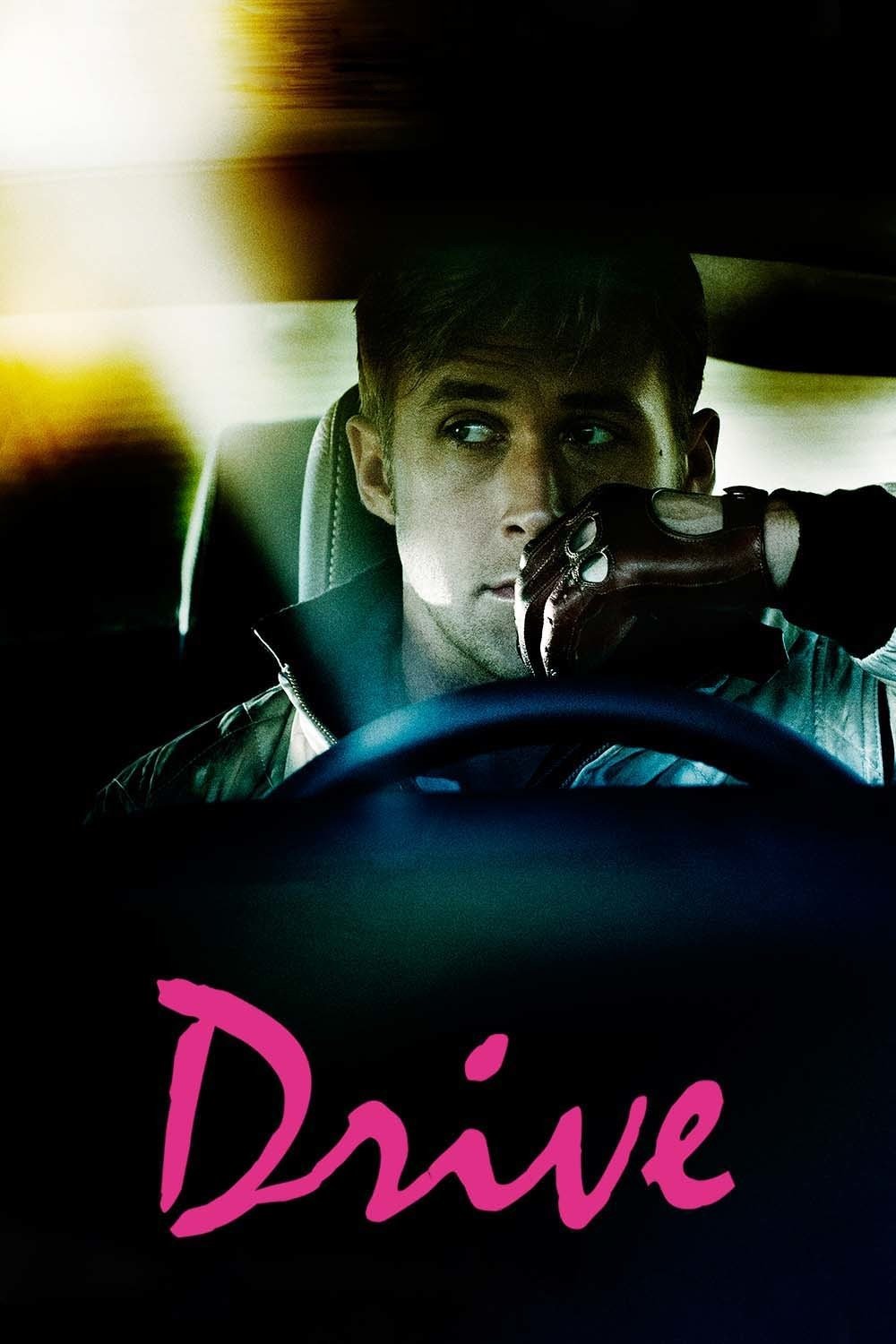
The First-Time Viewing Experience
Nothing quite prepared me for my first encounter with Drive. I remember pressing play long after the hype had faded, thinking I’d find just another moody, stylish thriller. What I got instead felt strangely intimate and almost spiritual—a kind of silent meditation wrapped in a neon-soaked Los Angeles night. For anyone else sitting down to Drive without prior baggage, the opening minutes hit with an unusual calm. There’s this dreamy, suspended feeling, as if the whole world’s been submerged underwater and every surface glows a little. The protagonist—known only as “the Driver”—barely speaks, and it disarmed me, instantly pulling my attention to everything else: every glance, each subtle gesture, the texture of the city at dusk. There’s this sustained tension, not just in the threat of violence but even in moments of quiet domestic warmth. It’s a sensation I can only compare to being awake in a city long after most have gone to sleep, noticing the hidden poetry in abandoned streets.
I found myself viscerally aware of every sound—a humming track, the click of a lighter, the hush before a storm of violence. Drive lured me in by forcing me to slow down, to notice the difference between expectation and reality in how action films can unfold. As a newcomer, I was surprised by how little exposition or backstory is handed out. Instead, my curiosity kept me close to the edge of my seat, trying to read the meaning behind Ryan Gosling’s blank stares and the haunting softness of Carey Mulligan’s presence. It was unpredictable—not because of wild twists, but because of its restraint. Every minute, I wondered: would the next scene explode with brutality or slip softly by? Watching Drive for the first time, I remember feeling both soothed and unsettled, like walking through a thunderstorm you suspect will break at any second.
But more than that, there was a strangeness to the film’s heart. It’s brutal, yes, but there’s also this pulse—a deep sense of yearning and hope. I’d expected cool detachment; I found, instead, unexpected tenderness. The first time through, I constantly reevaluated my expectations about heroes and antiheroes, crime and innocence. I felt plugged into something mythic. Every frame seemed to conceal a secret, and as a first-time viewer, it made me feel—paradoxically—both at home and in utterly foreign territory. “Is this really an action movie?” I kept asking myself, only to realize by the closing credits that Drive doesn’t belong to just one tradition—it’s a stylistic collision, and feeling slightly unmoored is, in fact, part of the magic.
Emotional Moments That Resonate
What surprised me most about Drive was the unexpected emotional resonance that crept into scenes I’d expected to be icy or remote. The instant that remains seared into my memory is the elevator scene. Even before anything happens, there’s a sense of intimate finality—like the world has shrunk down to three people, a single pool of light, and the thudding of my heart mirrored by the score. In that suspended moment, the violence that erupts is at once horrifying and oddly beautiful. It’s the first time I felt the sharp dichotomy of the film’s soul: a longing for connection, shattered by necessity. The silence before the storm, the gentleness of a touch—those are the emotional anchors of Drive, and each time I reflect on them, I’m jarred by how effectively the film uses stillness to magnify heartbreak.
I found myself holding my breath during scenes between the Driver and Irene. Their exchanges are spare, almost wordless, but I felt the heavy ache of all the things left unsaid. There’s a particular scene—just the two of them in a hallway, a tiny smile exchanged—that felt as overwhelming as any declaration in a grand romance. What caught me off-guard is the way Drive makes the simplest gestures feel monumental. I saw agony and hope in the way the Driver looks at Irene’s son, navigating a sense of belonging for perhaps the first time in his life. It’s not melodrama; it’s a kind of emotional shorthand. This economy stunned me, making me attuned to every flicker of expression, every time Gosling’s eyes glance downward.
Every act of violence, too, struck me not as spectacle but as heartbreak. Drive doesn’t indulge in action for its own sake; instead, each flash of brutality reads as a devastating punctuation—an inescapable toll for brief moments of peace. I remember feeling both sickened and strangely sympathetic during those sequences, wrestling with a paradox: can someone so vicious also be so wounded? There are tiny, almost throwaway moments—like Irene’s quiet, shattered hope, or Bryan Cranston’s ultimate act of sacrifice—that I found completely disarming. The movie’s synth-driven score became, for me, a kind of emotional undercurrent, amplifying the yearning and melancholy that hum beneath each surface interaction. Even now, years later, when I hear “A Real Hero,” I’m taken right back to that sensation of being quietly devastated by everything the characters keep hidden, all of their battered dreams leaking out at the edges.
In the end, what hit me hardest wasn’t the bloodshed or the betrayals—it was the poetic, almost innocent notion that even in a world scarred by violence, moments of grace can still exist. That’s what I carry with me from my first viewing: a sensation that pain and beauty can coexist, so long as you’re willing to watch closely enough to see them both.
How to Appreciate This Film Without Prior Knowledge
I can say with complete honesty that the full impact of Drive unfolded for me without any deep background in action cinema or noir storytelling. In fact, I think coming into the film with nothing but curiosity is part of the unique pleasure. You truly don’t need to know the director’s previous movies, or to have studied film noir, or to identify every nod to seventies thrillers. My own experience was—refreshingly—free from such references. I actually found greater emotional payoff in letting my guard down and just letting the movie speak directly. It rewards the kind of attentive, patient viewing that’s more about feeling than “getting” each allusion or reference.
For someone new to films that mix genres—be it crime, neo-noir, or barebones love story—I found Drive offered ample space for my own reactions and interpretations. I wasn’t expected to decode symbolism or remember intricate plot details. On the contrary, I felt invited to sense, rather than analyze. The film trusts the audience’s intuition. I think it’s a kind of cinematic Rorschach test: I brought my own longing and empathy, and the film returned those feelings in amplified, neon-lit form.
I never felt “out of the loop” or excluded from the film’s core emotions. When the music swelled, I didn’t need to intellectually grasp its reference points to feel the intimacy and desperation in those moments. I understood the stakes: the need to protect, the desire to belong, the simple wish that life could be gentler. Drive felt, surprisingly, like a film geared not toward cinephiles or those “in the know,” but toward anyone willing to be swept up in a wholly original mood. There’s a universality in that basic human yearning—grasping for connection, wrestling with violence, finding identity—and I felt it from the first frame. For me, that’s proof: the best movies are the ones that feel immediate, not because of knowledge, but because they so plainly yearn to connect.
Who This Film Is Best Suited For
- Anyone craving movies that deliver as much emotional depth as visual style, even if they aren’t usually drawn to crime or action genres
- Viewers who appreciate films that subvert expectations and refuse to fit neatly into any one category
- Those looking for a modern classic that uses silence, music, and visual poetry to tell its story, rather than wall-to-wall dialogue
A Beginner’s Final Recommendation
I remember worrying, before my first viewing, that I’d be “missing something”—that without expertise or a catalogued knowledge of references, a film like Drive might leave me cold. What I found instead was a quietly electrifying invitation to just immerse myself. There’s something uniquely powerful about watching it with open eyes and no preconceptions, surrendering to each shifting current of feeling, each moment of stillness or eruption. It’s not about chasing down hidden meanings or cataloguing clichés; it’s about letting go and letting the film’s curious blend of tenderness and ferocity wash over you.
If you ever felt cautious about approaching “modern classics,” I can genuinely reassure you: Drive meets you exactly where you are. It welcomes both the seasoned cinephile and the absolute beginner. Its emotions are immediate, its world intoxicating, and its story as welcoming to newcomers as a favourite song you’ve never heard but instantly love. If you give yourself to it, you’ll find that this is a film that lingers—not because of what you know, but because of what you feel. Trust the slow build, savor the quiet stretches, and don’t be afraid if you finish it a little shaken and a little in awe.
Because that’s how the greatest first-time movie experiences should feel: mysterious, intimate, and deeply personal.
To understand whether timeless appeal still resonates today, modern reassessments are worth exploring.
🎬 Check out today's best-selling movies on Amazon!
View Deals on Amazon