
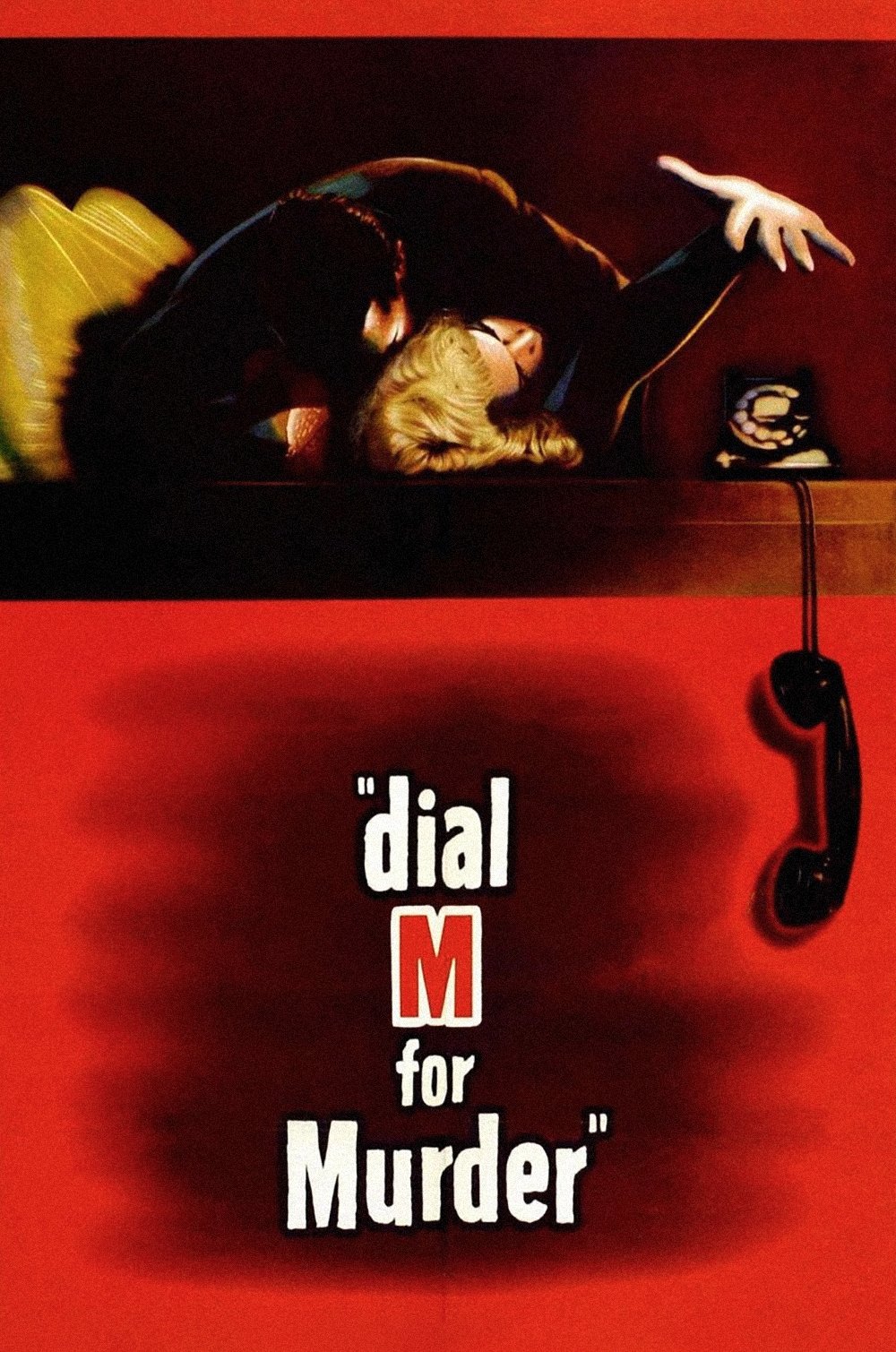
The First-Time Viewing Experience
Watching “Dial M for Murder” for the very first time isn’t simply a journey into Hitchcock’s world—at least, not for me. It’s more like quietly slipping into a room where even the air carries a charged sense of expectancy. As the credits began to play, I didn’t feel nostalgia or a sense of ceremony. Instead, I sensed a kind of intimate invitation, as if the film was asking me to lean forward and listen closely, promising secrets that weren’t meant for everyone. I remember feeling both anxious and giddy, fully aware that Hitchcock rarely deals in surface-level tension. There was a persistent hush to the film’s early minutes, the quiet of an apartment echoing with unspoken motives. What surprised me wasn’t just the slow burn of suspense—it was how quickly I pinned my attention to each detail: the placement of a key, the curl of a smile, the brittle edge to a lover’s voice. It’s as if the film required my active participation, rewarding even the smallest observation with a fresh ripple of uncertainty. I realized immediately that this wasn’t going to be an experience I could half-watch. Every glance, every line hinted at larger consequences, so much so that I found myself scrutinizing the screen with a kind of reverence, almost as if I might miss a silent confession tucked in a sidelong glance. For a movie made well before my time, the sense of being implicated as a viewer felt thoroughly modern to me.
What made my first viewing experience particularly exhilarating was the way “Dial M for Murder” refused to reveal its hand, even as it laid out each player’s card with exquisite clarity. I felt a persistent, low-key dread—not because I was worried about jump scares, but because I could sense the inexorability of fate inching closer for everyone on screen. The tension was less a jolt and more an inexorable tightening, like the way a musical note sustains long enough to become nearly unbearable. There were moments, especially during the planning and execution of the central scheme, when I became acutely aware of my own role as a silent conspirator. The room around me faded away; the only world that existed was the claustrophobic apartment, the measured voices, and the endless shifting of suspicion. The familiarity of domestic details—a phone call, a misplaced object—deepened the anxiety. It was as if something as innocuous as a ringing telephone could suddenly determine someone’s destiny. For a first-time viewer accustomed to modern thrillers with their pyrotechnics and noisy reveals, this film felt like a masterclass in intricacy, daring me to keep up—and making me painfully aware whenever I couldn’t.
Another thing I distinctly remember was how refreshingly direct the film felt, but not in a simplistic or didactic way. Nearly everything of importance takes place on a single set, giving the story a kind of theatrical immediacy. I found myself counting footsteps, watching the clock in the background, and waiting for the smallest misstep to ignite the storyline. The contained setting actually made the suspense more severe for me, almost as if there were no escape from the emotional machinery at work. What might be considered a limitation—one apartment for almost the entirety of the film—became a crucible, intensifying my focus on body language, the shadings in tone, and the minor shifts in relationships.
As the story began unfolding with its measured precision, I kept thinking how the film required a kind of patience that felt radical in an era of instant answers. But instead of testing my attention span, it awakened it fully. The effect was immersive, even hypnotic. There were no digital effects to distract me; every surprise, every thrill, emerged from the simple friction of character against character, the inexorable brush of fate against merely human intent. By the end of my first viewing, I felt like I’d weathered a psychological storm, not through spectacle but through steadily mounting, nearly unbearable expectation.
Emotional Moments That Resonate
Some films leave me with images, but “Dial M for Murder” left me with emotions that lingered much longer than the final frame. The immediacy of those feelings took me by surprise. What stands out most is the fragile, splintering trust between characters who once believed they knew each other completely. The moment that most affected me emotionally is not the central crime itself, but the wounded shock on Grace Kelly’s face as she sits, eyes wide with disbelief, in the aftermath of violence she never imagined could touch her life. I remember my own chest tightening—the violation of sanctuary felt almost personal, as if some essential line had been crossed in my own living room. The film, for all its elegance, never allows the viewer to forget that real fear can thrive in the most familiar places. For me, that’s the true genius at play.
Another emotional crescendo arrives quietly: the moment when Ray Milland’s character, whose motives have been steered by jealousy and calculation, is shown wrestling with the consequences of his own scheming. I found myself unexpectedly empathetic. Though I never condoned his actions, I saw something both monstrous and heartbreakingly ordinary in his desperate logic. Watching his composure begin to unravel, I caught myself wondering how the gentlest flaws—envy, pride, a thirst for control—can, in the wrong circumstances, become deeply dangerous. In that moment, the film reached out to me, not just as an observer of crime, but as a fellow human trying to understand what draws people into darkness.
For modern audiences like myself, there’s something haunting about the ambiguity that lingers long after the credits roll. The law, in the film, is never just black and white. I was intensely moved by the way suspicion falls unevenly, making justice feel both essential and susceptible to manipulation. The sight of Grace Kelly gently pleading her case, her voice shaken yet resolute, made me reflect on the ways that appearances so often fail us. This wasn’t just a matter of evidence and alibis—it was about the vulnerability of being misunderstood, the loneliness of standing trial in front of people who only think they know you. That theme, for me, echoed far beyond the confines of the plot. None of us, the film seems to say, is immune from being doubted or even discarded by those around us. That revelation, and the aching performance at its heart, lingers in a way that is as relevant now as it was in 1954.
There’s a particular power in seeing characters forced to confront themselves as much as each other. My attention was never on the mechanics of crime, but on the way a single moment—an argument, a choice, a near-miss—could ripple through the lives of everyone involved. I still remember the mix of dread and helplessness I felt as the walls closed in. “Dial M for Murder” reminded me that much of life’s suspense lies not in what happens, but in the terrifying anticipation of what could.
How to Appreciate This Film Without Prior Knowledge
I approached “Dial M for Murder” with almost no understanding of its story, its historical place, or even its formal inventiveness. Strangely, that absence of knowledge proved to be a sort of gift. I didn’t need to be versed in Hitchcock’s filmography, or have an academic background in film noir, to fall under the movie’s spell. What I discovered is that the film itself teaches you how to watch it: All I needed was the willingness to pay close attention, to listen as much to what wasn’t said as to the dialogue. The pleasure wasn’t in solving a puzzle before the characters did, but in tracing the emotional consequences of each new discovery. The plot, while intricate, never demanded any kind of code-breaking prowess from me—only that I stay alert to shifting allegiances and overlooked details.
For those who might feel intimidated by the film’s “classic” status—worry that it would be too outdated or stylized for contemporary enjoyment—I can promise that my own concerns evaporated almost instantly. Rather than feeling alienated by the setting or the dialogue, I was drawn in by the universal anxieties at play. The sense of threat, of betrayal, of being forced to adapt in circumstances outside one’s control—none of that has aged. “Dial M for Murder” never struck me as a dusty object on a shelf. Instead, it felt like an invitation to reexamine my own comfort with moral ambiguity and my faith in appearances. The film’s deliberate pace allowed me time to become fully invested in the characters, to feel their fear and hope well up inside myself, no matter when or where I grew up.
If anything, knowing less made the experience all the richer for me. Every twist was genuinely surprising, every revelation more poignant. I found myself engaged not because I had studied suspense as a genre, but because the film awakened the basic, primal joys of anticipation and empathy. When the story doubled back on itself, when motives blurred and alliances realigned, I didn’t need a guidebook. My own instincts—and the film’s gentle but persistent nudges—were enough. For anyone entering “Dial M for Murder” as a blank slate, I believe you’ll find yourself instantly at home in its carefully constructed labyrinth.
I sometimes hear people say classics have to be “worked through” in order to be fully appreciated. My experience told me the opposite. This film, especially, rewards a kind of open-hearted watching, a willingness to feel confusion, dread, and even hope along with its characters. The director’s craft isn’t meant to keep us at a distance, but to implicate us fully—so much so that I stopped thinking about when or how the film was made, and simply felt its pulse as if it were unfolding in my own living room. That, to me, is the real measure of greatness: the ability to speak across decades, not despite our differences, but because of the feelings we all share as strangers in a world of uncertain motives.
Who This Film Is Best Suited For
- Anyone who loves a slow-burning sense of suspense, and finds themselves drawn to stories that unfold in small, tightly-wound spaces
- Viewers who appreciate emotional nuance and the subtle shifts in relationships, rather than overt displays of action or loud spectacle
- People who are curious about how a single, well-drawn setting can become a crucible for exploring trust, betrayal, and the limits of human intention
A Beginner’s Final Recommendation
Looking back on my first encounter with “Dial M for Murder,” I realize what it offered wasn’t simply a glimpse into another era, but a chance to rediscover the pleasures of attentive watching. If you’re just stepping into the world of classic films, this is a deeply sympathetic place to begin, precisely because it doesn’t demand anything beyond the willingness to observe, to wonder, and to identify with the all-too-human frailties on display. Each character’s uncertainty, each small victory or terrible miscalculation, is rendered with such care that I couldn’t help but reflect on the mysteries that shape my own ordinary days. The film asked me not just to watch passively, but to examine what I would do under pressure, how I might satisfy complicated loyalties, and when I would know to trust even my own instincts.
What made me most grateful for having watched it was not the mastery of plot or the technical precision—though both are certainly present—but the way “Dial M for Murder” quietly advocates for empathy. It suggests that suspense isn’t just about the fate of the guilty or the innocent; it’s about the fragile hope that things might somehow work out in spite of all evidence to the contrary. That quiet resilience, shared by characters and viewers alike, remains intensely moving to me. If you’re looking for a film to teach you how to watch with both your heart and your eyes, to sit inside a story and let it slowly awaken your own capacity for suspense and compassion, let this be the first. I finished the film feeling more alert to the possibility of change—both sudden and gradual—in the relationships that matter most. And isn’t that, in the end, what makes any movie truly unforgettable?
To understand whether timeless appeal still resonates today, modern reassessments are worth exploring.
🎬 Check out today's best-selling movies on Amazon!
View Deals on Amazon