
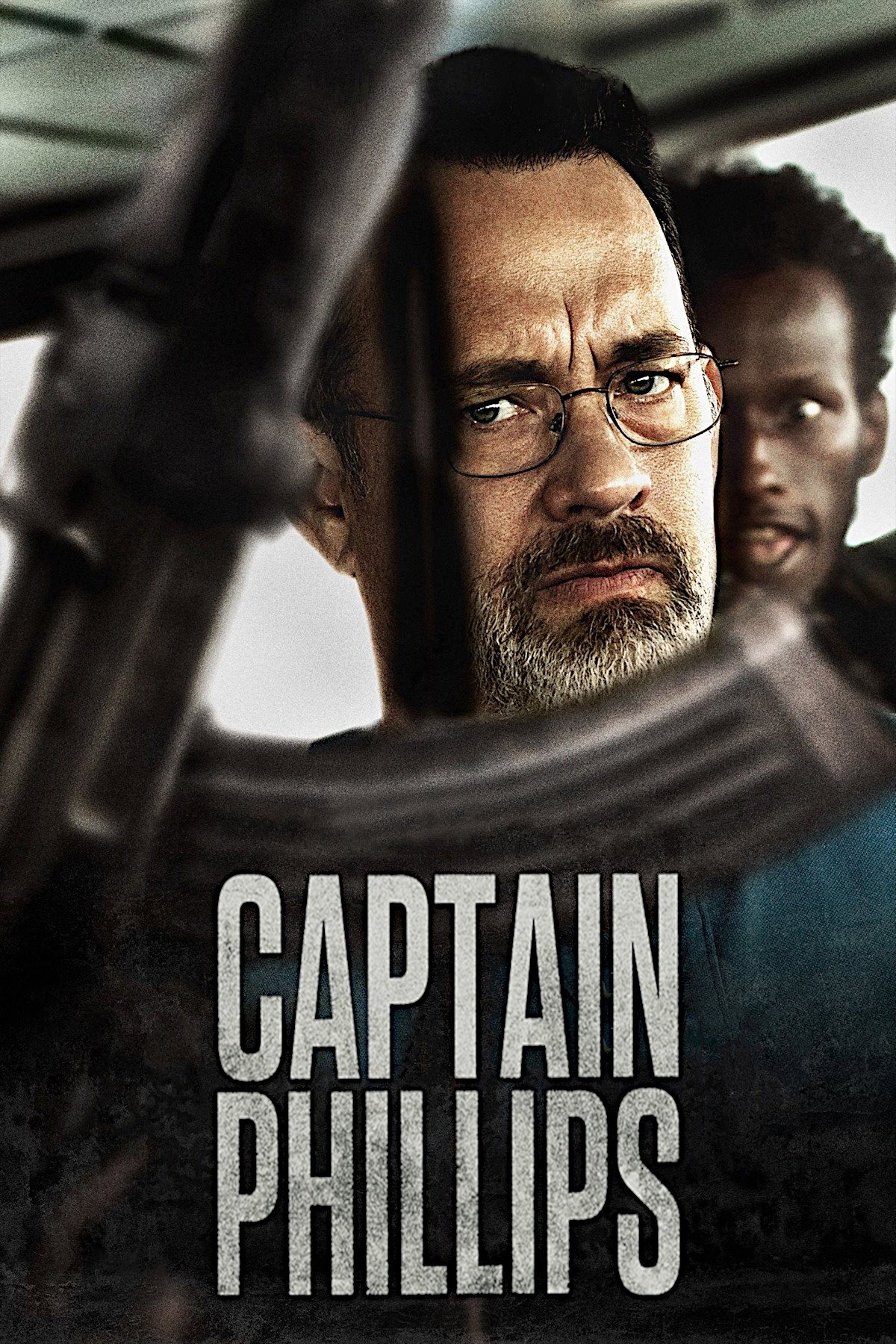
The First-Time Viewing Experience
I remember the first time I sat down to watch “Captain Phillips,” not knowing what kind of impact it would leave on me. The way this film gripped my attention from its very first moments felt less like settling in for a movie night and more like being pulled into the thick of a lived event. I could feel my hands tense as each scene unfolded, sweat gathering in my palms during the most suspenseful moments. It was as if my living room faded away, replaced instead by the roaring pulse of engines, the clang of metal containers at sea, and the anxious murmur of a restless crew awaiting the unknown. Watching this film for the first time today, I found that its immediacy and tension translate perfectly into a modern context—perhaps even more so given the constant hum of anxiety that seems to surround daily life these days.
There is a subtle but powerful psychological thread running through my first viewing that set it apart. I was struck by how clashing worlds—American merchant seamen and Somali pirates—came together under stress and necessity, and how, without warning, boundaries of comfort and safety collapse. Each scene, for me, was charged with an authenticity that seemed harder and harder to find in more stylized blockbusters. I watched, as if on trial myself, thrown headfirst into a stark reality stripped of melodrama or artificial heroics. My heart beat in time with the escalating danger, not just because the script called for tension, but because every performance, especially Tom Hanks’ as Phillips, was heartbreakingly real. I needed no prior knowledge, no historical context, to feel the weight of fear, resilience, and desperation play out in real time. It’s a sensation I rarely encounter, even after years of exploring acclaimed films from all eras.
The sensation of watching “Captain Phillips” today is not unlike stepping onto unsteady ground. I quickly realized I wasn’t watching a simple tale of good versus bad, nor merely an action-driven thriller. This was a confrontation with the larger unpredictabilities of life itself—where chance and human decisions collide. I found myself invested emotionally before I intuited why. The raw vulnerability on display—strangers facing strangers with nothing but their wits and instincts—created a connection to my own fears, my own moments of uncertainty. I didn’t need to relate specifically to merchant sailing or piracy; a part of me responded to the fundamental struggle to survive and to hold onto hope when it feels impossibly remote.
What stands out about discovering this film now is how quickly it broke through any barriers of skepticism I carried as a viewer. Even knowing that the events are based on a true story, the movie transcended its factual origins, becoming—at least to me—a kind of emotional litmus test. Would I react as calmly? Would I find inner courage in the face of threat? By the end, I realized I’d been holding my breath for minutes at a time, proof that the film’s commitment to genuine human drama had completely swept me up.
Emotional Moments That Resonate
When I think back on that initial viewing, I can easily recall several moments when my composure faltered. There’s one early sequence in particular, when the crew realizes their ship is being targeted, that left me jittery and jump-started empathy for every player on screen. I found myself genuinely frightened—not through shock or horror, but because of the steady, unblinking realism that director Paul Greengrass brings to every frame. The camera lingers on faces filled with unresolved questions and barely masked alarm, and I felt those unresolved questions echoing in myself. It’s the ordinary details that drove home a sense of realism: the nervous glances between crewmates, the hesitant yet firm tone in Phillips’ voice as he tries to stabilize the situation, the uncertain silences that seem to stretch between breaths.
Another moment that remains etched in my mind is the harrowing confrontation in the lifeboat that comes much later in the film. The confined space, the pressured negotiations, the heated exchanges—none of it felt staged. Instead, the atmosphere was claustrophobic and immediate. This is where the bruised humanity of both Phillips and Muse, the pirate leader, becomes undeniable. I was struck by how the film never let me forget the pirates’ desperation, making me feel something far more complex than simple animosity. There’s an aching sadness in Muse’s expressions, a residue of hope clinging desperately to the possibility of escape. His line, “I came too far, I can’t give up now,” sank into me, a reminder that survival, for all, is fraught with impossible choices.
But what really shook me—what made “Captain Phillips” feel deeply relevant today—was the film’s refusal to grant easy catharsis. The final act, especially that astonishing final scene with Phillips in shock being tended by the Navy medic, hit me like a tidal wave. I remember sitting on the edge of my seat and witnessing a kind of raw, unvarnished pain that rarely finds its way onto the screen. Tom Hanks’ trembling vulnerability didn’t just move me; it left me quietly undone. Tears welled up, not only for what he’d endured but for the universality of human fragility beneath layers of composure. More than a drama about heroism, this was a meditation on what gets left behind after trauma—a resonance I still felt long after the credits rolled.
Each time the film zeroes in on unspeakable tension—the glint of fear in an eye, a voice trembling just under the surface—I felt as if I was being invited to see something real about myself, about others, about the world. The emotional honesty isn’t just a device; it’s the core of the film’s power. Every small human gesture—an apologetic glance, a defiant stand, a quiet plea—is weighted with significance. There’s no moment that feels too distant or stylized to move me. These moments act as connective tissue, forging a link between the story’s bygone headlines and the private worlds of everyone watching today.
How to Appreciate This Film Without Prior Knowledge
One of the most unexpected gifts I received from my first engagement with “Captain Phillips” is how utterly unnecessary it is to arrive prepared. I worried, at first, that my lack of understanding about maritime trade routes or modern piracy might act as a barrier—as though only seasoned moviegoers or history buffs would find their footing here. That worry vanished within minutes. The film extends a kind of open hand; I found that all I needed to bring was a willingness to feel.
Everything from the story’s propulsion to its emotional beats is intuitively accessible. I wasn’t bogged down by technical jargon or convoluted backstory. The film’s structure gently guides viewers like me, first into the awkward comfort of daily routine, and then, as the situation unravels, into the heart-throbbing chaos of the unknown. Even the cultural divides at the story’s heart felt like bridges rather than roadblocks. I could sense the mutual suspicion and fear between captors and captives, but these emotions transcended language or location. The film’s humanity is plain, lived moment to moment, and I never felt lost or out of place, even as unfamiliar worlds collided on screen.
If anything, not knowing what would happen next heightened my sense of dread and empathy. I leaned forward, emotionally invested, because I was discovering each peril alongside the characters. The film does an extraordinary job pulling me into the immediacy of experience; I didn’t have to rely on historical markers or preconceptions in order to understand. I felt included, almost implicated, in every decision and misstep along the way. This gave rise to a sense of shared vulnerability. The realism, for me, was a language I easily understood—one that required neither study nor expertise but instead rewarded attention, curiosity, and an open heart.
What the film strives for is a lived authenticity, and it let me bring my own anxieties and hopes into the theater. The unfamiliar terms and scenarios dissolve rapidly as the driving emotions take center stage. I appreciated that I could let go of expectations and simply be present with the characters, riding the highs and lows right beside them. Whenever I’ve recommended “Captain Phillips” to other newcomers, I always stress that expert knowledge isn’t just unnecessary—it might actually soften the film’s rawest punches. There’s power in walking in unprepared, willing to be surprised, moved, and maybe even a little changed by the experience.
Who This Film Is Best Suited For
- Anyone who cherishes authentic, character-driven suspense instead of traditional action spectacle
- Viewers compelled by moral ambiguity and the exploration of tough choices in real-life crises
- Newcomers hoping to discover films where honest performances speak louder than special effects
A Beginner’s Final Recommendation
Choosing “Captain Phillips” as an entry point into more recent classics is, in my view, a profoundly rewarding decision. For anyone approaching it for the first time, I want to offer deep reassurance: this film has a unique way of meeting each person wherever they are. It doesn’t demand prior understanding or expertise—just a willingness to engage with empathy, to let yourself imagine the real human cost behind the headlines, and to open your heart to a story grounded in both courage and uncertainty.
I found myself changed by this film. Its emotional realism lingers, reminding me that heroism can be fractured, tentative, and deeply relatable. Even if you rarely gravitate toward suspenseful dramas, or if the subject matter seems heavy from the outside, I urge you not to turn away. My own experience showed me that the very things that make “Captain Phillips” challenging are what make it essential; it is not only a survival story, but an examination of how ordinary people behave under extraordinary pressure.
If your goal is to discover films that connect on a human level, where the line between fear and hope becomes tangible, then there’s a good chance you’ll leave this film feeling stirred, maybe even expanded. Sharing in the anxiety, astonishment, and fragile triumphs of these characters reminded me why I love movies—for their capacity to bring us closer to lives far from our own, and to reveal truths about ourselves along the way. After my first viewing, I understood in a new way why “Captain Phillips” already holds a place among modern classics: it’s not simply a recreation of the past; it’s an invitation for every viewer, including total newcomers, to step into the vulnerable and unforgettable heart of human experience.
To understand whether timeless appeal still resonates today, modern reassessments are worth exploring.
🎬 Check out today's best-selling movies on Amazon!
View Deals on Amazon