
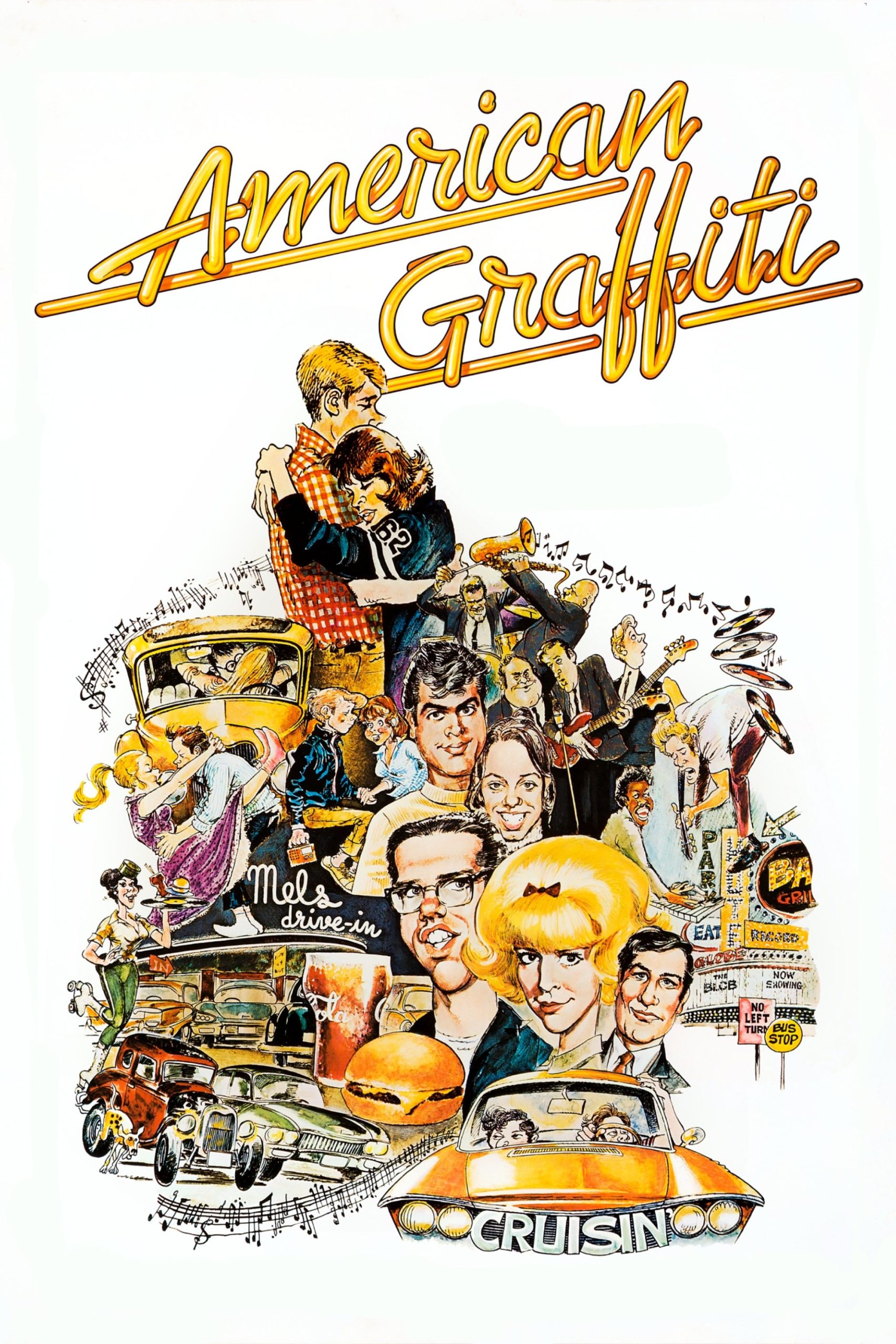
The First-Time Viewing Experience
I remember the first time I watched “American Graffiti” vividly, because it felt like tumbling headfirst into a summer night that shimmered with nostalgia, even though I’d never lived the era it so affectionately depicts. What struck me was an immediate sense of unfamiliarity paired with recognition—a world of gleaming chrome, pumping radio hits, and restless teenagers on the edge of something new. There was a whiff of magic in how the camera glided along the neon-lit streets, luminous faces flecked with hope and uncertainty. If you’ve never seen it before, I suspect you, too, might feel a gentle sense of dislocation, like wandering into a well-loved family photo album where everyone is having the best night of their lives and—somehow—you’re invited along. The first viewing is a kind of initiation; it’s not just watching characters chase one last night of innocence, but recognizing the essence of transition in every longing glance and revving engine.
“American Graffiti” doesn’t rush to give you context. At first, I felt as if I’d been dropped right in the middle of someone else’s memories—a little disoriented, maybe, but strangely content to let that current carry me along. For the unprepared, the film’s immersive style can feel less like storytelling in the traditional sense, and more like a guided time capsule. The impression is less about plot mechanics and more about the mood: a sleepy town passing through youth’s last hazy golden hour. Even if the details are radically different from my own upbringing, there’s a universal feeling—the restless anticipation, the bittersweet ache of endings—that immediately drew me in. Each scene seems to hang in the air, echoing with what’s about to vanish.
I found myself quietly watching the background as much as the foreground—cars circling like orbiting planets, music twining through every moment, the radio tying together everyone’s night with a continuous hum. Even with no knowledge of the cast or director, I came away feeling that the experience of seeing “American Graffiti” for the first time today is both a surprise and a comfort. There’s a gentle thrill in realizing how little the nervous, electric energy of late adolescence changes over time, no matter how much the world does around it. This is a movie that opens its arms to you, regardless of when you meet it.
Emotional Moments That Resonate
When I first encountered the film’s most honest moments, I was caught off guard by how vulnerable they felt. There’s something particularly affecting about seeing young people hovering on the threshold of adulthood—each of them facing their personal crossroads beneath the warm pulse of streetlights. What moved me wasn’t just the decisions they made, but the hesitation, the uncertainty in every pause and sidelong look. I could feel the weight of choices heavy on their shoulders, and it called up memories of my own moments of indecision, when the future seemed impossibly wide and daunting.
Certain scenes lingered in my mind long after. A favorite memory: Curt, reluctant to leave, staring out at the sleeping town he might never see again, his face tinged with both sadness and hope. That moment feels so raw and real—I could almost smell the cool night air, sense the anxiety of change in my own muscles. Another deeply resonant instant for me is the way friendships pull and stretch over the course of one frantic night. There are scenes where laughter is edged with anxiety, where bravado slips and regret glimmers underneath. I found the ride-alongs and unexpected conversations in parked cars to be surprisingly intimate, as if the camera were eavesdropping on secrets most people keep locked up forever.
Above all, the musical backdrop provides a direct highway to emotion. Each era-defining song seems to underline what the characters can’t say aloud, and I was surprised by how those melodies awakened something within me, even when I didn’t recognize the tunes. They carry unspoken feeling—yearning, melancholy, and joy that swell up when words fall short. I think modern viewers, like me, will find the cumulative effect sneaks up gently, coaxing us to reflect on how fleeting our own “last nights” have been. There’s melancholy here, but also a generosity: the kind of emotional resonance that only emerges from a film willing to press pause and let its characters simply exist in all their messy, uncertain humanity.
How to Appreciate This Film Without Prior Knowledge
One of the finest surprises of sitting down with “American Graffiti” is discovering that you don’t need a guidebook to orient yourself or a history lesson to decode its appeal. I found the movie invites curiosity, not expertise. When I pressed play, I realized I’d come armed with zero context; I didn’t know the actors or appreciate the director’s reputation. The film never scolded me for this—if anything, it rewarded my honest curiosity. What mattered most was my willingness to listen and observe.
I discovered that understanding cultural references or the mechanics of 1960s car culture wasn’t a prerequisite for feeling the all-consuming nervousness of a first love, or the strange ache of contemplating a new chapter far from home. The dialogue may reference things foreign to me, but the ache beneath every conversation—the wanting to belong, the need to decide—was universal. Sometimes, details that might feel like inside jokes whizz by, but for me, these became background brushstrokes, painting a world that felt lived in and specific. Even if I missed an occasional reference, I never felt shut out. I was free to tune into the emotional pitch of the characters and the mood of the film, which resonates far beyond any specific era.
In fact, having no prior knowledge meant that every song, every slang phrase, and every rustle of restless energy felt brand new. My advice to anyone about to view the film for the first time: let yourself drift. Resist the urge to overanalyze or hunt for “hidden meanings” at first. Enjoy the flow of conversation and the playfulness of the relationships. Bring your own memories and dreams along for the ride. The film opens itself to those who simply pay attention with open hearts, and its magic lies in how gracefully it welcomes a fresh perspective.
Who This Film Is Best Suited For
- Dreamers who savor films about in-between moments—the long goodbyes, the hesitant beginnings, the nights where anything seems possible and nothing is decided yet.
- Music lovers who are moved by soundtracks that do more than just set a mood, but act as an emotional core—those who notice the way songs can stitch together a whole world.
- Viewers seeking warmth and generosity in storytelling, especially those who might worry classic films will feel remote or uninviting. If you crave nostalgia, but on your own terms, this is a film that gently welcomes you.
A Beginner’s Final Recommendation
Walking away from my first encounter with “American Graffiti,” I felt an unexpected gratitude, as though I’d been entrusted with a sealed time capsule that opens only for those willing to remember—whether or not the memories are actually their own. The film doesn’t require you to have grown up in 1962 or to worship classic cars; what it asks for is far simpler and more profound: the willingness to recognize yourself in a fleeting moment, the listening ear for the quiet heartbreaks and sudden bursts of laughter that punctuate the march towards adulthood. I found this film to be less about finding answers and more about lingering questions; about noticing how much we are shaped by the nights that seem inconsequential as we live through them, only to gain weight in our recollections later.
If you haven’t watched many classics, or if you wonder whether older films have anything left to offer you, I say trust your own openness and curiosity. “American Graffiti” is a quietly generous film. It doesn’t shout or twist itself into knots to impress. Instead, it lets you breathe with its characters; it gives you space to feel alongside them. My own nervous anticipation dissolved quickly—I realized I didn’t need to be an expert or an aficionado. All I needed was a soft spot for what it means to be young, or to have once longed for something just out of reach. I suspect that, if you approach the film this way, you’ll not only find something to enjoy, but might also walk away refreshed by its gentle honesty.
The film’s legacy isn’t just about nostalgia for a vanished era. For me, it’s about watching the stubborn resilience of hope flicker beneath the nubby surface of daily life. If you’re looking for a film that greets beginners with warmth, sincerity, and an almost mischievous affection for all our clumsy, heartfelt attempts at growing up, then my heartfelt suggestion is this: give “American Graffiti” the space to surprise you. Let it become, if only for one night, a piece of your own memory. I can’t think of a better welcome into the world of classic cinema.
To understand whether timeless appeal still resonates today, modern reassessments are worth exploring.
🎬 Check out today's best-selling movies on Amazon!
View Deals on Amazon